

$429.00

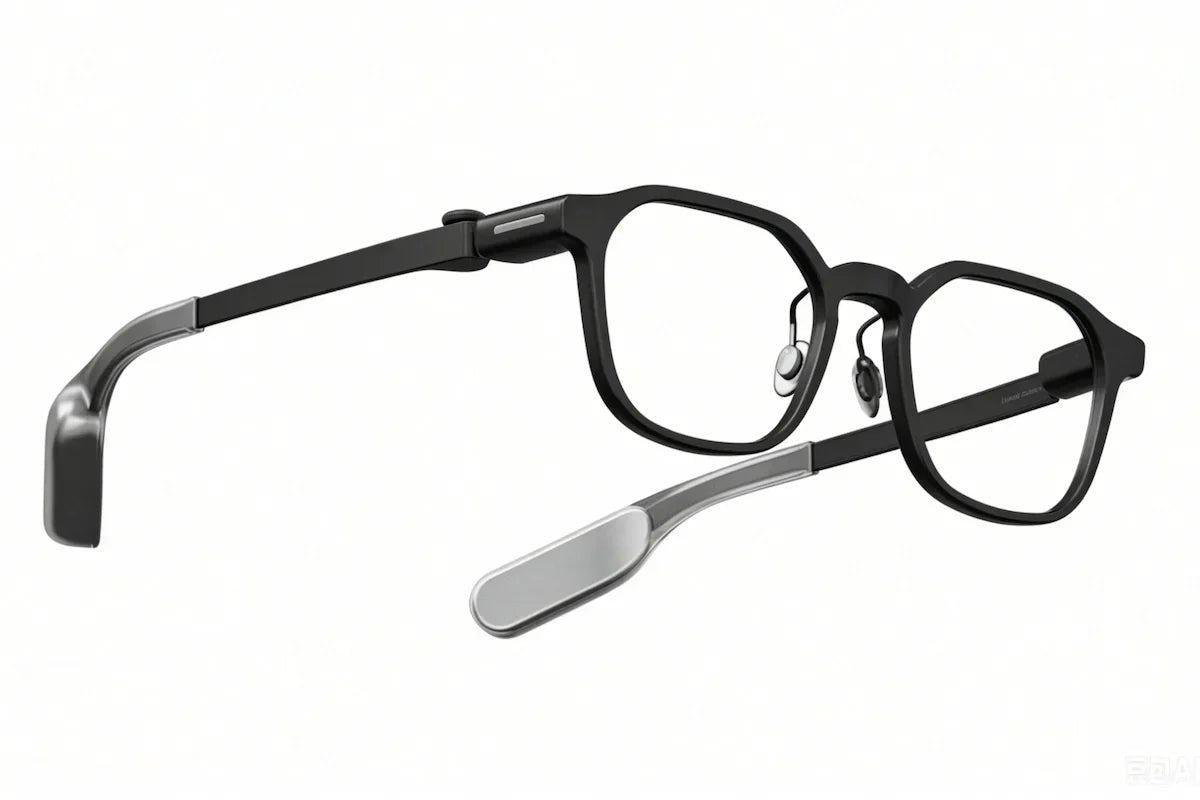
RayNeo iO runs on a single 240mAh battery, and that one cell produces five different official numbers depending on what the glasses are doing: up to 48 hours of typical daily use, up to 18 hours of continuous recording, up to 6.2 hours of continuous Live Captions and Translation, up to 63 hours of standby while worn, and up to 250 hours of standby while folded. RayNeo’s marketing shorthand for the 48-hour figure is “up to 2 days,” and the two numbers match exactly.
The five figures describe different workloads, not interchangeable promises of runtime. Continuous captions and translation involve speech capture and on-lens text, while recording and standby have different activity patterns. RayNeo does not publish a component-by-component power breakdown, so the ratings should be compared by use case rather than attributed to a particular sensor’s power consumption.
| Use case | Rated battery life | What’s actively drawing power |
|---|---|---|
| Typical daily use | Up to 48 hours (RayNeo markets this as “up to 2 days”) | Occasional dashboard glances, notifications, occasional Smart Crown input, and light voice commands |
| Continuous recording (One-tap Record) | Up to 18 hours | Microphone array and bone conduction sensor capturing audio continuously, with no live translation running |
| Continuous Live Captions & Translation | Up to 6.2 hours (RayNeo’s product imagery rounds this to 6 hours) | Microphone array, bone conduction sensor, on-lens display, and real-time AI translation, all running together |
| Standby, worn | Up to 63 hours | Glasses worn and waiting between uses, with no active recording or translation |
| Standby, folded | Up to 250 hours | Rated separately by RayNeo for the folded state |
| Fast charging | 25 minutes to 80% | Charging rate, not a usage figure |
Read together, these five numbers aren’t five competing estimates for the same battery; they’re separate ceilings tied to separate activities. Which one governs your day depends on whether you’re mostly glancing at notifications, or you’ve got one feature (recording, translation) running continuously in the background. Each is an “up to” rating under RayNeo’s own test conditions, so real-world results can land higher or lower depending on display brightness, Bluetooth activity, ambient temperature, and your own mix of features.
These figures come from RayNeo’s iO product page and are current as of early October 2026.

The 48-hour figure, the one RayNeo markets as “up to 2 days,” is built around light, intermittent use. That means:
None of those actions keep the display or the microphone array running continuously.
The practical takeaway is to treat 48 hours as the ceiling for that specific intermittent-use pattern, not as a guaranteed two-day window. The moment sustained recording or sustained translation enters your day, plan around those features’ own rated hours instead, since they draw power at a different rate than glancing at a notification.
RayNeo’s One-tap Record feature, which records audio with one tap and later generates an AI summary, is rated for up to 18 hours of continuous recording. That is a recording-specific rating, not a promise of the same runtime while captions, translation, and other features are active together.
Eighteen hours of continuous recording covers longer sessions than most people run in a single sitting. The following all sit inside the rated window on paper:
Treat 18 hours as the published maximum for continuous recording rather than a figure with headroom guaranteed on top.
Live Captions and Translation is the heaviest single draw on iO’s battery, rated at up to 6.2 hours of continuous use (RayNeo’s product imagery rounds this down to 6 hours). The gap between 18 hours of recording and 6.2 hours of translation reflects the added work of running real-time AI translation and keeping captions displayed on the lens, on top of the same microphone and sensor hardware recording already uses.
For real-world translation sessions, 6.2 hours is the published ceiling for one continuous stretch. Common scenarios like these rarely involve 6-plus hours of back-to-back translation:
Treat 6.2 hours as the rated maximum for one sitting rather than a number you need to plan an entire day around.
RayNeo publishes two separate standby figures: up to 63 hours while the glasses are worn and up to 250 hours while folded. Worn standby is the rating for glasses that are on and waiting between uses, with the display and AI features not actively running.
Folded standby, rated at up to 250 hours, is the number that applies once the temples are closed. The worn figure is what governs a day you’re actively wearing the glasses, while the folded figure is closer to what you’d see leaving iO in a bag or on a desk between uses.
RayNeo publishes a charging time of 25 minutes to reach 80% using the Eyewear Charging Clip. A portable charging case is also available in selected bundles or as an accessory. Compare the current package contents before ordering rather than assuming that every package includes the case.
The published specification is 25 minutes to 80%, not a full-charge time. Lithium-battery charging typically slows near full capacity, but that does not determine how long the final 20% takes. Starting charge, temperature, and charging conditions affect a top-up, so use the rated figure as a reference rather than a promise for every charging session.
A realistic day with RayNeo iO rarely sits inside just one of these five figures. A typical workday might include:
RayNeo doesn’t publish a combined-use rating that mixes these features into a single predicted total: each number is measured with one feature running continuously on its own. The practical move is to treat the five ratings as separate ceilings and let the heaviest feature in your day set the planning floor. If you expect a stretch of continuous recording or translation, size the day against those shorter numbers rather than the 48-hour headline.
If your day is unusually heavy on one feature, for example an all-day conference where you’re recording continuously, or a full day of travel where translation runs nonstop, plan around that feature’s specific number rather than the 48-hour headline figure. For meeting-heavy use, see our breakdown of which RayNeo AI glasses handle meeting transcription and summaries. For travel and conversation-heavy translation use, see our guide to real-time translation glasses for travel.
Does RayNeo iO’s battery really last two full days?
What’s the difference between the 63-hour “worn standby” and 250-hour “folded standby” ratings, and how do they relate to the 48-hour typical-use figure?
How long does it take to charge the battery completely, not just to 80 percent?
If I record and use live translation at the same time, how much battery life should I expect?
What do the 48-hour and 250-hour battery ratings measure?
RayNeo iO has five battery ratings tied to different workloads: up to 48 hours of typical use, 18 hours of recording, 6.2 hours of captioning/translation, 63 hours of worn standby, and 250 hours of folded standby. Mixed use does not have its own published runtime, so sustained recording or translation should guide charging plans rather than the two-day headline. Actual runtime varies with settings, conditions, and feature use.
Sources:





Share:
RayNeo X3 Pro Live Translation Explained: 14 Languages, Speed, and Network Needs
RayNeo iO Brightness Spec Explained: What "1,300 Nits Eye-Level Brightness" Actually Means