

$429.00


Smart glasses have split into two clear camps: voice-first AI assistants and visually driven AR experiences. Understanding which approach fits your daily life matters far more than chasing specs or trendy features. This article cuts through the noise by comparing the core differences between Meta AI glasses and RayNeo AI glasses, focusing on real-world use rather than marketing claims, so you can make a more informed decision when choosing your next pair of smart glasses.
Both platforms reflect very different ideas about how artificial intelligence should function in everyday eyewear. One emphasizes simplicity and voice interaction, while the other prioritizes visual context and on-screen information to guide real-world actions.
Ray-Ban Meta AI glasses focus on voice-based interaction and quick social capture. Built around Meta’s AI assistant, they handle spoken commands, take photos, record short videos, and play music without adding visual overlays. Their classic Ray-Ban styling helps them blend into daily life, keeping the experience discreet while supporting hands-free tasks throughout the day.
RayNeo centers its approach on visual intelligence through augmented reality displays. Models like the X3 Pro project information directly into your field of view using dual micro OLED screens. Gemini AI supports features such as live translation, navigation guidance, and contextual overlays that respond to what you’re actively seeing.
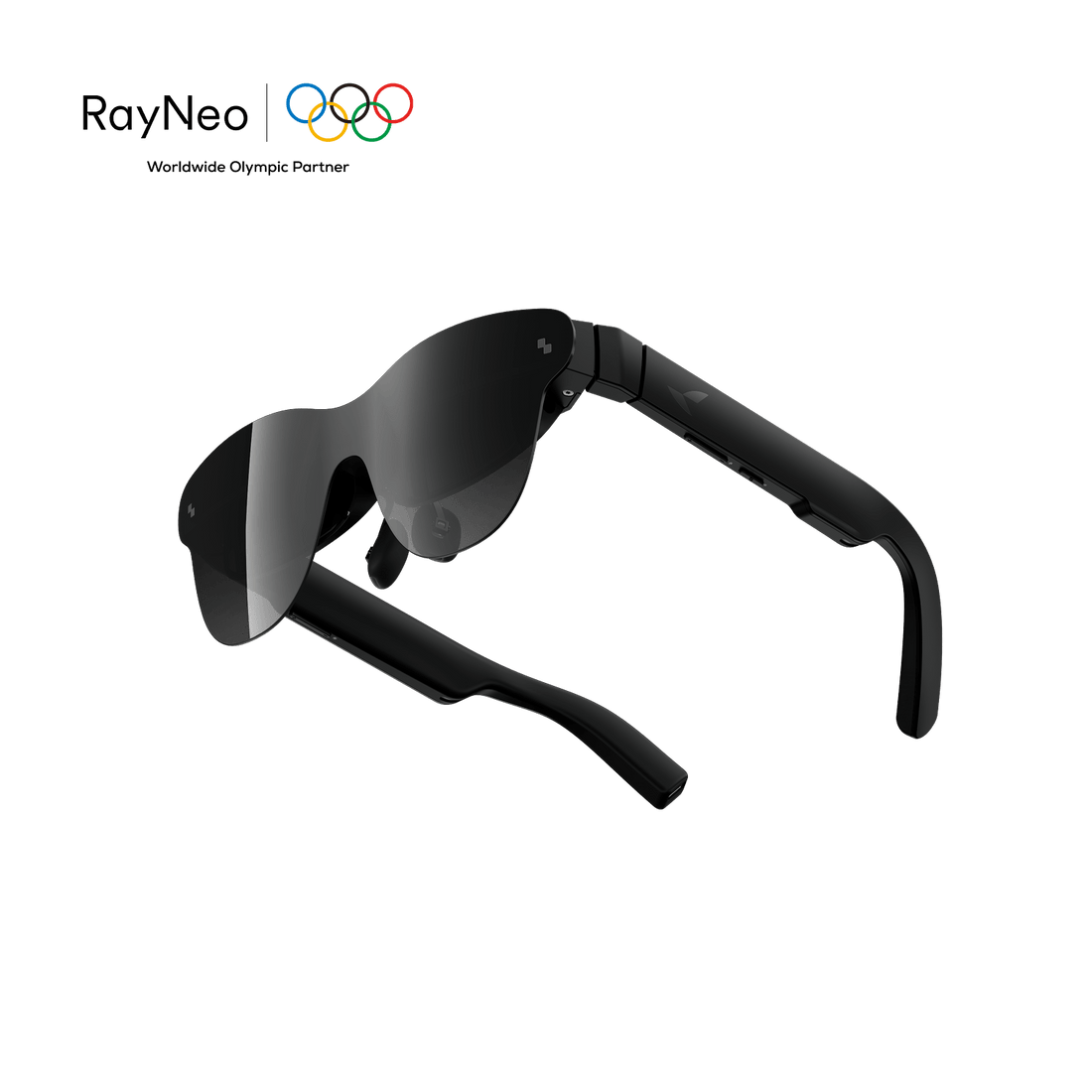
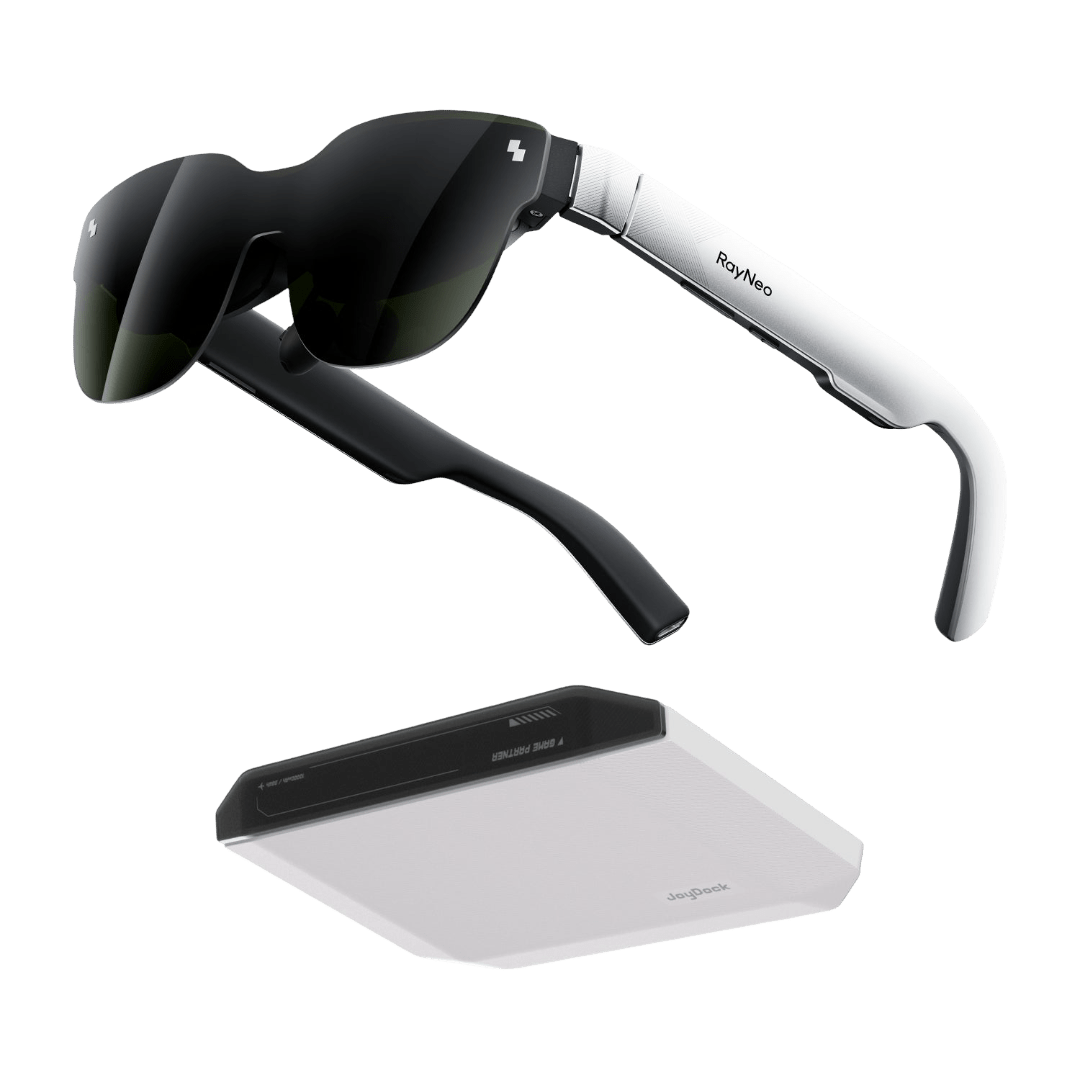
It’s worth noting that there are also non-AI glasses from RayNeo, like the Air 4 Pro and the Air 3s Pro, which focus more on entertainment factors than AI capabilities.

Meta positions its glasses as a voice-first AI assistant combined with lightweight content capture. Most interactions rely on spoken commands, allowing users to ask questions, control audio, or take photos without touching the frames or checking a screen.
RayNeo takes a more visually immersive route, building its system around on-screen information and spatial awareness. Real-time data appears directly in your field of view, including translation subtitles during conversations, navigation overlays while moving, and virtual screens placed within your environment.
At a practical level, one platform relies on verbal input to deliver responses, while the other provides contextual information visually, reducing the need to describe what you need or repeatedly check your phone.
Physical design plays a major role in whether smart glasses become part of your daily routine or end up unused after initial excitement fades—comfort, appearance, and how noticeable the technology feels all influence long-term wear.
Classic Wayfarer and Aviator frames help Ray-Ban Meta AI glasses blend naturally into most social settings. Cameras are tucked discreetly near the temples, and touch controls are subtly integrated into the frame. In everyday situations, most people won’t realize you’re wearing smart glasses unless they notice the small LED indicator during recording.
The RayNeo X3 Pro weighs around 76 grams while housing dual displays and 6DoF tracking sensors. Although heavier than standard eyewear, it remains lighter than many AR-focused competitors.

The Air 4 Pro and the Air 3s Pro from RayNeo keep a similar weight, but tilt the weight budget for technologies toward entertainment features over cameras.
However, all these designs clearly lean toward a tech-forward look rather than traditional eyewear styling.
Ray-Ban Meta AI glasses are designed to feel familiar immediately. They sit on the face much like regular glasses, usually requiring little adjustment beyond standard nose pad positioning, which makes them easy to wear for extended periods without much setup.
By comparison, RayNeo’s higher-end models offer more adjustment options to fine-tune fit, which can be helpful given differences in face shape. However, the visible camera and hardware modules resting near the nose bridge create a bulkier profile that’s noticeable during wear.
Prescription support also differs between platforms. Meta allows users to order prescription lenses that integrate directly into the frame through its website, making the process relatively straightforward. RayNeo supports prescription inserts, but compatibility is limited to select models.
Whether smart glasses include a screen changes nearly every aspect of how they function in real life. Displays affect how information reaches you, how often you pull out your phone, and whether the experience feels like light assistance or full immersion, especially in busy environments like city streets, offices, or airports across the U.S.
Gen 1 and Gen 2 Meta Ray-Ban AI glasses do not include a display and rely entirely on audio feedback through built in speakers. Meta Ray-Ban Display glasses add a visual element, but it’s limited to the right eye only. This single-eye projection helps keep the glasses lighter, more affordable, and socially discreet, which works well in everyday situations like commuting on a subway or walking through a crowded coffee shop.
RayNeo AI glasses take a different approach. The X3 Pro uses dual micro-OLED panels reaching up to 3,500 nits, projecting sharp text and graphics to both eyes at the same time. As detailed in the announcement of the RayNeo X3 Pro: Your Next-Generation AR Smart Glasses, this balanced display reduces eye strain during longer use. Real-time translation appears as subtitles during conversations, navigation arrows overlay streets, and virtual screens can be positioned in space, whether you’re navigating downtown San Francisco or exploring a large shopping mall in Texas.
Meta’s display strategy varies by generation, aiming to strike a middle ground between audio only assistance and limited visual support without committing fully to augmented reality. RayNeo’s dual micro OLED setup projects information to both eyes simultaneously, creating a more stable and comfortable viewing experience, particularly for professionals who rely on visual information throughout the workday.
The trade off ultimately comes down to priorities. One approach emphasizes accessibility, simplicity, and everyday wearability, while the other pushes toward spatial computing capabilities that demand more advanced hardware and greater user engagement, similar to choosing between audio directions during a drive or relying on a full navigation screen.
Voice assistants and visual AI solve different problems in everyday use. One focuses on quick, spoken interactions that reduce friction, while the other delivers on screen context that helps you make sense of what’s happening around you in real time.
Meta AI glasses are built around voice first interaction. Using the “Hey Meta” wake phrase, the assistant handles spoken questions, smart home controls, reminders, and quick photo capture without needing visual input. Responses play through built in speakers or appear as notifications on your connected phone. Content captured with Meta AI glasses moves easily into Meta’s ecosystem, which suits users who already share photos or short videos across social platforms during daily life.
RayNeo AI glasses take a more visual approach. Gemini AI powers the X3 Pro, supporting fourteen languages for real time translation during face to face conversations. Instead of relying only on voice prompts, the system reacts to what you’re looking at. Navigation guidance appears as directional overlays on streets, while object recognition helps identify landmarks or surroundings, which can be especially useful when walking through unfamiliar downtown areas or large public spaces.
In day to day situations, the differences become clearer. Meta AI glasses work well for hands free cooking timers, quick recipe lookups, or managing reminders while moving around the house. RayNeo AI glasses shine during travel, where live translation and visual directions reduce the need to stop and check a phone. Voice commands handle simple shopping lists on both platforms, but visual confirmation helps prevent mistakes, especially in work calls or professional settings where seeing reference material matters.
How smart glasses handle sound, recording, and media playback makes a noticeable difference in everyday use. These features shape how comfortable the glasses feel in public, how useful they are for content creation, and whether they fit naturally into daily routines like commuting, travel, or casual entertainment.
Both Meta AI glasses and RayNeo AI glasses use open ear audio, allowing you to hear music, calls, or directions while staying aware of your surroundings. You can play audio from your phone through the built-in speakers without blocking ambient sound, which is useful while walking city sidewalks or waiting at a train platform. Volume stays low enough to avoid disturbing people nearby, yet clear enough for personal listening.
Meta AI glasses record 1080p video with reliable stabilization, making them well-suited for quick social clips or capturing everyday moments. The five-minute recording limit can interrupt longer sessions, requiring frequent restarts. RayNeo AI glasses extend recording time to nine minutes on supported models, which offers more flexibility for documenting travel days, walking tours, or longer events without constantly stopping and starting the camera.

Meta AI glasses include a recording LED that lights up when the camera is active, signalling to others that recording is taking place. While this helps address privacy concerns, the indicator is subtle enough to remain a topic of debate. RayNeo models with cameras follow similar practices, but the hardware design makes recording more visually obvious. Regardless of indicators, wearing smart glasses can affect social dynamics. Meta’s classic frame designs attract less attention, while RayNeo’s more futuristic look makes the technology immediately noticeable in public settings.
Looking at how people actually use smart glasses day to day makes the differences between these platforms much clearer. Real-world habits, not feature lists, reveal where each approach fits naturally and where limitations start to show.
Meta AI-powered smart glasses stand out for quick, hands free content capture. Spontaneous moments can be recorded using simple voice commands or touch controls, with photos and videos syncing automatically to your phone. Integration with Meta’s social platforms makes sharing fast and convenient, especially during everyday moments like family outings, city walks, or casual events where pulling out a phone feels disruptive.
If immersive media experience is in your interest, you may just find AR glasses are able to fit your bill more than AI glasses. Augmented reality glasses are able to spend more of their power budget on audio, color quality and display resolution, trading AI interactivity to give you the best possible experience in terms of entertainment.
The upcoming RayNeo Air 4 Pro represents a significant leap in wearable entertainment technology. Hand tuned by Bang & Olufsen's acoustic engineers, the brand-new sound tubes direct audio toward your ears, cutting spillage by 80% while retaining complete details to push sound quality closer to cinema-esque experience than ever before. Visual performance matches the audio ambition. The Air 4 Pro debuts as the world's first AR glasses supporting HDR10, powered by the custom Vision 4000 chip that RayNeo co-developed with Pixelworks. As Air 4 Pro’s predecessor, what Air 3s Pro has to offer is nothing less impressive, projecting a virtual 201 inch screen that turns flights and commutes into private viewing sessions.
AI glasses, in contrast, prioritize different capabilities. Their typical five-speaker setups work well for listening experiences but can’t match the immersive entertainment quality that AR glasses can deliver today.
RayNeo’s visual overlays are especially useful during travel. Translation subtitles appear quickly during conversations, navigation arrows guide you through unfamiliar streets, and landmarks can be identified as you explore new places, whether abroad or in large U.S. cities. Meta offers similar support through Ray-Ban Display glasses, but Gen 1 and Gen 2 models rely on audio cues, often requiring frequent phone checks for visual confirmation.
Meta AI glasses work well for quick voice notes, hands-free calls, and reminders during busy workdays. RayNeo’s AR display opens up additional productivity options, such as viewing reference material during video meetings, receiving persistent notifications, or reviewing documents on virtual screens. Professionals managing multiple tasks at once tend to benefit more from having information visible rather than relying only on audio prompts.
For outdoor and fitness activities, RayNeo X3 Pro has a clear advantage due to its sweat-resistant design and durability during movement. Some Meta Ray-Ban glasses have users reporting that their glasses have failed after soaked in sweat. When walking, hiking, or exercising outdoors, build quality and moisture resistance become more important than subtle design, especially during longer or more intense sessions.
When comparing smart glasses, cost goes beyond the sticker price. Accessories, prescription options, and long term usability all affect what you actually spend over time, especially if you plan to wear the glasses daily rather than occasionally.
Ray-Ban Meta AI glasses pricing varies by generation and configuration. Discounted Gen 1 models can drop to around $246.75, while Gen 2 versions typically start at $379. Adding prescription lenses usually increases the price by roughly $100. The charging case is sold separately for $99, which adds to the total cost. The newer Meta Ray-Ban Display model starts at $799 and includes a charging case, reflecting the added display hardware.
RayNeo positions its lineup across different price tiers. The X3 Pro is priced at $1,099 now, reflecting its AR-focused hardware, dual displays, and spatial computing features. The Air 3s Pro sits at $299 and is aimed at users who prioritize entertainment over content capture, while the official prices for the Air 4 Pro is yet to be announced.
Both the X3 Pro and the Air 3s Pro support prescription inserts, with final pricing depending on individual optical requirements.
Value depends largely on how you plan to use smart glasses. Meta AI glasses offer solid value for lifestyle users who want voice-based AI, social sharing, and a lightweight design without relying on visual displays. However, for users seeking the best alternatives for meta smart glasses to handle productivity, navigation, or immersive media, RayNeo’s higher pricing reflects more advanced hardware that justifies the investment.

A side-by-side comparison helps clarify how Meta AI glasses and RayNeo AI glasses differ in design, display approach, and everyday use. Rather than focusing on specs alone, this overview highlights how each platform fits different lifestyles and use cases.
|
Feature |
Meta AI Glasses |
RayNeo AI Glasses |
|
Design |
Classic Ray-Ban frames |
Futuristic tech aesthetic |
|
Display |
Some (Mono display and audio-only) |
Dual micro-OLED (X3 Pro) / Virtual screen (Air 3s Pro) |
|
AI Interaction |
Meta AI voice assistant |
Gemini AI with visual context |
|
Audio & Camera |
Open-ear audio, 5-min video |
Spatial audio, 9-min video (X3 Pro) |
|
Price Range |
$250-$799 |
$299-$1099 |
|
Best Use Cases |
Social sharing, voice control |
AR navigation, immersive media |
Your daily habits and priorities ultimately determine which smart glasses make the most sense. The right choice depends on how often you rely on voice commands, visual information, or hands-free access throughout a typical day.
Meta AI glasses are a strong fit for users who prefer voice-driven interaction and minimal visual distraction. Voice commands, quick social capture, and a lightweight design suit casual, everyday use. If your needs center on hands-free calls, music control, reminders, and spontaneous photo sharing during daily routines, Meta AI glasses deliver those features without adding visual complexity that could feel unnecessary or distracting.
RayNeo AI glasses are better suited for users who rely on visual context throughout the day. Travellers who depend on live translation, professionals who need reference material in view, and entertainment-focused users benefit from built in displays. The X3 Pro’s AR overlays support navigation and productivity, while the Air 4 Pro and the Air 3s Pro’s virtual cinema experience appeals to those who expect more than audio-only feedback from smart glasses.
Meta AI glasses work well for people who want subtle technology that blends into daily life while handling voice tasks and social moments. RayNeo AI glasses suit users who are comfortable wearing visible tech and need on screen information available throughout the day. Neither option replaces the other; they are designed to serve fundamentally different needs based on how you interact with technology.
Meta AI glasses stand out for voice first simplicity, hands free control, and tight social integration, all packaged in a lightweight, socially discreet design that fits easily into everyday routines. RayNeo AI glasses take a different path, focusing on immersive AR experiences through visual overlays, longer recording capabilities, and entertainment driven features. The right choice comes down to whether you prefer minimal interaction without screens or need visual information available at a glance without pulling out your phone. Both platforms perform well within their intended roles, and neither is trying to replace the other.
No. Google Glass focused on workplace applications with a heads-up display, whereas Meta glasses target social users with voice AI and cameras but no visual overlay. Different companies, different goals, different hardware approaches.
No, they serve very different purposes. Google Glass was designed primarily for workplace and enterprise use, featuring a heads up display for tasks like instructions and data access. Meta glasses, by contrast, focus on social use, voice AI, and content capture through cameras, without relying on persistent visual overlays. Different companies, different audiences, and very different hardware philosophies.
Yes. Ray-Ban offers prescription lenses directly through its ordering system for Meta AI glasses. Most common prescriptions are supported, with options for different lens types and coatings. Pricing varies by prescription strength and features, typically adding around $150 to $200 to the base cost.
Ray-Ban Meta glasses work with a wide range of prescriptions, but there are limits. Very high power lenses or more complex corrections may not be supported. It’s best to confirm your specific prescription with Ray-Ban before ordering to ensure compatibility and avoid delays or fit issues.
There’s no single best option for everyone. Meta AI glasses suit users who prioritize voice control, social sharing, and a lightweight design that blends into daily life. RayNeo AI glasses are better suited for travellers, creators, and immersive experience seekers who rely on visual displays. The right choice depends on how you plan to use them each day.





Share:
Ray-Ban Meta Smart Glasses vs. Google Smart Glasses: Which Is Right for You?
Do Blue Light Glasses Work for Smart Glasses Users?