

$429.00


Gaming laptops and AR glasses are both outstanding choices for gaming. However, if you want peak performance and a full Steam or AAA gaming experience, portable gaming still centers on high-performance gaming laptops. AR glasses are better as immersive extension devices for cloud gaming, mobile movies, and lightweight interactive content. These are not simple alternatives to one another. Instead, they push portable gaming in different directions depending on the scenario. In this article, we will break down the differences between gaming laptops and AR glasses in terms of performance, portability, immersion, and future potential. Based on our long-term testing and user feedback, we will help you decide which one fits you best.
Before discussing which option is better for portable gaming, we must clearly define both categories. Many people imagine AR glasses as a smaller version of VR. This mindset leads to a major misunderstanding of where wearable gaming is headed over the next few years.

The working definition of a gaming laptop is very specific. It refers to a mobile computing platform equipped with a dedicated GPU. A typical setup includes a 45W class mobile CPU paired with a dedicated graphics card featuring an 80W to 175W TGP. This is supported by at least 16GB of high-speed memory and a minimum 512GB NVMe SSD. Total system power designs generally fall between 150W and 250W. Screen refresh rates for these devices have increased rapidly. High-end models now commonly offer 165Hz to 240Hz QHD or FHD panels. Some flagship models even feature 240Hz OLED displays to meet the extreme demands of esports for response time and contrast.
Functionally, a gaming laptop remains a full PC. This means you can directly run all Windows or Linux games, creative tools, and community plugins. This includes massive MMOs, professional mods, and various peripheral ecosystems. No current standalone AR headset can truly replace this advantage in productivity and game compatibility. In interviews with hardcore gamers, we found that their core demand for a gaming laptop is desktop-level graphics and frame rates that they can carry. Even if the weight exceeds 2.3kg, they are willing to compromise for performance.
The AR glasses for gaming we are discussing here are wearable head-mounted displays. They overlay digital game elements, such as 3D characters, objects, or interfaces, onto your view of the physical world. Unlike virtual reality (VR), which completely blocks out your surroundings, AR gaming glasses use transparent lenses to blend virtual content with the real environment. This allows you to maintain spatial awareness while playing.
Regarding interaction, we focus on the combination of extended display and spatial awareness. Some devices connect via wire or wireless as external screens for gaming laptops or phones. This brings the GPU performance of the host device directly in front of your eyes. Other models integrate cameras, IMUs, and spatial positioning into the temples or frames. These add simple 6DoF tracking and environmental sensing for cloud gaming, portable consoles, or native AR games. Because the computing resources on the glasses themselves are limited, more users are choosing to pair AR glasses with cloud computing or a host console. In this setup, the glasses handle display and sensing while the heavy computing is left to a phone, handheld, or gaming laptop.
From a hardware standpoint, a gaming laptop is a complete, closed-loop system for computing, graphics, and input/output. The device itself is both the brain and the screen. In most cases, AR glasses only handle the display and some sensing. Their actual computing power depends on the cloud or a local host. This difference directly determines how each device prioritizes performance, battery life, and heat management.
In terms of the experience, gaming laptops are best for stable use on a desk or lap. The screen size and keyboard layout mean you usually need to sit down to get into a gaming state. AR glasses extend a massive screen to anywhere you can sit or lie down. This allows portable gaming to finally break through the physical limits of traditional screen sizes.
Regarding the content ecosystem, gaming laptops rely on mature PC gaming platforms and full peripheral chains, offering massive room for user tuning. The value of AR glasses lies more in bringing the same game to more scenarios. For example, you can use AR glasses on a plane with a handheld or laptop to play a AAA title. You could also lie on a sofa and use cloud gaming to build a personal giant-screen space. For the same player, these two experiences are often complementary rather than replacements for each other.
|
Device Type |
Compute Role |
Typical Refresh Rate |
Typical Weight |
Main Gaming Use Case |
|
Gaming Laptop |
Full Compute + GPU |
144–240Hz |
2.0–2.8kg |
Local AAA gaming and high frame rate esports |
|
AR Glasses |
Display + Sensing |
90–120Hz |
70–90g |
Cloud gaming and mobile large-screen immersive viewing |
Understanding market demand helps us evaluate which technical paths are worth the investment. Between 2025 and 2026, the gaming laptop market has grown steadily, while interest in AR glasses has surged in online communities. This shift is about more than just lighter devices. Quantifiable factors like travel scenarios, network infrastructure, and the expansion of the gaming industry show that portable gaming is now much more than just a way to kill time on the road.

The primary demand for portable gaming remains the ability to play what you want, anywhere. Feedback shows typical scenarios include subway commutes, hotel stays during business trips, student dorms, and fragmented time in the living room. These sessions usually last between 30 and 90 minutes. Users have very low tolerance for slow boot times, short battery life, or loud fan noise compared to traditional desktop environments.
While gaming laptops handle tasks that consoles cannot, they face bottlenecks in tight seating areas due to screen size and keyboard space. This is why more players are moving toward combinations like a thin-and-light laptop paired with AR glasses or a handheld console with AR glasses. This setup provides a massive field of view with a much smaller physical footprint.
On the supply side, gaming laptop growth is driven by GPU efficiency and display panel iteration. By 2026, mainstream mobile GPUs can output desktop-class 1080p high-frame-rate experiences while staying under 100W. High-refresh IPS and OLED screens have also become more affordable, allowing mid-range laptops to maintain stable 144Hz performance.
Market Scale: The global gaming laptop market is projected to grow from approximately $12.93 billion in 2025 to over $22.94 billion by 2035, with a compound annual growth rate (CAGR) of 5.9%. This confirms that high-performance portable PCs will remain essential for at least the next decade.
In the AR glasses sector, display evolution is even more concentrated. 2026 models now use 0.6-inch Micro OLED engines.
Key Specs: These support up to 120Hz refresh rates and HDR10. With 1,200 nits of peak brightness and a 200,000:1 contrast ratio, cloud gaming and console streaming in bright light are now practical.
AI Integration: Advances in SoCs and AI co-processors allow for real-time SDR-to-HDR upscaling and 2D-to-3D conversion. These features provide depth to older titles and determine the long-term replay value of the device.
Global demand for high-performance mobile devices continues to rise. Research for 2025–2033 shows that multi-purpose laptops for both creation and gaming are gaining significant ground among content creators and esports fans.
Smart Glasses Growth: Interest in AR glasses reached a turning point between 2024 and 2025. Reports show that sales in Q3 2025 saw triple-digit year-over-year growth. Some users are even shifting their budgets from new VR headsets to lighter spatial computing glasses to gain a device they can use more frequently in daily life.
Player Base: With the global player base expected to reach nearly 3.9 billion by 2028, the push for immersive, portable, and interactive experiences is stronger than ever.
When evaluating gaming laptops for portable play, we must distinguish between laboratory specs and real-world travel. Paper-thin TGP and benchmarks do not reflect the psychological cost of using a device in a cafe, library, or on a train.
In terms of performance, gaming laptops remain the high-water mark for portable gaming. Current mainstream RTX 40-series mobile GPUs can maintain 80 to 120 frames per second (fps) in major AAA titles at 1080p, while staying within a 100W to 140W power envelope. Competitive esports titles can even hit a stable 200 fps, providing plenty of room for 165Hz or 240Hz high-refresh screens. Regarding the content ecosystem, the openness of the PC platform means you can use mod managers, third-party graphics tools, and various plugins. You can simultaneously stream, record, and chat—a composite usage scenario that handhelds and standalone AR devices cannot fully replicate.
Regarding expandability, gaming laptops offer rich I/O options, including USB-C, HDMI, and high-speed USB-A. This makes it easy to connect external monitors, AR glasses, mechanical keyboards, and controllers. This allows one device to serve as both a mobile workstation and a gaming console. A high-performance laptop often drives both a home monitor and a wearable display, increasing its lifecycle value. For heavy gamers on a budget, a high-end laptop typically stays compatible with new titles for 3 to 5 years. You can extend its life further by upgrading RAM or adding a larger SSD.
From a truly portable gaming perspective, the physical form of a laptop has several clear limitations. First is weight and bulk. A mainstream 16-inch gaming laptop plus its power brick often exceeds 3kg. This takes up massive space in a backpack and discourages users from carrying it daily for work or travel. Second is battery life and noise. In high-performance mode, a laptop draws over 150W. Once unplugged, the battery rarely lasts more than 1.5 to 2 hours during heavy gaming. Furthermore, fan noise becomes very noticeable in quiet spaces like libraries or hotels at night.
Even when using AR glasses as a virtual big screen, the physical footprint of the keyboard and trackpad remains. This has pushed some players to keep their gaming laptops at home, using a light terminal plus cloud gaming combo for travel to reduce the burden of long-distance carrying.
If the gaming laptop is the power core of portable play, specialized gaming-glasses represent the key variable for the future of gaming form factors. With the spread of cloud gaming and 5G infrastructure, their utility and stickiness have evolved far beyond just watching videos.
The greatest advantage of AR glasses in portable gaming is the product of immersion and portability. Current high-end models use 0.6-inch Micro OLED engines. They support up to a 120Hz refresh rate and HDR10, with a peak brightness of around 1,200 nits. In a dark room, they can simulate a virtual screen up to 201 inches. This creates a private theater-grade display in any hotel or bedroom. The sense of presence in action or racing games far exceeds a traditional 15-inch screen. Compared to VR headsets, the weight of around 70 grams and an open or semi-open soundstage allow players to stay aware of their surroundings. This reduces safety anxiety in public spaces like subways or stations.
Regarding connectivity, AR glasses can connect directly to gaming laptops, handhelds, or phones via USB-C DisplayPort mode. They also enable cross-device play through wireless casting and cloud gaming platforms. A user only needs a pair of glasses and a pocket-sized device to resume a save file from their living room while traveling. This cross-scenario continuity is difficult for traditional laptops to achieve. We see more players using AR glasses as a second screen. They use a keyboard and mouse on the main display while the glasses show maps, skill cooldowns, or stream chats. This information-splitting gameplay adds a direct tactical advantage in MMORPGs or competitive games.

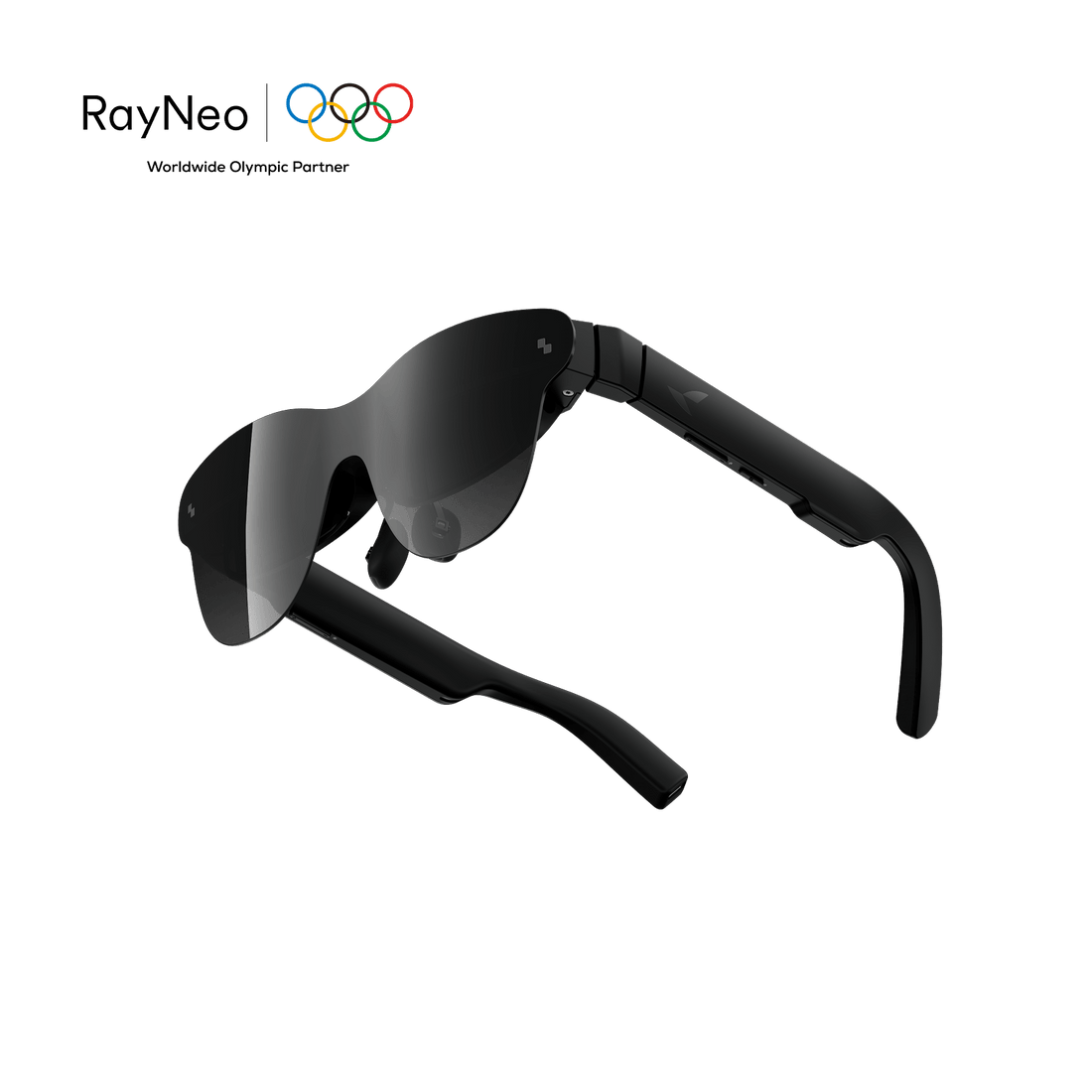
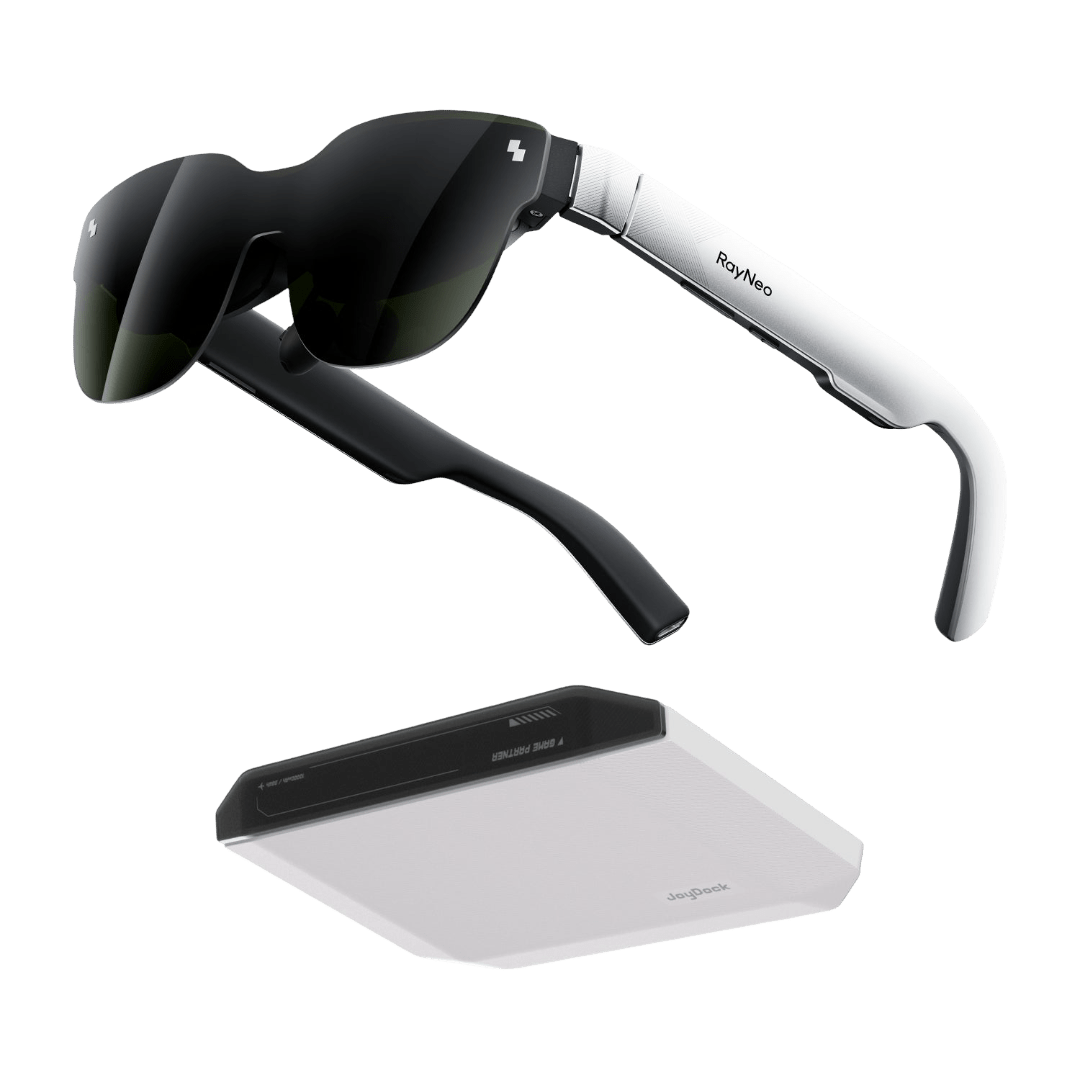
RayNeo Air 4 Pro is a strong example of where AR gaming glasses are headed. It uses a 0.6-inch Micro-OLED display system with 1080p resolution, a 120Hz refresh rate, and HDR10 support. With up to 1200 nits of perceived brightness and a 200,000:1 contrast ratio, it delivers a private giant-screen experience that works especially well in dark rooms, hotel stays, flights, and other on-the-go gaming scenarios.
What makes the Air 4 Pro especially interesting is that it feels like a practical entertainment extension, not just a novelty wearable. Its 76g weight makes it comfortable enough for mobile use, while the Bang & Olufsen-tuned quad-speaker system adds a stronger sense of presence. TÜV SÜD low-blue-light and flicker-free certification also makes it more suitable for long viewing sessions, cloud gaming, or second-screen use. For users who already own a gaming laptop, handheld, or phone, the Air 4 Pro works as a force multiplier for existing hardware rather than a replacement for full PC performance.
To be honest, AR glasses in 2026 are still iterating rapidly, and many products fail to meet all user needs. First is wearing comfort. Even at 70 grams, long-term wear puts pressure on the nose bridge and ears. Users with myopia or astigmatism require additional prescription inserts, which adds weight and cost. Second is the field of view and focus. Most AR glasses have an equivalent FOV between 40 and 50 degrees. For first-time users, the floating image and slight edge blur require an adaptation period. Fast-moving images can also cause mild dizziness or visual fatigue.
Power and heat are also hard constraints. In high-brightness HDR mode, the temples of some devices can become warm, which affects long-term wear for sensitive users. Furthermore, internal battery capacity is limited. Devices generally rely on host power or an external battery pack. This requires players to plan their cables and power banks ahead of time. Regarding content, the native AR gaming ecosystem is still in the exploration stage. The number of large-scale, long-term spatial computing games is limited. Most people currently use AR glasses to display traditional 2D games, which means manufacturers must rely on 2D-to-3D conversion and spatial UIs to maintain the sense of novelty.
When shopping for portable gaming gear, we recommend starting with your actual usage patterns. Map out your typical weekly gaming schedule and locations. Then, see which device or combination covers your most valuable gaming hours. This decision matrix helps you weigh preferences, budget, and comfort.
1. If you prioritize performance and traditional gameplay → gaming laptops For heavy AAA and competitive players, gaming laptops remain the top priority for portable play. If you need frame rates above 144Hz, desktop-class ray tracing, and complex mouse-and-keyboard inputs, no current AR terminal can fully replace a laptop. A powerful gaming laptop covers new single-player titles, ranked online matches, and content creation. It serves as your main rig with an external monitor at home and a portable powerhouse with a built-in keyboard or controller on the road. This all-in-one value is vital if your budget only allows for one primary device.
2. If you prioritize innovative play and portable immersion → AR glasses If your gaming time happens during commutes, business trips, or while lounging on the sofa or in bed, AR glasses offer a new layer of immersion. This assumes you already own a decent PC, handheld, or cloud gaming subscription. For example, on a long flight, you could connect 120Hz HDR10 AR glasses to a handheld for a four-hour session. The equivalent 201-inch virtual screen and four-speaker spatial audio provide immersion and relaxation far superior to a 7-inch handheld screen—all without disturbing your neighbor.
1. Budget Frameworks Mainstream gaming laptops typically range from $800 to $2,000, with a median price between $1,200 and $1,500. This performance level handles new titles at 1080p high settings for the next three years. AR glasses serve as display and sensing terminals, priced mostly between $400 and $900. Flagship models with high-brightness HDR and high refresh rates can approach $1,000. Since their computing power comes from external devices, adding high-spec AR glasses to an existing laptop or handheld upgrades your experience without buying core processing power twice.
2. Portability and Carrying Costs A 5.5lb gaming laptop plus a 1.5lb power brick is a constant burden in a commute or travel backpack. In contrast, a pair of 70g AR glasses folds down to the size of large sunglasses, fitting easily into a pocket or side bag. This is why more travelers leave the laptop at home and carry only a tablet or handheld with AR glasses. If your budget only fits one device and you must work and play at school or cafes, invest in a high-quality gaming laptop first. Add AR glasses in your next budget cycle to turn the laptop into a hub and the glasses into an experience booster.
Comfort is often ignored during purchase but determines how often you actually use the device. This includes physical wear, eye strain, and social pressure.
Gaming Laptops: These offer familiar comfort. Most users are used to keyboards, trackpads, and sitting at a desk. The main issue is the neck and shoulder strain from leaning over a screen for hours, especially during intense sessions.
AR Glasses: These shift the pressure to the nose bridge and ears. While adjustable nose pads and lightweight designs have improved recent models, sensitive users may still need to take a break every 2 to 3 hours to relieve pressure.
Scenario Summary:
Gaming Laptops: Best for planned, high-intensity sessions, such as a two-hour ranked match at night or a three-hour single-player campaign on the weekend.
AR Glasses: Best for filling fragmented time—20 minutes on the subway, 40 minutes waiting for a flight, or a quick card game while lying in bed. Together, these two segments often define your total weekly gaming hours.
Gaming is an ancient human urge to seek immersion and escape. The debate between gaming laptops and AR glasses is a clash of two philosophies of time: one says, I want to live fully in this moment, and the other says, I want to fill every gap. If you enjoy opening an epic raid in a cafe and need the roar of fans and the feel of keys for a sense of ceremony, the gaming laptop is your true battlefield. If you care more about not wasting twenty minutes on your commute, AR glasses are quietly rewriting the boundaries of anywhere, anytime. Technology is just a tool. It serves your vision of life's rhythm. For now, stop comparing and choose the device that truly makes you want to turn it on—that is your answer.





Share:
What You See Is What You Get: How Smart Glasses Are Redefining Real-Time Visual Interaction
What is Nits Brightness? Why It Matters for Outdoor Smart Glasses