


$429.00


Augmented Reality is no longer a futuristic novelty. In 2026, AR glasses will become practical tools for digital nomads, gamers, and tech-savvy professionals. Designs are slimmer, displays are bright enough for real-world use, and software finally feels polished. Whether you want to replace a bulky monitor or turn a long flight into a massive private screen, today’s AR glasses offer solutions built for specific needs.
This guide cuts through marketing noise to show what truly sets the best AR glasses apart. We’ll cover top models by real use case and explain which features actually matter when you’re deciding what’s worth your money.
Wearable tech in 2026 is being shaped by three clear shifts: HDR support, spatial AI, and much sharper visuals. AR glasses have moved past basic screen mirroring. Many models now include dedicated spatial computing chips that handle tracking and anchoring on the device itself. That means virtual screens stay locked in place around you without relying on a powerful PC to do the work.

Display tech has also caught up. New Micro-OLED and MicroLED panels are bright enough to use outside, not just in dim rooms. At the same time, electrochromic dimming is becoming common, letting you switch instantly between see-through AR and a fully darkened cinema mode with a single tap.
In 2026, there’s no single “best” AR glasses for everyone. The right choice depends on how you’ll actually use them, and analyzing what are smart glasses with display helps clarify these engineering directions. The market has clearly split into a few lanes: lightweight glasses built for media and gaming, wide FOV models made for real work, and AI-driven AR glasses that can operate with minimal reliance on a phone or laptop.
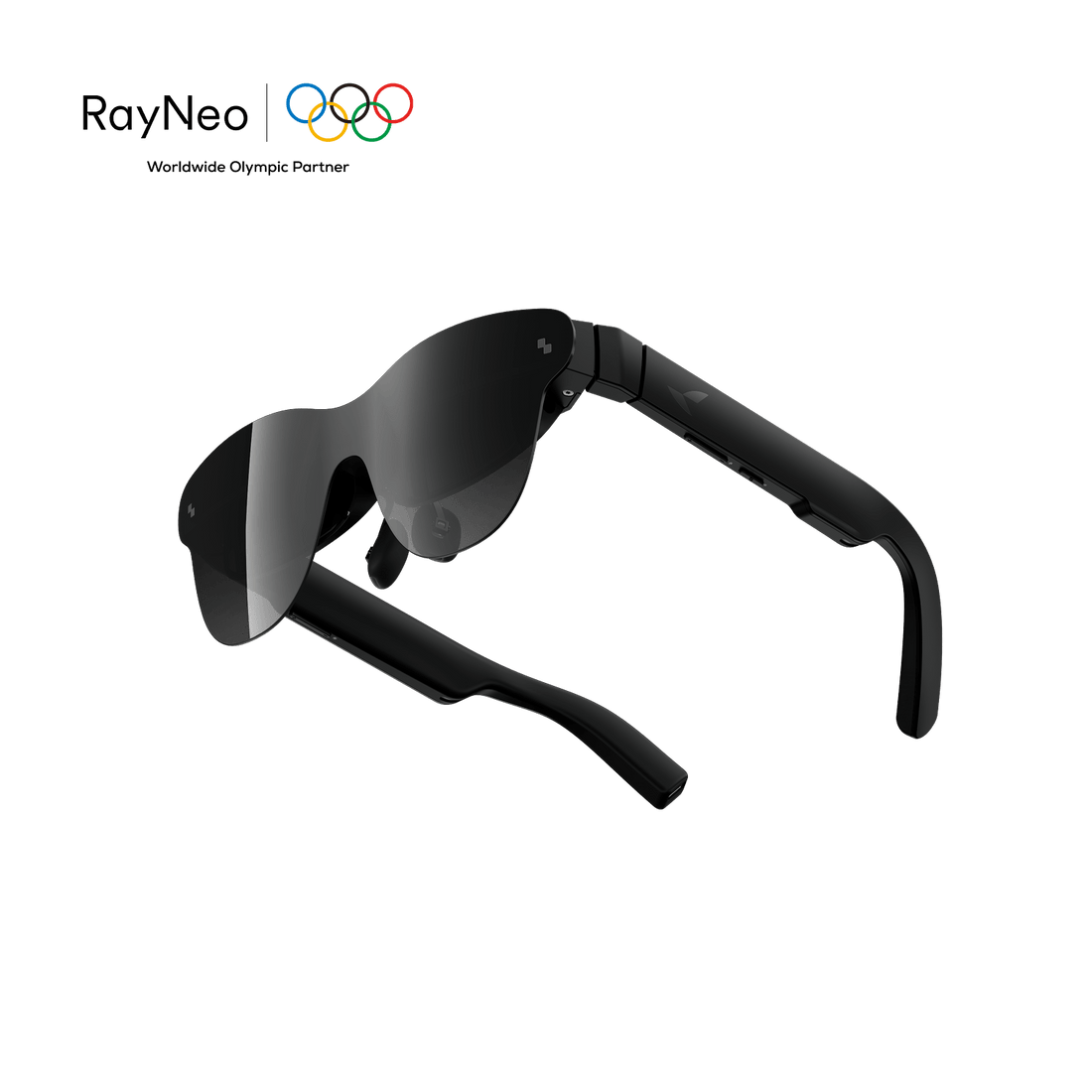
For gamers seeking the ultimate portable immersion, the RayNeo Air 4 Pro stands out among modern gaming glasses. As the world’s first AR glasses to support HDR10, it brings a level of dynamic range to mobile gaming that was previously reserved for high-end OLED TVs. Designed to pair perfectly with the latest consoles and high-spec gaming laptops, these glasses excel at rendering high-contrast environments found in titles like Cyberpunk 2077 or Elden Ring.
The inclusion of Bang & Olufsen-tuned speakers provides a wide, spatial soundstage that complements the visual depth. With a perceived brightness of 1,200 nits, the RayNeo Air 4 Pro remains vivid even in well-lit rooms, ensuring that dark corridors in horror games or high-speed action in shooters remain clear and ghosting-free.

World-First HDR10 Support: Delivers incredible contrast and vibrant colors that make 3A titles pop.
120Hz Refresh Rate: Ensures ultra-smooth gameplay with minimal motion blur for competitive titles.
AI Upscaling: Features an on-board Vision 4000 processor that can upscale SDR content and even convert 2D games into a simulated 3D experience.
Premium Audio: Integrated B&O speakers offer immersive sound without the need for bulky headphones.
The XREAL One Pro is the definitive choice for the modern professional. While many glasses focus on entertainment, XREAL has invested heavily in the Nebula software ecosystem, which allows for a sophisticated spatial workstation. The One Pro is powered by the X1 spatial computing chip, reducing motion-to-photon latency to a nearly imperceptible 3ms. This means when you move your head, your virtual work windows stay rock-solid in space instead of being floaty, characteristic of older generations of AR hardware.
Its standout feature for work is the massive 57-degree field of view, one of the widest in the consumer market. This extra real estate is crucial for reading spreadsheets or managing Slack channels alongside a main browser window without feeling boxed in.
Nebula Ecosystem: Enables a "Spatial Life" where you can pin multiple apps in your physical environment.
X1 Spatial Chip: Handles all tracking on the glasses to ensure a lag-free, stable viewing experience that prevents eye strain during long shifts.
Professional Optics: Uses the Sony 0.55-inch Micro-OLED for Delta E < 3 color accuracy, essential for creative professionals and designers.
Ultra-Low Latency: The 3ms response time makes interacting with a virtual mouse or keyboard feel instantaneous.
If you are looking to ditch your physical desk entirely, the RayNeo X3 Pro is a glimpse into the post-monitor future. Unlike standard AR glasses that mirror another device, the X3 Pro runs on its own RayNeo AIOS and Google Gemini AI to create an intelligent, multi-window environment where digital information lives naturally within your physical surroundings. It is one of the few pairs capable of running standalone AR applications. You can have an AI assistant, navigation, and a live data feed simultaneously.
The MicroLED display technology is the star among its list of features, reaching a staggering 6,000 nits of peak brightness, making it the only viable option for multi-virtual-monitor productivity even in direct, outdoor sunlight. The five-dimensional temple control system lets you navigate interfaces through gestures, which speeds up workflows once you build the muscle memory.
Snapdragon AR1 Platform: Provides the processing power needed to run complex AI tasks and multiple virtual overlays natively.
Binocular Full-Color MicroLED: Offers extreme brightness and high transparency, allowing you to see your work and the world with equal clarity.
Google Gemini Integration: Allows for voice-controlled multitasking, real-time translation, and AI-assisted information retrieval.
Real-Time Dialogue Translation: Face-to-face translation in over 14 languages with subtitles appearing directly over the person speaking.
The Viture Luma Pro has built a following among handheld enthusiasts, specifically Steam Deck and ROG Ally users, for one simple reason: it addresses the most common complaints of previous generations by eliminating display artifacts like colour banding or shimmering lines. The 1200p resolution (1920x1200) provides a native 16:10 aspect ratio that perfectly matches the Steam Deck’s output and avoids the black bars you see on standard 1080p AR glasses.
One of its most user-friendly features is the built-in myopia adjustment, allowing users with up to -6.0D vision to use the glasses without prescription inserts or wearing their own spectacles underneath.
1200p Sony Micro-OLED: Offers a 16:10 aspect ratio and 4K-like sharpness that maximizes the visual output of handheld consoles.
Artifact-Free Viewing: Custom-engineered optics eliminate the ripple effects and banding often seen in cheaper AR models.
Electrochromic Lenses: One-click Immersion Mode to block out external light, turning the glasses into a private cinema.
Mesmerizing Audio: HARMAN AudioEFX provides spatial sound without external headphones
When work goes beyond simple screen mirroring, the XREAL Air 2 Ultra is built for it. With full 6DoF tracking, these glasses actively map your room and let you pin virtual screens to real-world surfaces. Browsers can live on one wall, code on another, and nothing drifts when you move. This kind of spatial anchoring makes digital work grounded and consistent, particularly beneficial for developers and power users who need their digital environment to interact with their physical one.
Constructed with a titanium frame, the Air 2 Ultra is designed for durability and long-term wear, weighing in at just 83 grams despite its advanced sensor array.
Dual 3D Environment Sensors: Enable precise hand-tracking and head-tracking, allowing you to manipulate virtual windows with gestures.
Titanium Construction: Provides a premium feel and superior strength-to-weight ratio for all-day professional use.
120Hz Smoothness: Keeps the interface fluid, which is vital for reducing sim-sickness when working in spatial environments.
TÜV Rheinland Certified: Optimized for eye comfort with low blue light and flicker-free technology.
Budget AR glasses don’t have to feel cheap anymore. Current entry-level models like the XREAL Air 2 now include features that were premium additions last year, making AR glasses accessible without sacrificing core functionality. The best budget AR glasses prioritize getting basics right over including every possible feature.
The XREAL Air 2 delivers a 201-inch virtual screen with solid brightness and contrast. In terms of display quality, it holds its own against more expensive alternatives for general media consumption, though you might notice the gap for professional colour work.
Universal USB-C compatibility works with most modern devices without adapters, while the included carrying case and nose pads address comfort needs. If you want a real AR experience without paying premium prices, the XREAL Air 2 is a practical, low-risk place to start.
|
Use Case |
Model |
Key Feature |
Price Range |
Best For |
|
Gaming |
RayNeo Air 4 Pro |
World's First HDR10 |
TBA |
AAA Gaming |
|
Work |
XREAL One Pro |
X1 Chip |
$599~$649 |
Professionals |
|
AI & AR |
RayNeo X3 Pro |
Best-In-Class Tech Bundle |
$1,099~$1,299 |
Power users |
|
Steam Deck |
VITURE Luma Pro |
1200p |
$349~$499 |
Portable Gaming |
|
Productivity |
XREAL Air 2 Ultra |
6DoF |
$699 |
Spatial Computing |
|
Budget |
XREAL Air 2 |
Universal USB-C |
$199~$399 |
First-Time Buyers |
Specs only matter if they actually improve day-to-day use. A long spec sheet can look impressive, but it doesn’t always translate to a better experience. Knowing which features affect how you’ll actually use AR glasses helps you cut through the noise and choose the right model faster.
Resolution impacts how sharp the image looks and how noticeable the “screen door effect” feels. While 1080p is still the baseline, features like HDR often matter more than raw pixel count. Models like RayNeo Air 4 Pro stand out with HDR10 support, which adds contrast and depth that standard resolution alone can’t deliver.
Brightness is just as critical. High-nit displays, such as the RayNeo X3 Pro at 6,000 nits or the Air 4 Pro at 1,200 nits, prevent content from washing out under room lighting or direct sunlight. If you plan to use AR glasses on the go, brightness should be a top priority.
FOV determines how big the virtual screen feels. Around 46° feels like watching a 130-inch screen from across a room, while 57° pushes closer to a 170-inch theatre experience. For productivity tasks, a wider FOV means less head turning and a more natural multi-window setup.
For gaming, 120Hz is the minimum standard in 2026 if you want smooth motion and low blur. For work, motion-to-photon matters more. The 3ms latency seen in XREAL One Pro keeps virtual screens stable when you move, avoiding that floaty feeling that can cause motion discomfort.
Anything under 80 grams is generally comfortable for long sessions. Lighter models, such as the RayNeo Air 4 Pro at 76g, are easier to wear all day. Adjustable fit systems, including flexible temples and interchangeable nose pads, further widen the felt comfort gap between products.
Most AR glasses draw power directly from your phone or laptop. Standalone models like the X3 Pro offer more independence but usually deliver only 30-60 minutes of heavy AR use without accessories. If you need longer sessions, look for charging cases or battery packs designed to extend runtime.
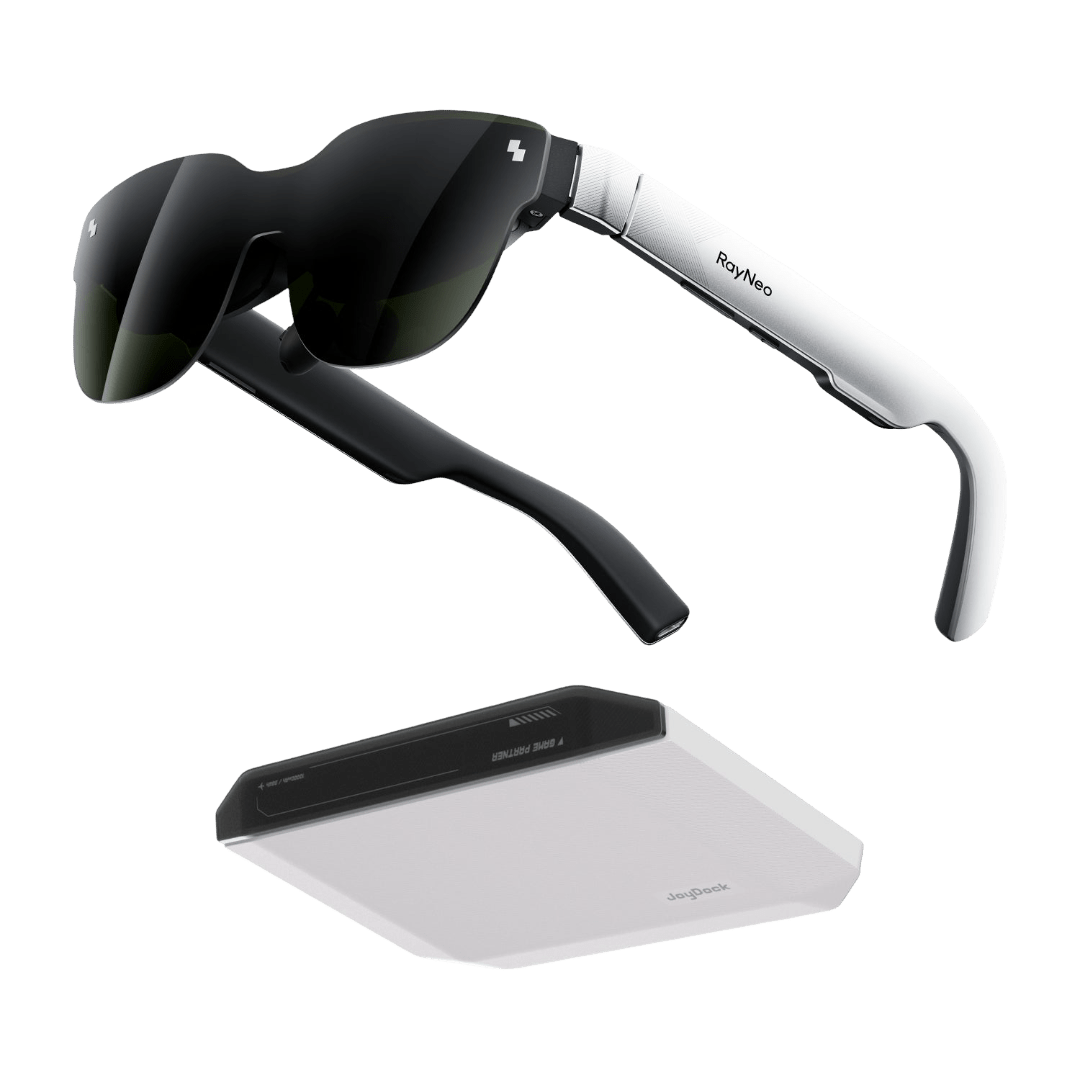
USB-C is the standard connection across most modern devices. Good accessory support matters too. RayNeo’s Pocket TV and JoyDock make it easier to connect AR glasses to devices such as the Nintendo Switch or consoles with an HDMI connection without cable clutter or having to worry about battery too much.
The question “what are the best AR glasses?” doesn’t have a single, universal answer. The right choice depends on how you actually plan to use them. Gamers benefit most from HDR support and high refresh rates, like those found in RayNeo Air 4 Pro. Professionals need stable multi-window software and low-latency tracking, where platforms such as XREAL’s ecosystem stand out. For first-time buyers, budget-friendly options like XREAL Air 2 cover the fundamentals without premium pricing.

When evaluating the best AR glasses 2026 has to offer, prioritize brightness if you work or travel in changing light conditions, and always confirm compatibility with the devices you already own. The market continues to evolve, but today’s best AR glasses 2026 lineup already delivers practical, everyday value when features are matched thoughtfully to real-world use.
Not in the way most people think. In 2026, many AR glasses use “4K-equivalent” language, which usually refers to a high PPD (Pixels Per Degree) that looks similar to a 4K TV at viewing distance. True native 4K per eye is still limited to bulky, high-end VR headsets, not slim AR glasses.
Most AR glasses draw power from the connected device, typically causing a 15-20% faster battery drain on systems like the Steam Deck or laptops. Standalone models such as the RayNeo X3 Pro AI+AR glasses usually last about 30-60 minutes during heavy AR use, or up to 5 hours for lighter tasks.
Yes, but it depends on the console. USB-C devices like the Steam Deck work plug and play while some others require an adapter. Models such as the RayNeo Air 4 Pro are optimized for USB-C connections and work smoothly with modern gaming setups when paired correctly.
Some are. Models designed for productivity and balanced weight distribution can be worn for long sessions, but eye breaks still matter. A short 5-minute break every hour helps reduce eye strain caused by fixed focal distance, even with well-tuned optics.
Brightness makes the difference. High nit displays perform best outdoors. RayNeo models are strong here; the X3 Pro’s 6,000-nit MicroLED can remain visible in direct sunlight, while the Air 4 Pro’s high-nit Micro-OLED works well with light-blocking accessories for improved contrast.
Only certain Smart AR models can. Glasses like the RayNeo X3 Pro include onboard processors and an operating system, allowing apps to run natively. Most other AR glasses act as wearable displays and require a phone, laptop, or console to function.





Share:
Best Smart Glasses 2026: What Should You Check Before You Buy?
Oakley Meta HSTN Smart Glasses: Are There Better Alternatives?