AI glasses are quickly changing how we interact with technology by bringing digital assistance directly into our everyday lives. Equipped with features like AI-powered assistants, cameras, sensors, and advanced displays, these wearable devices can help with answering questions, translating languages, capturing moments, and accessing information hands-free.
As more models enter the market, it can be difficult to know which options truly deliver useful features and reliable performance. This guide explores the best AI glasses and explains the factors that matter most, including AI functions, AR capabilities, display quality, comfort, battery life, and connectivity. It also highlights how to match different designs to your daily routine.
Key Takeaways
- AI glasses go beyond traditional smart glasses by combining artificial intelligence, cameras, sensors, and connectivity to provide real-time assistance, translations, and hands-free interactions.
- The best AI glasses should offer useful AI features, suitable displays, comfort, dependable battery life, and strong connectivity for everyday use.
- Camera-free designs such as RayNeo iO focus on in-view assistance, live translation, everyday productivity, and privacy without visual recording.
What Makes AI glasses Different from Regular Smart Glasses?
AI glasses are a more advanced type of smart glasses that combine wearable hardware with artificial intelligence. While regular smart glasses mainly focus on basic features like audio, notifications, and hands-free photo or video capture, AI glasses add intelligent assistance and real-time interactions.
Many AI glasses include cameras, microphones, open-ear speakers, and smartphone or cloud connectivity. These features allow users to ask questions, translate languages, identify objects, capture first-person photos and videos, make calls, and access information without reaching for a phone.
Some models also include built-in displays for navigation, messages, and visual responses. In comparison, regular smart glasses typically provide fewer interactive features and may rely more on connected devices. However, not every AI model has a camera, so the actual feature set is important to check.
What Makes the Best AI glasses Worth Buying?
Choosing the best AI glasses requires more than looking at smart features alone. The right pair should combine powerful AI capabilities, immersive displays, reliable performance, and everyday comfort. Understanding these key factors can help you find glasses that deliver real value.
Look for Powerful AI Features and Real-Time Assistance
A powerful AI assistant is one of the key features that separates advanced AI glasses from traditional smart eyewear. With multimodal AI, some glasses can understand voice commands, recognize what you see, and provide context-aware responses.
Users can ask questions, summarize information, identify objects, translate signs, or get assistance during daily tasks.
Consider whether voice interactions are accurate in noisy settings, which languages are supported, and whether an internet connection is required. Real-world reliability is more useful than an impressive feature list alone.
Prioritize Display Quality and AR Capabilities
Display quality plays an important role in how useful AI glasses feel in everyday situations. Some models use heads-up displays (HUDs) to show simple information like notifications, text, or directions, while advanced AR glasses can overlay interactive 3D digital content onto the real world.
When choosing the best AI glasses, compare display clarity, visibility in daylight, field of view, and how steadily visuals stay positioned as you move. A compact display can be preferable for discreet prompts; richer spatial visuals are better for interactive AR tasks.
Consider Comfort, Battery Life, and Everyday Usability
Comfort and battery life are essential factors when choosing AI glasses for daily use. Since these devices combine processors and other hardware into compact frames, battery capacity and weight can be limited. Actual endurance depends on how often you use translation, navigation, displays, and AI assistance.
A lightweight design, comfortable nose pads, secure fit, and convenient charging arrangement can make glasses easier to wear throughout the day. Check whether stated battery life describes intermittent everyday use or continuous operation of demanding features.
Check Camera, Audio, and Connectivity Features
Camera, audio, and connectivity features determine how practical AI glasses are for everyday use. A camera can capture photos and videos from your point of view, while built-in speakers and microphones support calls, voice commands, and AI interactions. Reliable wireless connectivity matters for syncing with smartphones and accessing smart features.
However, a camera-free design can be more appropriate in privacy-sensitive environments. Consider microphone quality, permission controls, compatibility with your phone, and how data is handled before selecting a model.
How to Choose the Best AI glasses for Your Lifestyle?
Choosing the right AI glasses depends on your needs, daily activities, and budget. Consider these key factors before making a decision:
- Define your main purpose: Decide whether you need AI glasses for productivity, travel, entertainment, accessibility, or everyday assistance.
- Consider your budget: Basic models may focus on AI and audio features, while advanced options with displays and AR capabilities usually cost more.
- Prioritize comfort and fit: Choose a lightweight frame style that feels comfortable for extended use and matches your preferences.
- Check prescription compatibility: If you need corrective lenses, make sure the glasses support prescription options before buying.
- Compare features: Evaluate AI capabilities, display quality, battery life, cameras, and connectivity to find the right match for your lifestyle.
For the best AI glasses 2026 searches, it helps to decide which trade-offs you can accept. A device optimized for continuous visual prompts is not necessarily the same as one built around immersive AR or photography.
Try on the frame if possible and confirm return policies, software compatibility, and local language availability.
Privacy, Software Support, and Long-Term Value
Hardware specifications tell only part of the story. Before purchasing, review how the glasses process voice requests, whether images or recordings are stored, and which controls are available for permissions and data deletion. A camera-free design may suit meetings or environments where recording is unwelcome.
Also examine software updates, app support, and regional service availability. AI features can depend on cloud access or subscriptions, and language availability may differ by location. Over time, dependable updates and compatibility may contribute more to everyday value than a long list of features you rarely use.
RayNeo iO AI glasses for Everyday Productivity and Privacy
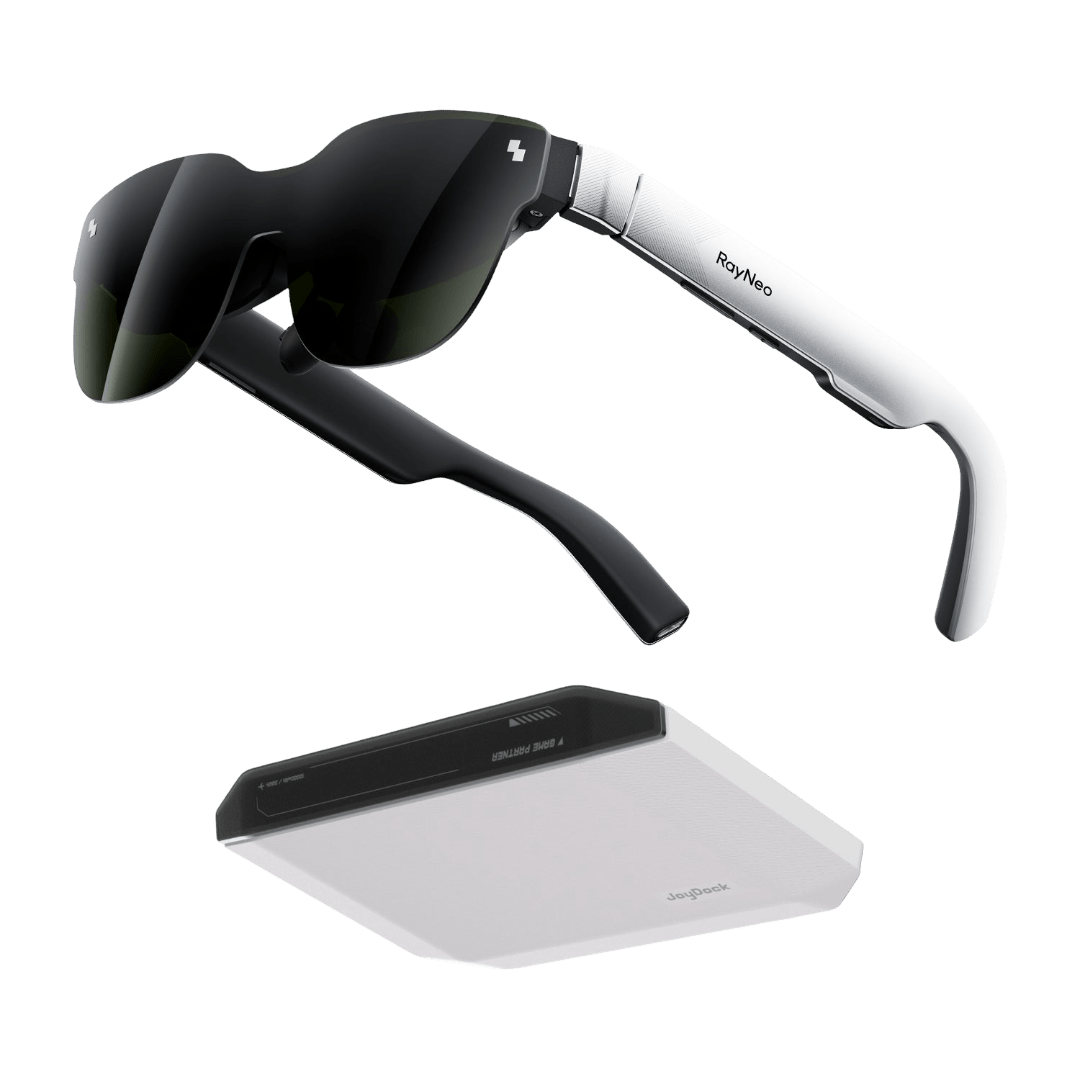
For a discreet, camera-free design, RayNeo iO AI glasses offer a practical option. The RayNeo iO Smart Glasses combine hands-free AI assistance with a transparent 33-inch virtual display for notifications and essential information. At just 33g, they are designed for comfortable wear during work, travel, and daily routines.
- Display: 33-inch transparent virtual display for notifications, AI assistance, and essential information.
- Weight and optics: 33g frame with Blue Lake optics and 97% light transmittance for an unobstructed view.
- Translation: Real-time translation support across 55 languages.
- Productivity: Automatic meeting notes, an invisible teleprompter, and Lifelog tools.
- Privacy: Camera-free design with on-device data anonymisation before information leaves the glasses.
- Battery and durability: Up to two days of everyday use and IP54 dust and water resistance.
With up to two days of everyday use and IP54 dust and water resistance, iO may suit users who want quick access to information without recording their surroundings. Those who prioritize immersive spatial overlays or photo capture should instead compare devices designed specifically for those tasks.
Compare the broader range of RayNeo AI glasses to see which balance of display, AI assistance, privacy, and AR features better fits your routine.
Conclusion
The future of wearable technology is becoming more intelligent, and AI glasses are helping make digital assistance easier to access. The best AI glasses combine practical AI functions, comfortable design, clear information displays, and dependable connectivity. Some prioritize immersive AR, while others focus on privacy and lightweight everyday productivity.
If you are comparing the best AI glasses 2026, begin with the tasks you perform most often rather than the longest feature list. Check battery expectations, supported languages, prescription options, software compatibility, and recording controls. A thoughtful comparison will help you choose a useful, comfortable everyday device.
FAQs
Can AI glasses Replace Smartphones?
Not yet. While the best AI glasses can handle hands-free tasks like navigation, translations, notifications, and voice assistance, they still rely on smartphones or other connected services for many functions. Setup, messaging, payments, and app availability vary by device. They are useful companions rather than complete smartphone replacements.
Are AI glasses Good for Watching Movies and Videos?
Some display-equipped AI glasses can show video on a virtual screen, but viewing experiences vary considerably. Products designed for immersive entertainment differ from glasses primarily intended for brief notifications or translation. Check display specifications and supported content connections before choosing eyewear for watching movies.
Do All AI glasses Have a Built-In Display?
No, not all AI glasses have built-in displays. Some models rely on cameras, speakers, microphones, and AI assistants to provide smart features without visual overlays. However, display-equipped AI glasses can project information directly into the user's view, enabling features like navigation, notifications, translations, and augmented reality experiences.
What Should I Look for in the Best AI glasses 2026?
Prioritize the features you will use most: reliable AI assistance, a comfortable fit, suitable display visibility, practical battery life, phone compatibility, and transparent privacy controls. If you need live translation or navigation, confirm language coverage and regional support rather than assuming every device offers the same functions.




AI glasses are quickly changing how we interact with technology by bringing digital assistance directly into our everyday lives. Equipped with features like AI-powered assistants, cameras, sensors, and advanced displays, these wearable devices can help with answering questions, translating languages, capturing moments, and accessing information hands-free.
As more models enter the market, it can be difficult to know which options truly deliver useful features and reliable performance. This guide explores the best AI glasses and explains the factors that matter most, including AI functions, AR capabilities, display quality, comfort, battery life, and connectivity. It also highlights how to match different designs to your daily routine.
Key Takeaways
What Makes AI glasses Different from Regular Smart Glasses?
AI glasses are a more advanced type of smart glasses that combine wearable hardware with artificial intelligence. While regular smart glasses mainly focus on basic features like audio, notifications, and hands-free photo or video capture, AI glasses add intelligent assistance and real-time interactions.
Many AI glasses include cameras, microphones, open-ear speakers, and smartphone or cloud connectivity. These features allow users to ask questions, translate languages, identify objects, capture first-person photos and videos, make calls, and access information without reaching for a phone.
Some models also include built-in displays for navigation, messages, and visual responses. In comparison, regular smart glasses typically provide fewer interactive features and may rely more on connected devices. However, not every AI model has a camera, so the actual feature set is important to check.
What Makes the Best AI glasses Worth Buying?
Choosing the best AI glasses requires more than looking at smart features alone. The right pair should combine powerful AI capabilities, immersive displays, reliable performance, and everyday comfort. Understanding these key factors can help you find glasses that deliver real value.
Look for Powerful AI Features and Real-Time Assistance
A powerful AI assistant is one of the key features that separates advanced AI glasses from traditional smart eyewear. With multimodal AI, some glasses can understand voice commands, recognize what you see, and provide context-aware responses.
Users can ask questions, summarize information, identify objects, translate signs, or get assistance during daily tasks.
Consider whether voice interactions are accurate in noisy settings, which languages are supported, and whether an internet connection is required. Real-world reliability is more useful than an impressive feature list alone.
Prioritize Display Quality and AR Capabilities
Display quality plays an important role in how useful AI glasses feel in everyday situations. Some models use heads-up displays (HUDs) to show simple information like notifications, text, or directions, while advanced AR glasses can overlay interactive 3D digital content onto the real world.
When choosing the best AI glasses, compare display clarity, visibility in daylight, field of view, and how steadily visuals stay positioned as you move. A compact display can be preferable for discreet prompts; richer spatial visuals are better for interactive AR tasks.
Consider Comfort, Battery Life, and Everyday Usability
Comfort and battery life are essential factors when choosing AI glasses for daily use. Since these devices combine processors and other hardware into compact frames, battery capacity and weight can be limited. Actual endurance depends on how often you use translation, navigation, displays, and AI assistance.
A lightweight design, comfortable nose pads, secure fit, and convenient charging arrangement can make glasses easier to wear throughout the day. Check whether stated battery life describes intermittent everyday use or continuous operation of demanding features.
Check Camera, Audio, and Connectivity Features
Camera, audio, and connectivity features determine how practical AI glasses are for everyday use. A camera can capture photos and videos from your point of view, while built-in speakers and microphones support calls, voice commands, and AI interactions. Reliable wireless connectivity matters for syncing with smartphones and accessing smart features.
However, a camera-free design can be more appropriate in privacy-sensitive environments. Consider microphone quality, permission controls, compatibility with your phone, and how data is handled before selecting a model.
How to Choose the Best AI glasses for Your Lifestyle?
Choosing the right AI glasses depends on your needs, daily activities, and budget. Consider these key factors before making a decision:
For the best AI glasses 2026 searches, it helps to decide which trade-offs you can accept. A device optimized for continuous visual prompts is not necessarily the same as one built around immersive AR or photography.
Try on the frame if possible and confirm return policies, software compatibility, and local language availability.
Privacy, Software Support, and Long-Term Value
Hardware specifications tell only part of the story. Before purchasing, review how the glasses process voice requests, whether images or recordings are stored, and which controls are available for permissions and data deletion. A camera-free design may suit meetings or environments where recording is unwelcome.
Also examine software updates, app support, and regional service availability. AI features can depend on cloud access or subscriptions, and language availability may differ by location. Over time, dependable updates and compatibility may contribute more to everyday value than a long list of features you rarely use.
RayNeo iO AI glasses for Everyday Productivity and Privacy
For a discreet, camera-free design, RayNeo iO AI glasses offer a practical option. The RayNeo iO Smart Glasses combine hands-free AI assistance with a transparent 33-inch virtual display for notifications and essential information. At just 33g, they are designed for comfortable wear during work, travel, and daily routines.
With up to two days of everyday use and IP54 dust and water resistance, iO may suit users who want quick access to information without recording their surroundings. Those who prioritize immersive spatial overlays or photo capture should instead compare devices designed specifically for those tasks.
Compare the broader range of RayNeo AI glasses to see which balance of display, AI assistance, privacy, and AR features better fits your routine.
Conclusion
The future of wearable technology is becoming more intelligent, and AI glasses are helping make digital assistance easier to access. The best AI glasses combine practical AI functions, comfortable design, clear information displays, and dependable connectivity. Some prioritize immersive AR, while others focus on privacy and lightweight everyday productivity.
If you are comparing the best AI glasses 2026, begin with the tasks you perform most often rather than the longest feature list. Check battery expectations, supported languages, prescription options, software compatibility, and recording controls. A thoughtful comparison will help you choose a useful, comfortable everyday device.
FAQs
Can AI glasses Replace Smartphones?
Not yet. While the best AI glasses can handle hands-free tasks like navigation, translations, notifications, and voice assistance, they still rely on smartphones or other connected services for many functions. Setup, messaging, payments, and app availability vary by device. They are useful companions rather than complete smartphone replacements.
Are AI glasses Good for Watching Movies and Videos?
Some display-equipped AI glasses can show video on a virtual screen, but viewing experiences vary considerably. Products designed for immersive entertainment differ from glasses primarily intended for brief notifications or translation. Check display specifications and supported content connections before choosing eyewear for watching movies.
Do All AI glasses Have a Built-In Display?
No, not all AI glasses have built-in displays. Some models rely on cameras, speakers, microphones, and AI assistants to provide smart features without visual overlays. However, display-equipped AI glasses can project information directly into the user's view, enabling features like navigation, notifications, translations, and augmented reality experiences.
What Should I Look for in the Best AI glasses 2026?
Prioritize the features you will use most: reliable AI assistance, a comfortable fit, suitable display visibility, practical battery life, phone compatibility, and transparent privacy controls. If you need live translation or navigation, confirm language coverage and regional support rather than assuming every device offers the same functions.
Share:
Leave a Comment
We'd love to hear your thoughts. Comments are reviewed before publication.