
Table of Contents
For most average users, smart glasses are still transitioning from a fun novelty to a daily necessity this year. However, for heavy content consumers, remote workers, frequent travelers, and tech enthusiasts, 2026 is a solid time to jump in. Buying a $200 pair of smart glasses might be a worse deal than spending $400 if you never wear them a second time. The smart glasses market in 2026 is highly fragmented. This article helps you understand the core differences in the category. We will help you avoid common buyer's remorse.
What Are Smart Glasses in 2026
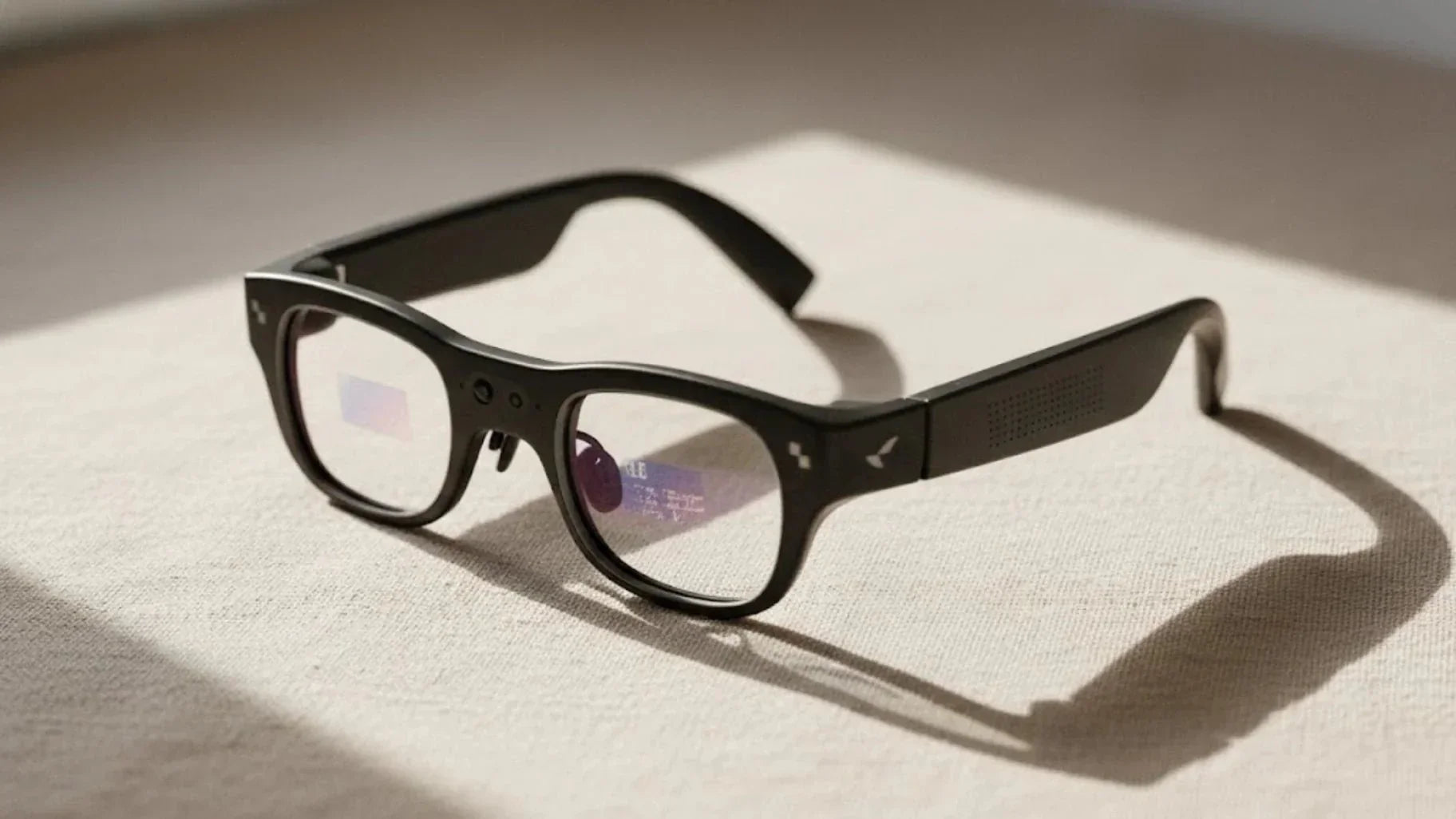
Smart glasses on the market today have undergone a generational upgrade in hardware architecture and interaction. However, many people still think of them as just small glowing screens. In reality, truly mature smart glasses now require a perfect balance of size, weight, heat dissipation, and computing power. The design logic is closer to a spatial computing terminal shrunk down to the size of eyewear.
Definition and Types of Smart Glasses
To understand the modern market, defining what are smart glasses in 2026 reveals they are wearable terminals with independent computing or high-bandwidth connectivity. They overlay digital content onto your field of vision and support voice, gesture, or head-posture interactions.
They are generally categorized by form and function into several types.
-
Display AR Glasses: These products use high-brightness micro-displays and optical waveguides. They connect to phones, PCs, or handheld consoles via Type-C cables or wireless streaming to create a virtual screen of about 100 to 150 inches in front of you. Standard specs include 1080p resolution or higher with brightness between 500 and 1200 nits. They are excellent for media consumption and mobile work.
-
Computing AI Glasses: These are closer to full spatial computing devices. They feature built-in SoCs, cameras, and sensor arrays. They run AI assistants, AR apps, and spatial interactions locally or in the cloud. These models support 6-degree-of-freedom head tracking with a field of view typically between 25 and 40 degrees. They focus more on productivity and professional use.
-
Industrial Smart Glasses: These focus on warehousing, inspection, remote maintenance, and medical visualization. They prioritize protection ratings, hot-swappable batteries, and enterprise system integration. While they may not look like everyday eyewear, they require high environmental awareness and stability for long-term wear.
Key Technologies Behind Modern Smart Glasses
If we look inside, the improved usability of this generation stems from the maturity of several core technologies.
-
Optical Display and Waveguide Technology
Mainstream consumer smart glasses use MicroLED or MicroOLED displays. Light is coupled into the lenses through diffractive or reflective waveguides to form floating images. For example, our RayNeo X3 Pro AI+ AR glasses achieve 640x480 binocular display with an average brightness of 3500 nits and peak levels reaching 6000 nits. This ensures the display remains visible even in bright outdoor light. For entertainment-focused models like the RayNeo Air 4 Pro AR glasses, 1080p resolution, 120Hz refresh rate, and HDR10 support are now standard for high-end versions.
-
Computing and AI Inference
The new generation of smart glasses uses dedicated AR platform chips. These support real-time gesture recognition, object identification, and natural language interaction.
-
Sensors and Interaction Systems
To achieve 6-degree-of-freedom tracking, smart glasses require IMUs, ambient light sensors, and binocular or multi-lens cameras. Spatial positioning algorithms keep virtual content fixed in the real world. Interaction has evolved from early touchpads to voice and head gestures. Some models have added hand tracking or ring controllers for cursor control and clicking.
-
Connectivity and Ecosystem
There are two main connectivity paths today. The first is a semi-independent terminal with built-in Wi-Fi and Bluetooth. It can access cloud AI services directly or serve as an extended screen for a PC or phone. The second relies on USB-C DisplayPort Alt mode or private wireless protocols to stream from phones and tablets. You should check device compatibility before buying.

Why Smart Glasses Are Gaining Popularity
Understanding whether smart glasses are worth buying requires looking at the bigger picture. Why have they suddenly become so popular over the last two years? Based on our observations, this is the result of three trends converging in 2026: underlying AR hardware, AI capabilities, and user content consumption habits.
Growth of AR and AI Integration
The fusion of AI and AR is the core trend for smart glasses in 2026. Spatial computing devices need to understand the environment, and AI makes that understanding much smarter. We have evolved from simple, fixed UI overlays to real-time responses to scenes, objects, and tasks.
On the hardware side, incorporating SoCs like the Snapdragon AR1 allows glasses to perform local visual reasoning and voice recognition. This reduces the latency that comes from relying entirely on a phone or the cloud. On the software side, smart assistants have upgraded from answering basic questions to actively helping users schedule their days, generate content, and identify environmental text. When you add real-time translation and navigation interfaces, users feel for the first time that putting on glasses is like opening a portable AI terminal.
From a data perspective, the AR and VR smart glasses market is expected to approach 25 billion dollars in 2026. It continues to expand at a compound annual growth rate of over 17%. This type of growth is very rare in consumer electronics. It signifies that the combination of AI and AR has gained clear commercial validation.
Increasing Demand for Hands-Free Devices
Another driving factor comes from user habits themselves. Over the past decade, phone screens got bigger, occupying both hands and making a head-down posture the norm. More users are starting to reflect on this. They want to free up their hands and save their necks during commutes, workouts, or chores. This pain point comes up in almost every offline event we host.
Smart glasses offer a new solution. You can hold the handrails on a subway with both hands while a 120 inch large screen floats in your field of vision. You can see recipe steps just by looking up while cooking. You can see navigation arrows overlaid on real roads while walking, without constantly looking down at your phone. Feedback from our community has shifted from initial curiosity to comments like, I realized I no longer need to hold my phone to check my route while out for a run.
Expansion of Everyday Use Cases
As hardware nears maturity, the true value of smart glasses is increasingly determined by what they can actually do. We are seeing several use cases move quickly from niche to mainstream.
First is mobile movie watching and content consumption. More users view smart glasses as a foldable portable cinema. They watch streaming media or play console games on planes, in bedrooms, or even in office break areas, reducing reliance on traditional TVs and projectors. Second is remote work and multi-screen productivity. Users who handle documents, code, or charts for long hours use glasses to expand the number of virtual monitors. This allows them to set up three to five virtual screens in a limited physical space. Third is navigation, translation, and information alerts during commutes and travel, replacing the need to frequently unlock a phone.
What Can Smart Glasses Do Today
In 2026, we view smart glasses as wearable big-screen AI devices. They offer practical capabilities for entertainment, travel, work, and immersion. To show what users can do daily, we will focus on media, translation, navigation, productivity, and gaming. This avoids vague talk about feature counts.
Entertainment and Media Viewing
Media consumption is one of the most mature use cases with high user satisfaction. Glasses with 1080p, 120Hz, and HDR10 support can project a virtual TV. This screen feels like 120 to 150 inches at a distance of 4 to 6 meters. The detail and contrast are great for streaming and handheld gaming.
With a wired connection, glasses act as an external screen for handhelds like the Steam Deck, Switch, or ROG Ally. Many players find it hard to go back to small screens after experiencing this portable IMAX feel. High-end models now use multi-unit stereo speakers. Some even feature collaborative tuning with audio brands. This is a huge leap over early products.
In our experience, eye fatigue after two hours of HD video comes from the content itself, not the display. This is due to high pixel density, stable refresh rates, and good optical design. For users in hotels or quiet homes, smart glasses are the best solution for an invisible big screen.
Real-Time Translation and Navigation
Combining AI with cameras makes translation and navigation feel intuitive. Models with front cameras and AI translation modules overlay text on foreign signs, menus, and documents. You no longer need to hold up your phone. The experience feels much more natural.
For navigation, 6DOF tracking and spatial anchors place arrows and street names directly on the road or buildings. This helps prevent wrong turns. Feedback shows two main benefits. Walking at night is safer without staring at a phone. Also, finding subway entrances in a new city while carrying luggage is much easier.

Productivity and Remote Work Support
Mobile work and remote collaboration are key growth areas for smart glasses in 2026. When connected to a PC or Mac, high-end glasses provide 2 to 3 virtual windows. You can arrange code editors, browsers, and documents in these windows. This allows for a multi-screen setup even when desk space is limited.
With an AI assistant, you can see meeting summaries and email drafts right in front of you. You do not have to switch between windows constantly. For those in cafes or co-working spaces, this portable multi-screen workstation is very useful. It removes the need for large monitors or big desks.
For remote work, glasses with cameras and spatial tracking can stream your view to colleagues. This lowers communication costs for tasks like remote inspections, training, and design reviews.
Gaming and Immersive Experiences
Smart glasses take a different path than traditional VR headsets for gaming. They do not block out the real world. Instead, they act like a large gaming monitor you can pull up anywhere.
When connected to a handheld or PC, players get borderless HD visuals while staying aware of their surroundings. This is better for users who get motion sickness or dislike enclosed headsets. Some 6DOF models can run light AR games. These overlay virtual elements on tables or walls. While not as deep as high-end VR, they offer a fun, everyday experience.
For most players, the biggest value of smart glasses in 2026 is portability. They bring console gaming and cinematic experiences from the living room to planes, hotels, and beds in a light, natural way.
Are Smart Glasses in 2026 Worth It? Pros & Cons to Consider
Whether they are worth it depends on the specific problem you want to solve. Users who imagine smart glasses as a universal replacement for every device will feel a gap. However, those who use them as a portable big screen and smart assistant find them very valuable.
We will break down the pros and cons to help you decide.
Pros of Smart Glasses in 2026
Portability and Convenience
Smart glasses offer a clear advantage in portability. With a weight under 80 grams, they can replace external monitors, tablets, or hotel TVs. They take up almost no space in a bag.
Frequent flyers or business travellers can carry less gear. Their bags are lighter because they do not need an extra monitor or stand. You can pull the device out of its case and plug in a USB-C cable. In seconds, you have a 120-inch or larger virtual screen. This is much easier than setting up a projector or finding a TV.
Immersive Viewing Experience
High contrast micro-displays and high refresh rates make smart glasses feel like a private cinema. 1080p resolution with HDR10 offers better dark details and color transitions than a phone.
Immersion is key. While the screen is virtual, it looks like a 100-inch TV. Users often describe it as a giant screen in bed. This happens without disturbing others. It is perfect for night use or shared spaces.
Hands-Free Interaction
One underrated benefit is freeing up your hands. Voice control, head movements, and hand tracking let you answer calls or check navigation without a phone. This is valuable while cooking, working out, or holding a baby. The path to view info is shorter than on a phone. It makes better use of small breaks.
Cons of Smart Glasses in 2026
Battery Life Limitations
Battery life is a major weakness. Standalone models typically last 4 to 5 hours. Usage drops when using cameras, AI features, or high brightness.
Display-only glasses rely on external power. They do not have their own battery, but they drain your phone or handheld console. Long movies often require a power bank. They work for a commute, but they cannot handle high-intensity use all day.
Price vs Value Concerns
Price stops smart glasses from reaching everyone. When researching how much are smart glasses average cost, you'll find that entry-level models are relatively accessible, but high-end versions with spatial tracking can cost as much as a top-tier phone or tablet. Some users might prefer a better TV or monitor for the same money. For students on a budget, buying glasses might mean skipping other gear. We suggest defining your needs before looking at the price.
Limited App Ecosystem
The app ecosystem is far behind phones. Many apps only run as screen mirrors. Native software that uses AR is limited.
This is clear on AI glasses. Users want context-aware assistance, but they mostly rely on a few built-in apps. Third-party developers are still finding the right models. For those who want many apps, this generation is still in its early stages.
Privacy and Social Acceptance
Built-in cameras and mics pose a challenge. Concerns focus on whether others can tell if the camera is on. People also worry about being recorded in public.
Many places like meetings and gyms have rules against recording. Wearing smart glasses can lead to conflict. Some users choose models without cameras for work. They only use camera versions when they need spatial awareness.
Any device that changes how we interact with machines needs time to adjust. We take privacy and visibility very seriously in our designs.
Who Should Buy Smart Glasses
When we talk about whether a device is worth it, we see smart glasses as a tool that must match the user. For some, it will immediately change how they work and play. For others, it might be a future device they do not need yet. Use these profiles to see if you are ready to buy.
Tech Enthusiasts and Early Adopters
For those who follow tech and love new gear, 2026 is the time to buy. Hardware is now light and reliable. Systems and apps are useful enough that you will not leave the device in a drawer after a few days. Many power users value ecosystem growth over just specs. They like exploring beta features and customizing shortcuts. If you enjoy a sense of involvement, smart glasses will be very rewarding.
Frequent Travelers and Commuters
Travelers and commuters are among the biggest beneficiaries. For those who handle emails or slide decks on planes, smart glasses and a folding keyboard create a full mobile workstation. This makes you less dependent on tiny tray tables. Commuters can read or watch media while staying aware of their surroundings. Real-time translation and navigation also make working in a foreign country much easier.
Gamers and Content Consumers
This is a core target group. For players with handhelds or gaming laptops, smart glasses expand 7 to 15 inch screens to 120 virtual inches or more. You can play PC games in bed without moving a heavy laptop. For media fans, you get the same theater experience anywhere. This is perfect for renters or people who move often.

Professionals and Remote Workers
For designers, developers, and product managers, smart glasses are productivity tools. Virtual multi-screen extensions let you have a workstation layout in a cafe. This makes remote meetings and collaborative editing much more efficient.
Final Buying Recommendations
If you consume a lot of media, work remotely, or travel often, 2026 is a good time to buy. You will see a real change in your workflow and entertainment over the next year or two.
|
Model |
Core Focus |
Key Specs |
Best For |
|
RayNeo Air 4 Pro |
Portable Big Screen |
1080p 120Hz HDR10, Micro-OLED, 1200 nits,201-inch virtual screen, 2.7 oz |
Movies, Gaming, Mobile Work |
|
RayNeo X3 Pro |
Spatial Computing & AI |
Snapdragon AR1 Gen 1, Dual Cameras, MicroLED Waveguide, 3500-6000 nits, 5h battery |
AI Tasks, Professional Apps, 6DOF Tracking |
Conclusion
Are Smart Glasses Worth It in 2026? If we must provide a simple conclusion, it is this: for heavy digital content users, remote workers, and frequent travelers, 2026 is a mature point to confidently choose smart glasses. For users who only seek occasional entertainment or have a limited budget, it may be worth waiting for another generation or two.
As a team deeply rooted in this field, we will continue to refine optics, computing power, wearing comfort, and AI capabilities. Our goal is to ensure every generation of our products blends more naturally into your daily life. We sincerely welcome you to take that step whenever the timing feels right for you. Experience firsthand how your digital life can transform once spatial computing fits inside a pair of glasses.
Are smart glasses practical for everyday use?
If your daily routine involves commuting, watching content during breaks, or remote meetings, smart glasses are already practical for everyday use. They significantly reduce the strain on your neck and arms, especially through virtual large screens and AI assistance. However, if most of your work and life happen at a fixed desk and you do not prioritize immersive screen experiences, your daily usage frequency might be lower.
Do smart glasses replace smartphones or laptops?
In 2026, smart glasses will act more as an expansion and extension of phones and computers rather than a total replacement. They can reduce how often you pick up your phone in many scenarios, such as checking notifications, navigating, or performing quick searches. They can also help laptops by expanding into multiple virtual screens. But for photography, heavy typing, and intense productivity work, phones and computers remain essential.
How long do smart glasses last on a single charge?
For models with built-in batteries, independent processing, and cameras, mainstream products currently offer about 4 to 5 hours of continuous use under typical conditions. This varies based on brightness, camera usage, and how often AI functions are called. For display-only glasses that rely on external power, the device itself uses relatively little power, so the limitation usually comes from the battery capacity of the connected device.
Are smart glasses improving quickly?
Based on industry data and product cycles, the pace of innovation for smart glasses has accelerated significantly over the last few years. We see steady improvements in optical brightness, display resolution, weight control, and AI capabilities. The market size is expected to reach about 25 billion dollars in 2026 and continue to grow at an annual rate of over 17%. When you buy a pair of smart glasses today, you will gain new features through software updates. At the same time, the hardware will become lighter and more natural with each generation.
Share:
Top Tech Gifts in 2026: Cool Gadgets Every Tech Lover Will Want
How Much Are Smart Glasses in 2026? Average Cost & Buying Guide