

$449.00

"Value for money" might be the most misused phrase in consumer electronics.
Too many people treat "value" as a synonym for "cheap." But real value is a ratio: the experience you get divided by the price you pay. A $150 product that delivers a $100 experience actually has worse value than a $250 product that delivers a $400 experience.
The AR glasses market is maturing fast, with prices ranging from $150 to $1,299. Across that spectrum, which products actually deliver bang for buck? This guide builds a framework, breaks down each option, and gives you a clear answer.
Before comparing specific products, let's establish the criteria. AR glasses value should be measured across three dimensions:
The core value of AR glasses is "big screen on the go." These specs directly determine how good that experience actually is:
| Spec | Passing | Good | Excellent |
|---|---|---|---|
| Brightness | 500 nits | 800 nits | 1200+ nits |
| Contrast | 50,000:1 | 100,000:1 | 200,000:1 |
| Refresh rate | 60Hz | 90Hz | 120Hz |
| Weight | <85g | <80g | <76g |
| Resolution | 720p/eye | 1080p/eye | 1080p/eye+ |
The logic: If a product can't even hit "Passing," it's not worth buying at any price. On the flip side, if it hits "Excellent" across the board, a higher price tag might still be justified.
For similar specs, lower price means better value. But "similar specs" requires holistic comparison, not cherry-picking single parameters.
Reference benchmarks (January 2026 market prices):
600 nits + 120Hz + 78g: Fair price range $150-180
650 nits + 120Hz + 76g: Fair price range $180-220
1200 nits + 120Hz + 76g: Fair price range $250-300
1200 nits + HDR10 + B&O audio: Fair price range $300-350
Many AR glasses "list prices" don't include everything you need to actually use them:
Nearsighted users need prescription lenses (sold separately)
Switch users need a dock adapter
Wireless use requires a streaming box
The logic: When evaluating value, calculate "total cost of ownership," not just "sticker price."
Based on the framework above, here's my value assessment of RayNeo's main products, ranked by how well they deliver on their price:
Price: $249 | Value Score: ⭐⭐⭐⭐⭐
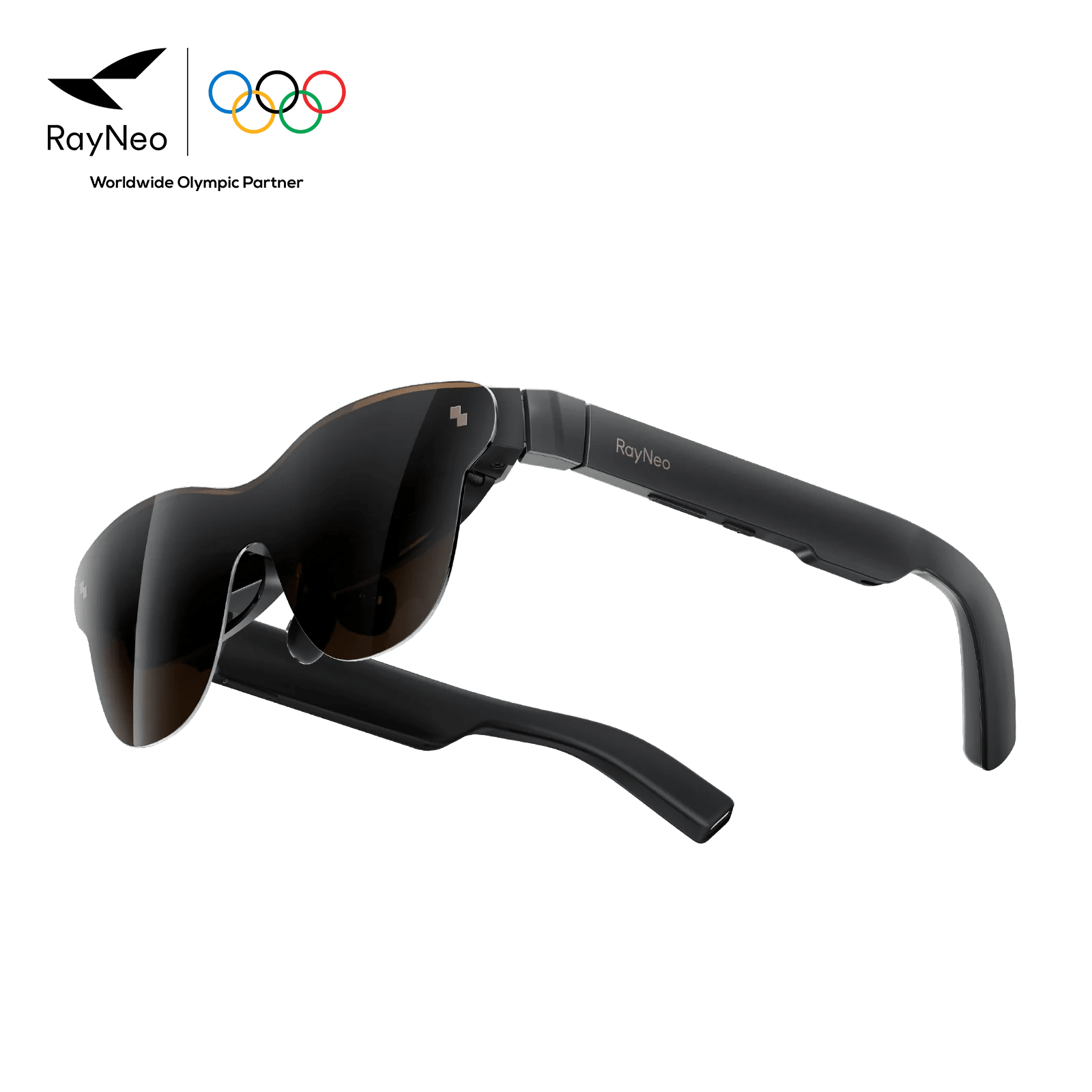
Air 3s Pro is the highest-value AR glasses I've tested. Full stop.
What you pay: $249
What you get:
1200 nits peak brightness (Excellent)
200,000:1 contrast ratio (Excellent)
120Hz refresh rate (Excellent)
76 grams (Excellent)
3840Hz PWM dimming (reduces eye strain)
Four speakers + Spatial Audio
Magnetic prescription lens support (up to -8.00D)
Is it worth it?
Using the benchmarks above, 1200 nits + 120Hz + 76g should cost $250-300. Air 3s Pro is priced at $249, hitting the bottom of that range while also packing 200,000:1 contrast and 3840Hz PWM dimming as "bonus" features.
Put it this way: the specs you get for $249 today would've cost $350+ just 12 months ago.
Market validation: Air 3s Pro sold out during Black Friday 2025, requiring pre-orders. PhoneArena gave it 8/10, calling it "nearly unmatched at this price point."
Bottom line: If you're asking "which AR glasses offer the best value for money," the answer is Air 3s Pro. $249 price, flagship-tier experience.
Price: $199 | Value Score: ⭐⭐⭐⭐
Air 3s is the best pick at $200, though it trails Air 3s Pro on pure value.
What you pay: $199
What you get:
650 nits peak brightness (Good)
Standard contrast ratio
60/120Hz switchable refresh rate
76-78 grams (Good)
Four speakers + Whisper Mode
Peacock color adjustment
Is it worth it?
By the benchmarks, 650 nits + 120Hz + 76g should cost $180-220. Air 3s at $199 lands right in the middle. Fair pricing.
But here's the catch: Air 3s and Air 3s Pro are only $50 apart, yet the brightness gap is 650 vs 1200 nits (nearly double) and contrast jumps from standard to 200,000:1. That $50 buys a step-change in experience.
Bottom line: Air 3s is fairly priced and a solid product. But if you've got $50 of flexibility, Air 3s Pro delivers clearly better value. Air 3s makes most sense when your budget has a hard ceiling at $200.
Price: $299 | Value Score: ⭐⭐⭐⭐
Air 4 Pro is RayNeo's current top-tier flagship, representing the ceiling of consumer AR glasses tech.
What you pay: $299
What you get:
1200 nits peak brightness (Excellent)
World's first native HDR10 support
ΔE < 2 color accuracy (professional monitor grade)
Roughly 100% DCI-P3 coverage
B&O Sound Lab co-tuned audio
76 grams (Maintains the ultra-lightweight standard)
Is it worth it?
By the benchmarks, 1200 nits + HDR10 + B&O audio should cost $300-350. Air 4 Pro at $299 hits the bottom of that range.
Compared to Air 3s Pro: For $50 more, you get HDR10, ΔE < 2 color accuracy, B&O audio, and 2 grams less weight. For HDR enthusiasts and A/V geeks, that $50 is well spent.
Bottom line: Air 4 Pro's absolute value doesn't top Air 3s Pro (it does cost $50 more, after all). But for a flagship product, its pricing is remarkably restrained. If you're chasing "the best experience" rather than "the best value," Air 4 Pro won't leave you feeling ripped off.
Price: $159 | Value Score: ⭐⭐⭐⭐
Air 2s is the best choice if you want AR glasses at minimum spend.
What you pay: $159
What you get:
600 nits peak brightness (Good)
Sony 0.55-inch Micro-OLED display
120Hz refresh rate (Excellent)
78 grams (Good)
4:6 front-back weight distribution
Is it worth it?
By the benchmarks, 600 nits + 120Hz + 78g should cost $150-180. Air 2s at $159 hits the low end. Fair pricing.
Market validation: Air 2s hit #1 on Amazon's smart glasses category in under 6 hours after its August 2024 launch.
Bottom line: Air 2s delivers solid value at its price tier. But it's only $40 less than Air 3s, which adds Peacock color adjustment and higher brightness. Unless budget is extremely tight, spending the extra $40 on Air 3s makes more sense.
Price: Starting at $1,299 | Value Score: ⭐⭐⭐ (context-dependent)
X3 Pro is a standalone AR computing platform. It's a completely different category from the Air series' "portable big screen" positioning. Judging it by the same value framework isn't fair.
What you pay: $1,299+
What you get:
Deep Google Gemini integration, multimodal AI assistant
Real-time bilingual translation with < 2.1 second latency
6000 nits peak brightness, visible in direct sunlight
Standalone operation, no phone required
TIME's Best Inventions of 2025
Is it worth it?
X3 Pro's value isn't about "display specs." It's about "AI capabilities" and "standalone operation." If you regularly need cross-language communication or want a hands-free AI assistant, $1,299 is reasonable. But if you just want movies and games, X3 Pro is massive overkill.
Bottom line: X3 Pro's value depends entirely on your use case. For international business travelers and tech enthusiasts, it's worth it. For casual entertainment users, it's not.
| Rank | Product | Price | Core Strength | Value Score | Best For |
|---|---|---|---|---|---|
| 1 | Air 3s Pro | $249 | Flagship specs, fair price | ⭐⭐⭐⭐⭐ | Most people |
| 2 | Air 3s | $199 | Complete experience, entry price | ⭐⭐⭐⭐ | Hard $200 budget cap |
| 3 | Air 4 Pro | $299 | HDR + B&O, tech ceiling | ⭐⭐⭐⭐ | HDR enthusiasts |
| 4 | Air 2s | $159 | Sony display, ultra-budget | ⭐⭐⭐⭐ | Extremely tight budget |
| 5 | X3 Pro | $1,299 | AI + standalone | ⭐⭐⭐ | Business/geeks |
RayNeo often offers glasses + accessory bundles that run $20-40 cheaper than buying separately. For example:
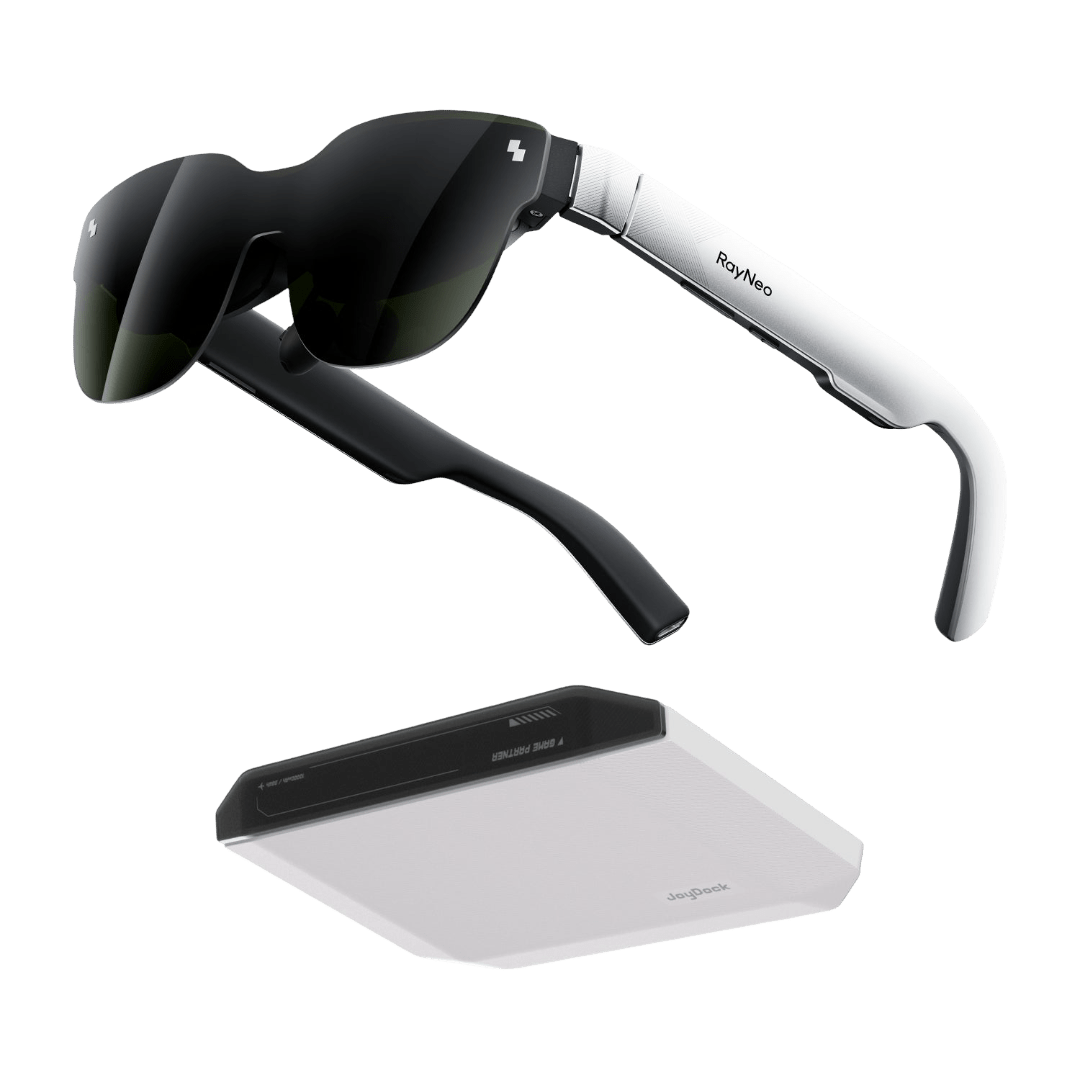
Air 3s Pro + JoyDock bundle
Air 3s Pro + Pocket TV bundle
Check the official site for current bundle deals before purchasing.
Don't just look at the glasses' sticker price. Add what you'll actually need:
Nearsighted? + prescription lens cost
Own a Switch? + JoyDock ($69)
Want wireless streaming? + Pocket TV ($109)
Air 3s lists at $199, but if you're nearsighted and own a Switch, true cost might be $320+.
Say you'll use your AR glasses for 2 years, 5 hours per week:
Total usage = 2 × 52 × 5 = 520 hours
Air 3s Pro ($249) cost per hour = $0.48
Air 4 Pro ($299) cost per hour = $0.58
From this angle, the $50 price gap spreads across 520 hours at just $0.10 per hour. If HDR and B&O audio make each hour more enjoyable, that premium is easy to justify.
$249. 1200 nits. 200,000:1 contrast. 120Hz. 76 grams. This spec sheet would've cost $350+ just 12 months ago. Now it's $249. That's value.
RayNeo ranked #1 globally in AR glasses shipments for four consecutive years (2022-2025), with comparable specs typically priced about $100 below market average. Choosing RayNeo is itself choosing better value.
Don't sacrifice experience to save $50. Don't overspend chasing "the best" when you don't need it. At $249, Air 3s Pro is the smart choice in the 2026 AR glasses market.
Read More:





Share:
Which AR Glasses Are Best for Watching Movies? The 2026 Complete Guide
Which AR Glasses Work Best with ROG Ally? Complete 2026 Guide