

$449.00


When the match between frames and face shape improves, subjective ratings of appearance can rise by an average of two levels. Issues like skin indentations and frames slipping during long-term wear also decrease significantly. In this article, we will cover face shape identification, frame styles for each type, the differences between smart glasses and traditional frames, and how to shop and try them on online.
Most users' face shapes can be categorized into five common types based on forehead width, cheekbone prominence, jawline shape, and the ratio of face length to width. There are no absolute boundaries between these five types. Many users fall somewhere in between, so we will provide a more practical assessment method later to help you identify your dominant face shape.
If you look in the mirror and notice a slightly wider forehead, a slightly narrower chin, and a face length about 1.3 to 1.5 times the width, without any sharp angles, you likely have an oval face. In our internal modelling, we view this as a benchmark shape with high visual balance. The transitions between the forehead, cheekbones, and jaw are smooth, offering the most flexibility for frame selection. The main advantage of an oval face is that it can handle most geometric shapes. You only need to ensure the frame height isn't too tall, which might overwhelm the mid-face and disrupt your natural proportions.
A round face is typically characterized by a length nearly equal to its width, soft forehead and jawline boundaries, and noticeable cheekbone width. When observing real users wearing smart glasses, we noticed two main pain points: frames that are too circular make the face look rounder, and lenses that are too short vertically make the face appear wider. For round faces, the goal of a frame is to add vertical lines and angularity. This visually elongates the face and helps pull your features toward the center rather than letting them look spread out.
Identifying a square face is usually straightforward. The jawline is nearly horizontal with distinct angles, the forehead and jaw are similar in width, and the face length-to-width ratio is close to 1 to 1.2. During our AR glasses testing with square-faced users, we found that frames with very sharp lines create too many horizontal and vertical layers. This causes visual tension, especially during video calls or while consuming content. Therefore, when choosing frames for a square face, you should intentionally look for curves and softer contours to help offset the sharpness of the jaw.
A heart-shaped face generally features a wider forehead and cheekbones with a significantly narrower chin, sometimes accompanied by high cheekbones. In our sports and outdoor testing, we noticed that heart-shaped faces often experience concentrated pressure on the nose pads or slipping behind the ears when wearing heavier smart glasses. This happens because the visual weight and center of gravity are pulled upward. For these users, frames should help balance the upper and lower widths, shifting the visual focus from the forehead back to the eyes and mid-face to reduce the sense of expansion at the top.
Diamond faces typically have prominent cheekbones with a relatively narrow forehead and chin. The silhouette follows a path that expands in the middle and narrows at the top and bottom. When testing frame fit with 3D head models, we found that diamond faces have a low tolerance for frame width and bridge height. Frames that are too narrow can pinch at the cheekbones, while frames that are too wide make the side profile look thin. If you have a diamond face, focus on how the frame fits at cheekbone height and look for top-heavy frames that can visually widen the forehead area.
In real-world scenarios, most people lack professional measuring equipment and must rely on home mirrors and smartphones. The following three methods are a recommended combination based on ease of use and accuracy. You can choose one or two of these to cross-verify your face shape.
Stand in front of a mirror in bright light. Use lipstick, a dry-erase marker, or a fingertip to trace your facial outline on the mirror surface. Focus on maintaining the true shape of your cheekbones and jawline curve. Do not tilt your chin down or open your mouth. Once finished, step back to observe the overall shape. Determine the relative relationship between the width of your forehead, the maximum width of your cheekbones, and the width of your jaw. See if it is closer to an oval, circle, square, inverted triangle, or diamond. The benefit of this method is that it helps you move past self-perception bias by using a physical outline to judge proportions. It is very user-friendly for a first-time self-test.
We need to use a front-facing photo to measure proportions. Have someone take a photo of you at eye level from a distance of about 1 to 1.5 meters to ensure there is no significant lens distortion. Then, use your phone markup tools or a simple measurement app to mark the forehead width, cheekbone width, jaw width, and face length. Compare these using pixels or grid counts. Focus on whether the cheekbones are the widest part, the difference between the jaw and forehead width, and if the face length is significantly greater than the width. While this method lacks millimeter-level precision, it is reliable enough for general face shape classification. It is especially useful for users needing to buy glasses online or select smart glasses models.
In 2026, more e-commerce platforms and smart glasses brands are offering facial analysis tools based on front-facing cameras and machine learning. These tools can directly provide face shape classifications and frame recommendations. In our testing, we found that these tools are very sensitive to lighting, facial expressions, and camera angles. Tilting your head up or down just a few degrees can cause the result to jump from an oval to a diamond shape. We recommend taking two or three photos at different times to allow the system to recognize you multiple times. Then, combine these with the mirror tracing and photo measurement results to find your most consistent face shape. Compared to a single subjective judgment, combining photo measurements with multiple virtual tool identifications can increase classification consistency by over 30%. This directly improves the success rate of frame selection.
So, what glasses fit my face shape perfectly? We will now provide precise recommendations for five specific face shapes across three dimensions: lines, width-to-height ratios, and temple structure, all integrated with real-world wearing feedback. In the context of smart glasses, frame style also affects the weight distribution of front modules, so we will address this impact throughout our explanation.
Oval faces offer the most flexibility for frame selection. When designing and recommending styles, we usually prioritize square, rectangular, and slightly angular rounded-square frames. These styles add structure to facial contours through clear horizontal and vertical lines. We suggest a frame width slightly wider than the face, with the temple connection points close to cheekbone height. This keeps overall proportions balanced and naturally draws focus to the eye area. Oval face users tend to have a higher tolerance for slightly thicker temples and front modules because weight distribution across the bridge and cheekbones is more even.
The primary goal for round faces is an elongating and slimming effect. Our extensive fit testing shows that narrow rectangular frames, aviator styles with flat top edges, and semi-rimless designs with defined upper lines effectively minimize facial width. These shapes pull visual attention toward the upper and middle areas of the face. Round frames and oversized rimless designs often exaggerate roundness. If you truly prefer round frames, choose a smaller diameter with a slightly flattened top edge to maintain vertical facial proportions through subtle detail adjustments.
Square faces benefit from frames that soften the angles of the jawline. Rounded, oval, and cat-eye frames with soft curves work best. However, frame height should not be too tall to avoid making the lower face appear heavier. During user trials, we found that when the top of the frame is slightly wider than the jaw, the sense of power in the overall silhouette is more balanced, shifting the focal point from the jaw to the eyes. For users who like a tech-focused look, geometric frames with a slight upward tilt can use angular differences to break up the horizontal strength of the jaw.
The key for heart-shaped faces is balancing a wide forehead with a narrow chin. Frames with slightly wider bottom rims and lightweight top rims work best, such as square frames with rounded bottom edges, light metal frames, and thin browline styles. Our daily wear tracking shows that when the top of the frame is too thick or heavily decorated, the visual width of the forehead is magnified, which is especially noticeable in photos and video calls. Therefore, we tend to recommend frames with slender temples and lighter upper halves to keep the focus between the eyes and cheekbones rather than at the top of the forehead.
Diamond faces require attention to detail, as you must account for both cheekbone width and a narrower forehead. We lean toward choosing oval or cat-eye frames that are slightly wider than the cheekbones. An upper frame with a slight upward angle visually widens the forehead while making the cheekbones appear more tapered. Rimless frames and extremely narrow metal frames are not ideal choices. The former lacks line support, while the latter fails to balance facial dimensionality in profile, making the cheekbones stand out too much.
For easy reference, we have organized the matching relationship between face shapes and frame styles into a concise table. This will help you quickly narrow down your options when browsing product listings. The recommended styles in the table are mainstream choices based on extensive wearing data and user reviews, though they do not rule out individual differences or personal style experiments.
|
Face shape |
Recommended styles |
Styles to be cautious with |
|
Oval |
Rectangular, square, geometric with soft corners |
Oversized ultra tall frames |
|
Round |
Narrow rectangles, flat top aviator, semi rimless |
Large round, very wide rimless |
|
Square |
Round, oval, soft cat eye |
Very angular thick square |
|
Heart |
Light upper rims, bottom heavy subtle frames |
Thick top bars, very heavy browline |
|
Diamond |
Oval, cat eye, gently upswept frames |
Very narrow metal, frameless |
Face shape only solves half of the frame selection puzzle. The factors that truly determine whether you will want to wear a pair of glasses long-term are skin tone, usage scenarios, prescription strength, lens weight, and overall comfort. In the context of smart glasses, these variables are amplified because additional display modules and electronic components directly change the weight and center of gravity.
Skin tones are generally categorized into cool, neutral, and warm tones. Cool skin tones gain higher contrast and more defined facial features when paired with black, dark gray, silver, and deep jewel tones. Warm skin tones appear softer and more balanced with brown, tortoise, gold, and muted greens. If you are using smart glasses or AR glasses, you should also consider whether the temples and front frame obstruct your eyebrow line, as the brow and eye area significantly impact your overall facial aesthetic.
Real user feedback shows a clear trend: office professionals and remote meeting users care most about screen clarity and pressure during long sessions, while outdoor enthusiasts focus on grip, light blocking, and sweat resistance. For frequent travelers and commuters, the folding volume, case thickness, and impact resistance often dictate whether they are willing to pack the glasses in their bags daily. In smart glasses scenarios, features like navigation, real-time translation, and notifications are better suited for mobile users, while home users prioritize virtual big screens and media entertainment.
Your prescription and lens design directly affect your frame options. High-prescription users who choose oversized frames will experience thicker lens edges, leading to increased weight and peripheral distortion. Progressive lenses require sufficient lens height for a complete focal zone design, which limits the feasibility of ultra-narrow frames. For smart glasses, we usually recommend that users with higher prescriptions prioritize models with better weight control and a balanced front-to-back weight distribution to offset the pressure caused by lens weight.
Comfort comes from the synergy of several physical parameters: total weight, nose pad contact area, temple curvature, pressure distribution behind the ears, and the alignment of the frame with your pupillary distance. If any of these elements are poorly designed, they can escalate into significant discomfort after four or five hours. When we conduct long-term wear tests in the lab, we record the length of nose bridge indentations, the area of redness behind the ears, and subjective user scores after six hours. This data tells us that keeping the weight between 70 to 80 grams, combined with proper nose pad design, allows most users to wear them all day without noticeable fatigue.
In the real world, comfort is often overshadowed by aesthetics and functionality. However, from a long-term retention perspective, whether a pair of glasses can be worn for a full workday determines if it is a useful tool or just a collectible in a drawer.
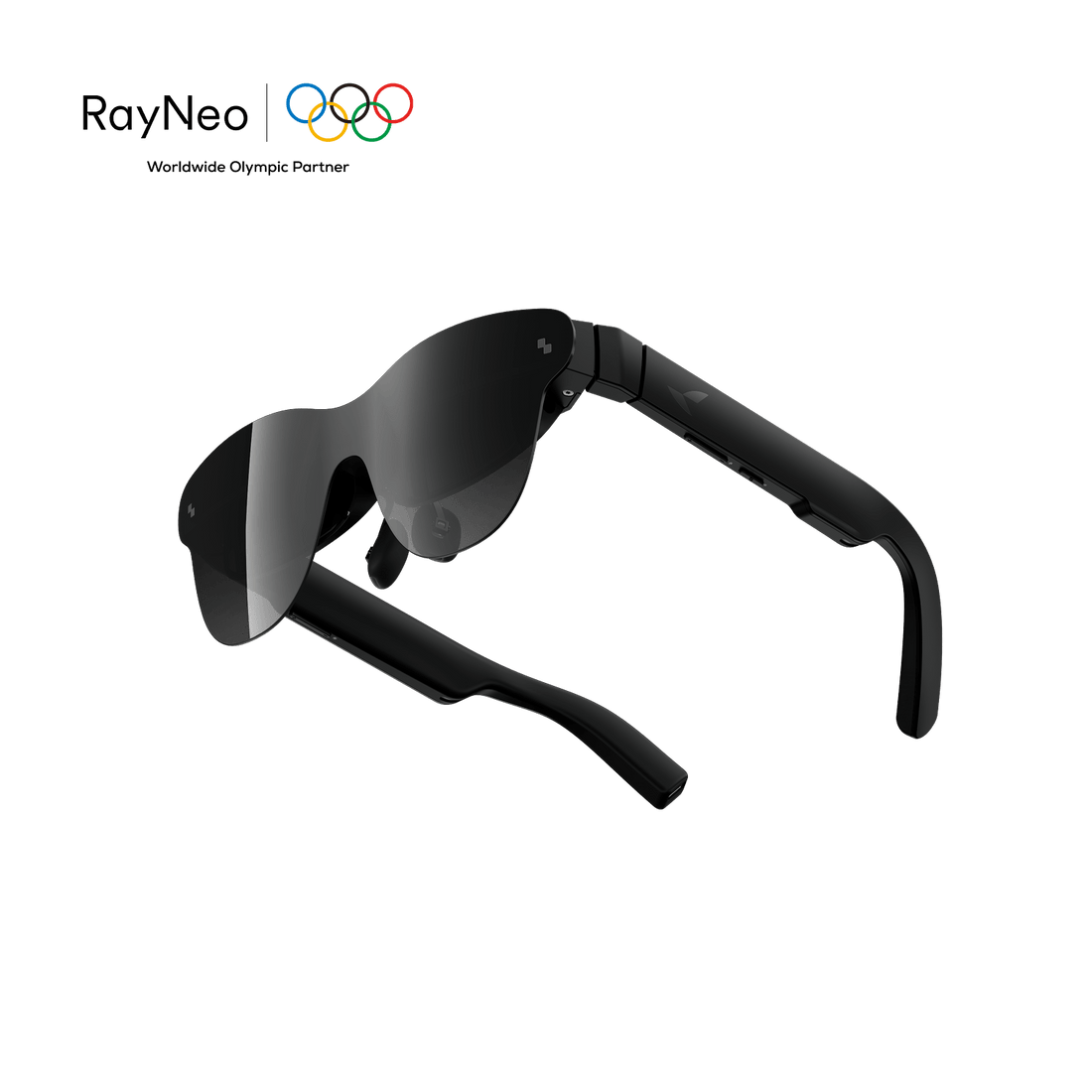
Many users assume that smart glasses, whether AI or AR glasses, use a universal frame design that fits everyone. However, smart glasses typically feature thicker temples and front frames to house batteries, processors, and display modules. This makes them much more sensitive to weight and balance than traditional eyewear. Therefore, how well smart glasses fit depends on whether their structural design allows enough adjustment for different face shapes. Our RayNeo X Series AI display glasses and Air series focus on lightweight materials and adjustable structures to cover a wider range of users. For instance, RayNeo AR glasses feature a front-to-back weight ratio close to 46.7% : 53.3%. This balanced distribution significantly reduces pressure on the nose and ears, making them suitable for various face shapes. The RayNeo X3 Pro also uses lightweight materials and ergonomic design, resulting in a feel so close to regular glasses that some reviewers describe the weight as almost unnoticeable.

During the industrial design phase, we use high-precision head model databases covering various facial proportions and head sizes to find a universal fit range. Smart glasses usually feature medium-width front frames and adjustable nose pads, using swappable pads and flexible temples to accommodate different bridge heights and face widths. This universal design is often a compromise for engineering and supply chain efficiency. For individuals seeking tailored advice on how to choose glasses for large heads, understanding these flexibility metrics is crucial, as users with extremely narrow or wide faces may still need fine-tuned adjustments or custom frames to achieve a truly perfect fit.
The X and Air series incorporate multi-position nose pad adjustments and extendable or bendable temples. RayNeo AR glasses, including the Air series and specific X series models, support three levels of nose pad adjustment. Users can slide the nose pad clips to find the best fit for their bridge, reducing slipping and marks. Additionally, we use lightweight materials like Polyamide (PA) nylon and magnesium-lithium alloys along with flexible temple structures. This allows the frames to adapt to different face widths and head circumferences without adding bulk, providing an experience close to a custom fit.
AR glasses face three typical fit challenges:
Front-heavy weight: This is especially true for models using binocular waveguides or micro-projection modules, as the front frame houses many optical and electronic parts. If a user has a narrow face or a low nose bridge, the glasses can easily slide down and press against the nose.
Temple thickness and pinching: When temples house batteries and speakers, they become thicker and stiffer. Users with high cheekbones or thin skin behind the ears may feel a pinching sensation during long-term use.
Optical alignment: AR displays require the virtual image to align with the pupils. If the hardware cannot adjust for different face shapes and pupillary distances, it leads to image offset or blurry edges.
We addresses these challenges through specific designs in the X seires and Air series AR Glasses:
The RayNeo X3 Pro uses proprietary RayNeo waveguides and a full-color Micro-LED light engine. While maintaining high brightness and 3D display, it keeps the front frame weight at approximately 76 grams. Combined with titanium hinges and a lightweight temple structure, it balances the weight distribution to relieve pressure on the nose.
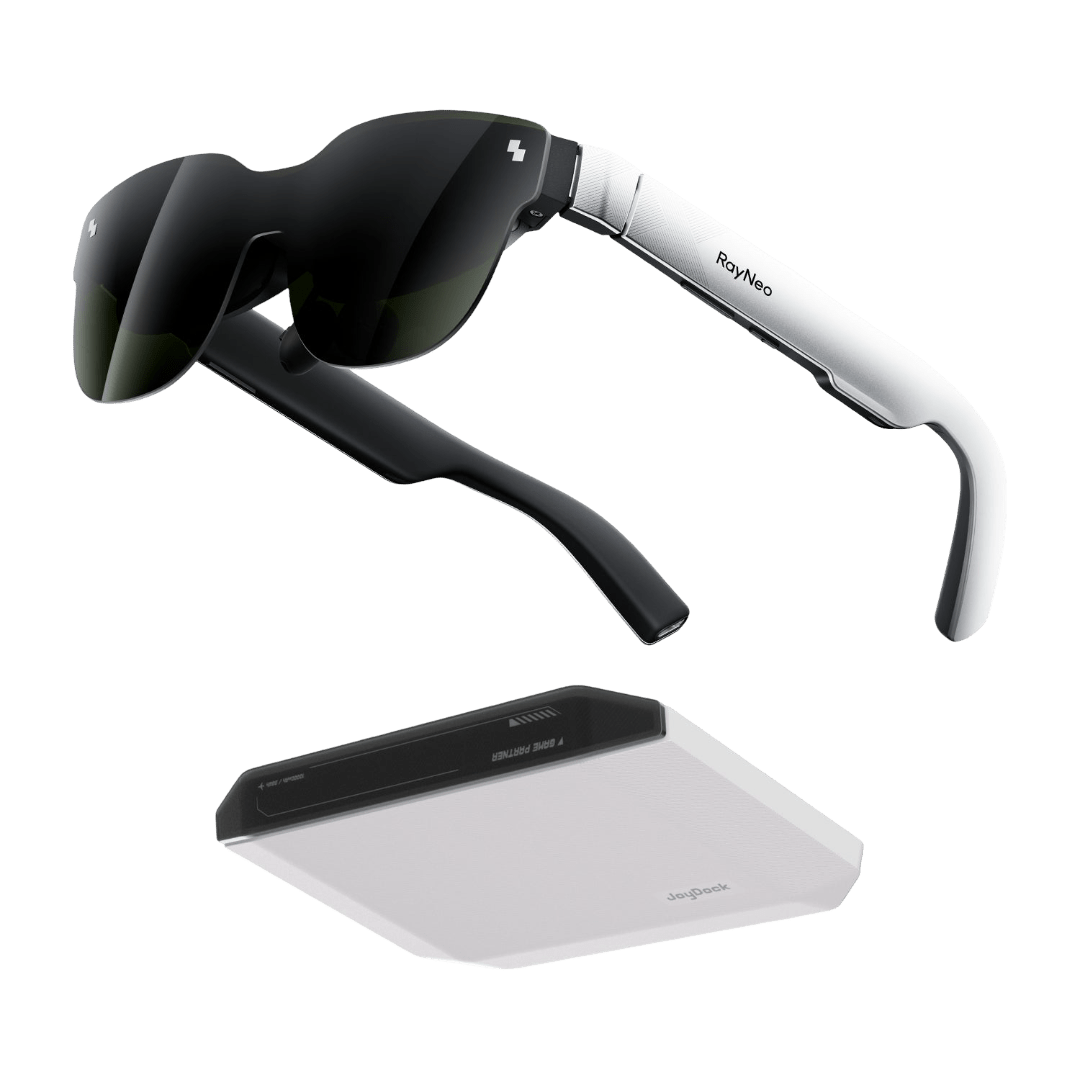
The RayNeo Air 4 Pro uses a split design where the core processing is handled by a phone or external device. By focusing solely on the display, the frame stays light and balanced. The Air series also features the RayNeo display engine with adjustable brightness and a large Eye-Box, ensuring a clear and complete image even if the pupils are slightly offset.

As online optical shops and smart glasses e-commerce channels mature, more users are placing orders without trying on a physical pair first. Our after-sales data clearly shows that the top reason for returns is not an incorrect prescription, but rather a mismatch between the frame and face shape, along with general discomfort. Therefore, when shopping online, you need to combine virtual try-ons, size verification, and user feedback to make an informed decision.
Virtual try-on tools use your camera to capture facial features and angles, overlaying different frame models on your screen. The advantage of these tools is the ability to browse many styles quickly and get a direct visual impression. In our testing, we found that virtual try-ons are relatively reliable for evaluating frame width and shape, though they can be slightly off regarding height and actual resting position. When viewing results, use them to filter styles and general sizing rather than judging nose pad pressure or fit behind the ears.
Many online shoppers ignore the frame specifications, but the lens width, bridge width, and temple length determine how the glasses actually sit on your face and where the center of gravity lies. We recommend taking a pair of old glasses that you find comfortable, recording the lens and bridge width, and then looking for a similar or slightly adjusted combination in the new frame specs. For smart glasses, you also need to pay attention to total weight and the length of the front module, as these dictate the pressure distribution on your nose bridge and behind your ears during long-term wear.
Most e-commerce platforms have a review section, which often contains the most authentic feedback on face shape compatibility. You should focus on descriptions from users with face shapes similar to yours, looking for details on forehead width, bridge height, face width, and head circumference. Pay attention to mentions of slipping, pressure marks, or fatigue after long hours. In the smart glasses category, users will also mention the sense of weight, heat while wearing, and compatibility with hats or headphones. These details help you judge if a pair fits your daily routine.
When comparing products with detailed specifications versus those without, we found that the former has a significantly lower return rate and higher user satisfaction scores for comfort. This once again proves the importance of size transparency in online eyewear shopping.
In theory, any frame can be worn on any face shape. However, from the perspective of visual balance and long-term comfort, fit makes a significant difference. Users who ignore face shape recommendations are much more likely to replace their frames or stop using them within six months. We prefer to view face shape matching as a recommended range rather than an absolute rule. Within this range, you can adjust based on your personal style and preferences.
Based on extensive user feedback, the key to a slimming effect is not a single frame model, but three logical principles. First, the vertical proportion of the frame should be slightly higher than the horizontal. Second, the top edge should have clear lines. Third, the frame width should be slightly wider than your face, but not excessively so. In smart glasses, the front modules usually result in a thicker top rim. This naturally strengthens the upper lines and, if the frame width is controlled properly, can create a flattering slimming effect for round and square face shapes.
Oversized frames can create a stylish contrast. However, for users with small faces, if the lens height and width far exceed facial proportions, the frames often press against the cheeks or the lower lens edge hits the cheekbones when smiling. Wearing these for a long time is uncomfortable and can interfere with facial expressions.
A well-fitting pair of glasses should sit with the top rim a few millimeters below the eyebrows, with the lens center aligned with your pupils. From the side, the temples should extend naturally over the ears without creating pressure behind them. In our wear tests, we specifically check if the glasses slide down the bridge of the nose, if they require frequent manual adjustment, and the condition of marks on the nose and behind the ears after four hours of use. If the glasses perform well in these three areas, they are considered to fit properly.





Share:
Top 10 College Graduation Gift Ideas for Techies in 2026
Are Prescription Smart Glasses Over $350 Worth It?