

$449.00


Shopping for smart glasses with a larger head usually means dealing with frames that squeeze your temples, slip constantly, or create pressure points that turn into headaches after twenty minutes. Standard sizing assumes average proportions, leaving buyers stuck with uncomfortable gear.
This guide covers specific fit challenges, explains which measurements matter when shopping online, and reviews models built for adjustable, comfortable wear.

Fit problems with smart glasses go beyond simple discomfort. Poor sizing affects visual clarity, stability during movement, and whether you'll actually want to wear the device for more than a few minutes.
Smart glasses pack batteries, processors, and sensors into temple arms, making them thicker than regular eyewear. When temples are too short for your head width, they press uncomfortably behind your ears or fail to hook properly, causing constant slippage.
Like wearing a too-small baseball cap that sits high and slides forward, insufficient temple length creates pressure at the wrong contact points.
Interpupillary distance (IPD) measures the space between your pupils. Smart glasses assume average IPD around 63mm, but larger heads often mean wider measurements.
When your IPD exceeds the optical sweet spot, displays appear blurry at edges like looking through binoculars adjusted for someone else. You lose peripheral clarity and strain trying to compensate.
Jogging, leaning forward, or turning your head quickly reveals fit problems that sitting still masks. Loose frames bounce and shift, breaking immersion and requiring constant readjustment.
For smart glasses used during workouts or active tasks, a stable fit isn't optional. The device needs to move as one unit with your head, not as separate components fighting against each other.

Online shopping means relying on specs rather than trying on. Analyzing a comprehensive eyeglass-frame-size-chart-for-perfect-fitting helps predict whether certain measurements will work comfortably for larger heads.
Frame width spans hinge to hinge. Standard smart glasses measure 135-145mm. Larger heads need frames at least 145mm wide, with 150mm+ providing comfortable clearance.
If your current comfortable glasses measure 145mm but still feel tight, search for wider options.
Larger lens widths (50mm+) improve peripheral vision and indicate frames built with bigger proportions. Smaller widths (45mm or less) signal compact designs that won't accommodate larger faces comfortably.
The bridge sits on your nose. Too narrow pinches; too wide causes slipping. Bridge widths between 18-22mm suit most larger faces, with wider nose bridges needing the higher end.
Temple length measures from hinge to arm end. Standard temples run 135-145mm. Larger heads need at least 145mm, with adjustable designs offering best results since they provide extra length without oversized frames.
Smart glasses contain more components than regular eyewear, making material choice and weight distribution crucial.
Quality smart glasses keep total weight under 80 grams using titanium alloys or advanced polymers. This prevents nose-bridge fatigue during extended wear. Heavier frames (90g+) cause pressure headaches, especially with tight fits on larger heads.
Adjustable nose pads customize how glasses sit on your face. Multi-position pads (three levels or more) accommodate different bridge heights and widths. Spring hinges flex outward to relieve temple pressure, transforming uncomfortable fits into customized ones.
Front-heavy glasses slide down your nose. Rear-heavy designs pull backward and create temple pressure. Balanced weight distribution (close to a 50:50 ratio front to back) keeps the glasses stable without causing pressure points.
Manufacturers sometimes list weight distribution specs. A 47:53 or 46:54 front-to-rear ratio indicates thoughtful balance engineering.
Several smart glasses models address the specific fit challenges larger heads face. These options prioritize adjustability, comfort, and stable wear during active use.
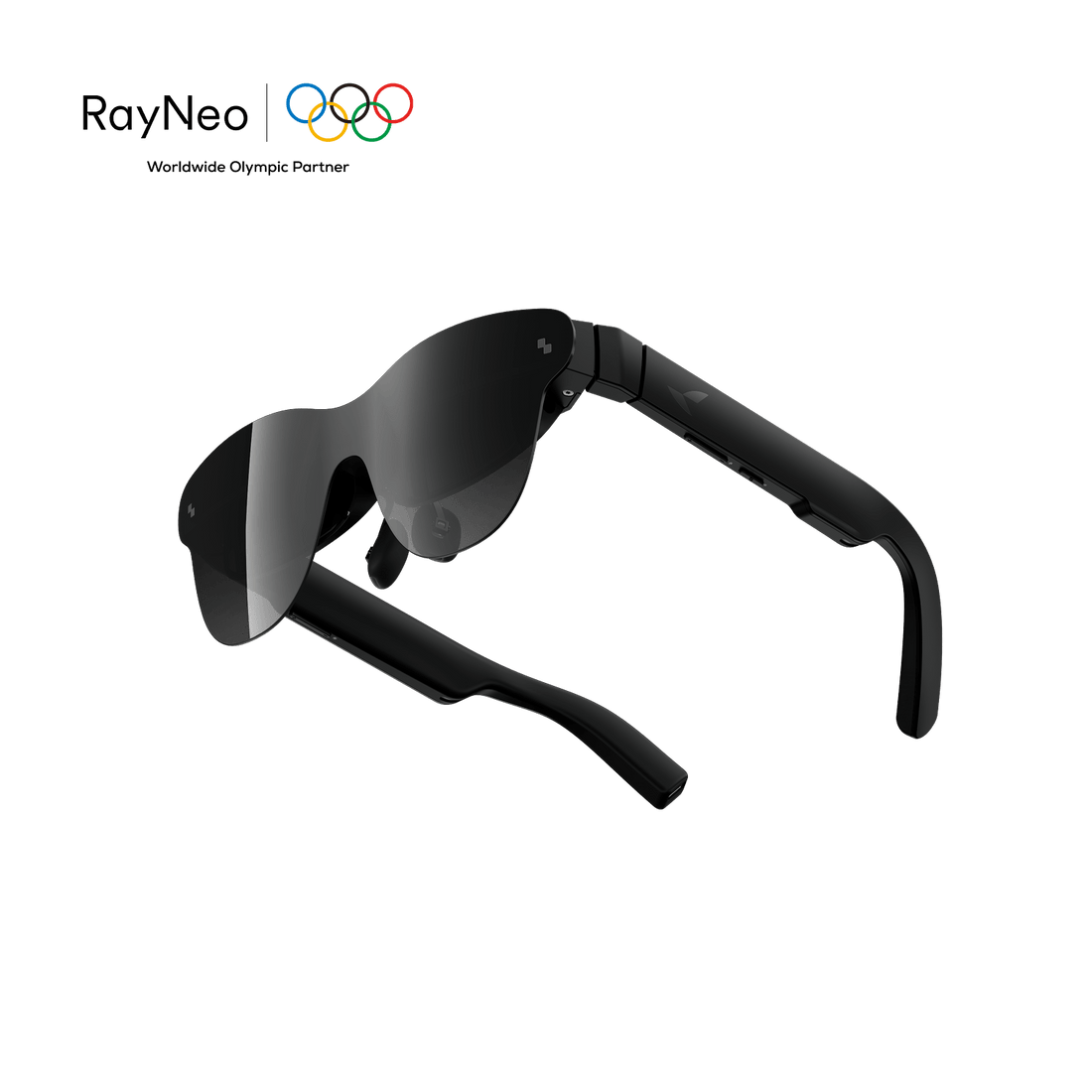
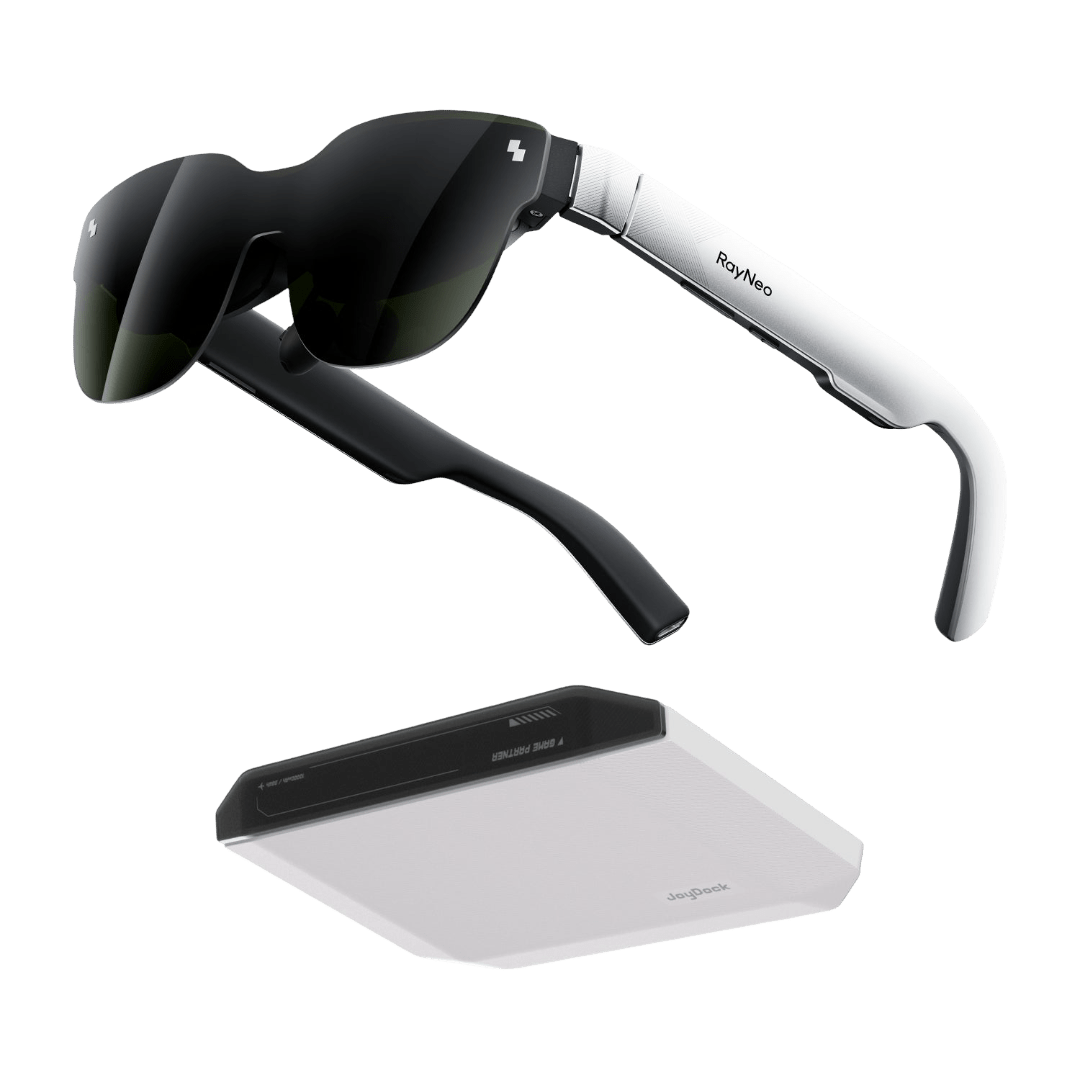
The RayNeo Air 3s Pro solves multiple fit issues through extensive adjustability. Nine temple adjustment levels plus three-position nose pads let you dial in custom fit instead of accepting standard sizing.

Weight & Balance: At 76 grams, the design won't cause fatigue during extended wear. The 46.7%:53.3% weight distribution prevents sliding, while a 15% clamping force reduction specifically addresses the temple pressure that plagues larger heads.
Display & Visuals: It features a 201" virtual screen with a 46° field of view and 1,200 nits brightness, ensuring visibility even in bright outdoor conditions. The 1080P resolution pairs with a 200,000:1 contrast ratio for sharp images.
Eye Comfort: A large 14x7mm EyeBox accommodates 93% of interpupillary distances, reducing edge blur. It also holds TÜV SÜD certification for Low Blue Light and Flicker-Free performance.
Connectivity: Works across iOS/Android, PCs, PS5, Xbox, and Nintendo Switch via USB-C or HDMI adapter.
Price: At $299 MSRP with a one-year warranty and 30-day returns, this is the best pair on this list for budget-conscious buyers, and a strong contender if you're looking for alternatives to Ray-Ban Meta smart glasses that offer a more customized fit.
Oakley's collaboration with Meta produced the Vanguard, a model specifically engineered for athletes who need a secure fit on larger head shapes. As we've noted in our look at the best smart glasses for athletes, grip and stability are paramount. Unlike standard casual frames, the Vanguard utilizes a big wraparound visor design that mimics Oakley's high-performance sports eyewear, effectively gluing the 66g frame to your head without tight pressure points.
Fit System: The frame features Oakley's signature three-point fit system, ensuring the glasses touch only your nose bridge and the side of your head. Replaceable Unobtainium nose pads come in three size options, gripping better as you sweat to prevent slippage during runs or rides.
Smart Features: A 12MP ultra-wide camera sits centrally to capture 3K video and photos hands-free, while open-ear speakers direct audio to your ears with minimal leakage.
Battery & Durability: You get up to 6 hours of media playback (30 hours with the case), and the IP67 water resistance rating means they withstand sweat and rain.
Visual Tech: Prizm lens technology enhances color and contrast, critical for spotting details on a trail or road. The frame width and flexible materials accommodate wider craniums better than the standard Ray-Ban Meta Wayfarer.
Price: The Vanguard commands a premium at $499, reflecting its advanced specialized lenses and larger chassis. The HSTN sits slightly lower, starting from $399.
The XREAL One Pro targets users who prioritize display size and immersion above all else. With a 57° field of view, which is significantly wider than many competitors, it reduces the "looking through a window" effect that often breaks immersion for users with wider IPDs.
Display Quality: Dual Micro-OLED panels deliver 1080p resolution per eye at a smooth 120Hz refresh rate. The brightness hits 700 nits, which, combined with 3-level electrochromic dimming (0%, 35%, 100%), allows you to block out distractions and focus on the screen regardless of ambient light.
Fit & Weight: Weighing approximately 87 grams, it sits heavier than the RayNeo or Oakley options but compensates with substantial, "oversized" frames and sturdy, adjustable nose pads that distribute that weight effectively across larger faces.
Connectivity: It relies on a USB-C tether to a host device (phone, PC, console) driven by the internal X1 chip for spatial display processing.
Price: Sitting at a premium price point of $649 MSRP, it positions itself as a personal theater replacement rather than a casual all-day wearable.
|
Feature |
RayNeo Air 3s Pro |
Oakley Meta Vanguard |
XREAL One Pro |
|
Best For |
Budget-conscious buyers; extensive adjustability |
Athletes; active use; secure fit |
Display size and immersion; personal theater |
|
Price (MSRP) |
$299 |
$499 |
$649 |
|
Weight |
76g |
66g |
87g |
|
Fit |
9-level temple adjustment; 3-position nose pads |
3-point fit system; wraparound design; 3 nose pad sizes |
Oversized frames; sturdy adjustable nose pads |
|
Display / Visuals |
201" virtual screen; 1200 nits brightness; 1080p resolution |
Prizm lens (enhances color/contrast) |
Dual Micro-OLED; 1080p per eye; 120Hz; 700 nits |
|
Connectivity |
USB-C or HDMI (Phone, PC, Consoles) |
Bluetooth/App pairing (Active use focus) |
USB-C (Phone, PC, Console) |
Smart glasses for large heads require adjustable features rather than hoping standard sizes stretch. Nine-level temple adjustment, multiple nose pad positions, and reduced clamping force address specific pressure points.
When shopping online, prioritize 145mm+ frame width, substantial lens width, and adequate temple length. Lightweight materials under 80 grams with balanced weight distribution prevent all-day fatigue. The RayNeo Air 3s Pro, Oakley Meta models, and XREAL One Pro each solve fit challenges differently. Choose based on whether you prioritize adjustability, sports performance, or display quality.
Check frame width (145mm+ for larger heads), temple length (145mm+), and look for adjustable features. Order from retailers with easy return policies so you can test fit at home. Measure your current comfortable glasses to establish baseline dimensions.

Glasses with 9+ adjustment levels for temples, multiple nose pad positions, and reduced clamping force work best. The RayNeo Air 3s Pro offers the most extensive adjustability. Oakley Meta models provide sports-focused fit. Avoid fixed-size frames under 145mm width.
Meta smart glasses don't publish exact frame width specs, but Oakley collaborations typically run 148-152mm frame width, accommodating most larger head sizes through adjustable components and flexible materials.
Rectangular or wraparound shapes with wider proportions distribute weight better than round or narrow frames. Smart glasses specifically benefit from wraparound temples that extend further back, creating more stable contact points.
Wider frames with substantial lens width (50mm+) and adjustable nose bridges work best to complement facial proportions. Knowing what glasses fit my face shape perfectly helps you avoid small, narrow frames that create awkward contrast. For smart glasses specifically, the Air 3s Pro's adjustable system adapts well to various face shapes without creating pinch points.





Share:
Smart Sunglasses with Camera: Features, Limits, and Real Use Cases
How to Choose the Best Smart Glasses for Binge-Watching?