

$449.00


To find glasses and smart glasses that actually fit, you must first understand how lens width, bridge width, and temple length relate to your face width and pupillary distance. Then you can consider the specific display alignment and weight balance requirements for smart glasses. In this guide, we will break down the sizing logic shared by traditional and smart glasses. We provide practical size charts and measurement methods to help you reduce headaches, pressure marks, and image offset. Ultimately, this will help you find the perfect size that balances comfort and display quality.
In daily fittings, we find most users have one major misunderstanding about the eyeglass frame size chart. They only remember vague terms like small, medium, or large. They ignore specific values for lens width and bridge width. For smart glasses, these sizes affect more than just comfort. They directly impact where the image enters your eye, its clarity, and how much fatigue you feel after long-term wear.
Traditional frame sizes usually appear as three numbers, such as 54 18 140. These represent lens width, bridge width, and temple length. Most brands and online stores use this system. These three measurements are core for matching a frame to your face and how you use it. For smart glasses, we also look at lens height and the angle of the front temple. This helps fine-tune the distance between the display and your pupil.
Once you can read those three numbers inside the temple, you have mastered the first step in choosing a frame.
|
Measurement |
Typical Range |
Role in Fit |
|
Lens Width |
47 to 56 mm |
Determines total frame width and suitability for face size. |
|
Bridge Width |
14 to 24 mm |
Dictates how the glasses sit on the nose and overall stability. |
|
Temple Length |
135 to 150 mm |
Ensures the glasses stay secure behind the ear and balances weight. |
For most adult frames, lens width usually ranges from 47 to 56 mm. Larger numbers mean a wider frame, which fits users with broader faces. Bridge width is usually between 14 and 24 mm. This is the gap between lenses that sits on your nose. It has a huge impact on comfort and stability. If glasses slide down or leave marks, the bridge width is usually off by a few millimeters. Temple length is the length of the arms, typically between 135 and 150 mm. This ensures the frame stays secure behind your ears. For smart glasses with batteries and speakers, we must balance weight across this length to avoid pressure behind the ear.
When tuning smart glasses, we look beyond the three standard sizes. We focus on how the center of the virtual image aligns with your interpupillary distance. This determines if you have to tilt your head or squint to see the HUD or projected screen. If the frame is too wide or the nose pads do not stay in place, the image will drift. You might see the screen at uneven heights or find one side clear while the other is blurry. This happens when the frame is not stable against your face.
Traditional optics often recommends frames based on face shapes like square, round, or long. For smart glasses, we focus on three measurable dimensions: face width, bridge height, and temple flare. To help you find your range in an eyeglass frame size chart, we have organized a reference based on face width. We also explain how to fine-tune the fit for narrow and wide face types within the same model.
You can start by matching your face width to small, medium, or large categories. The table below is a reference based on mainstream optical frame ranges. When using this, compare it to the data from your most comfortable pair of glasses.
|
Face Width Category |
Suggested Lens Width |
Suggested Bridge Width |
Suggested Temple Length |
|
Small (Face width under ~129 mm) |
47 to 50 mm |
14 to 16 mm |
135 to 140 mm |
|
Medium (Face width ~130 to 139 mm) |
51 to 53 mm |
17 to 19 mm |
140 to 145 mm |
|
Large (Face width over ~139 mm) |
54 to 56 mm and up |
20 to 23 mm |
145 to 150 mm and up |
These ranges combine size guides from online platforms with our data on user fit. When choosing a frame, a float of 2 to 3 mm is acceptable for lens width and temple length. We suggest keeping the bridge width within a 2 mm margin. For smart glasses weighing more than 70 grams in the large category, we prefer slightly shorter temples and a tighter closure angle to ensure better stability.
In a store, we use two visual lines to judge the fit. One is the alignment between the outer frame edge and the temple. The other is how the lens center aligns with the pupil. If the frame is much wider than the face, the weight of the smart glasses will concentrate on the middle of the bridge. This leaves marks during long wear. Also, virtual images may appear shifted outward or upward. If the frame is noticeably narrower than the face, the temples will put constant pressure on your head.
For narrow faces, we prioritize models with a smaller bridge and narrower lenses but flexible temples. This ensures the lens center stays near the pupil and prevents the frame from wobbling. For wide faces or high cheekbones, understanding how-to-choose-glasses-for-large-heads becomes essential because AR display modules make temples thick. If the front is too wide, pressure on the temples increases, meaning that reducing the angle and shortening the contact distance behind the ear helps relieve squeezing and headaches.
The ideal state is three stable support points: the bridge and the areas behind both ears. Even pressure distribution makes long-term wear much easier.
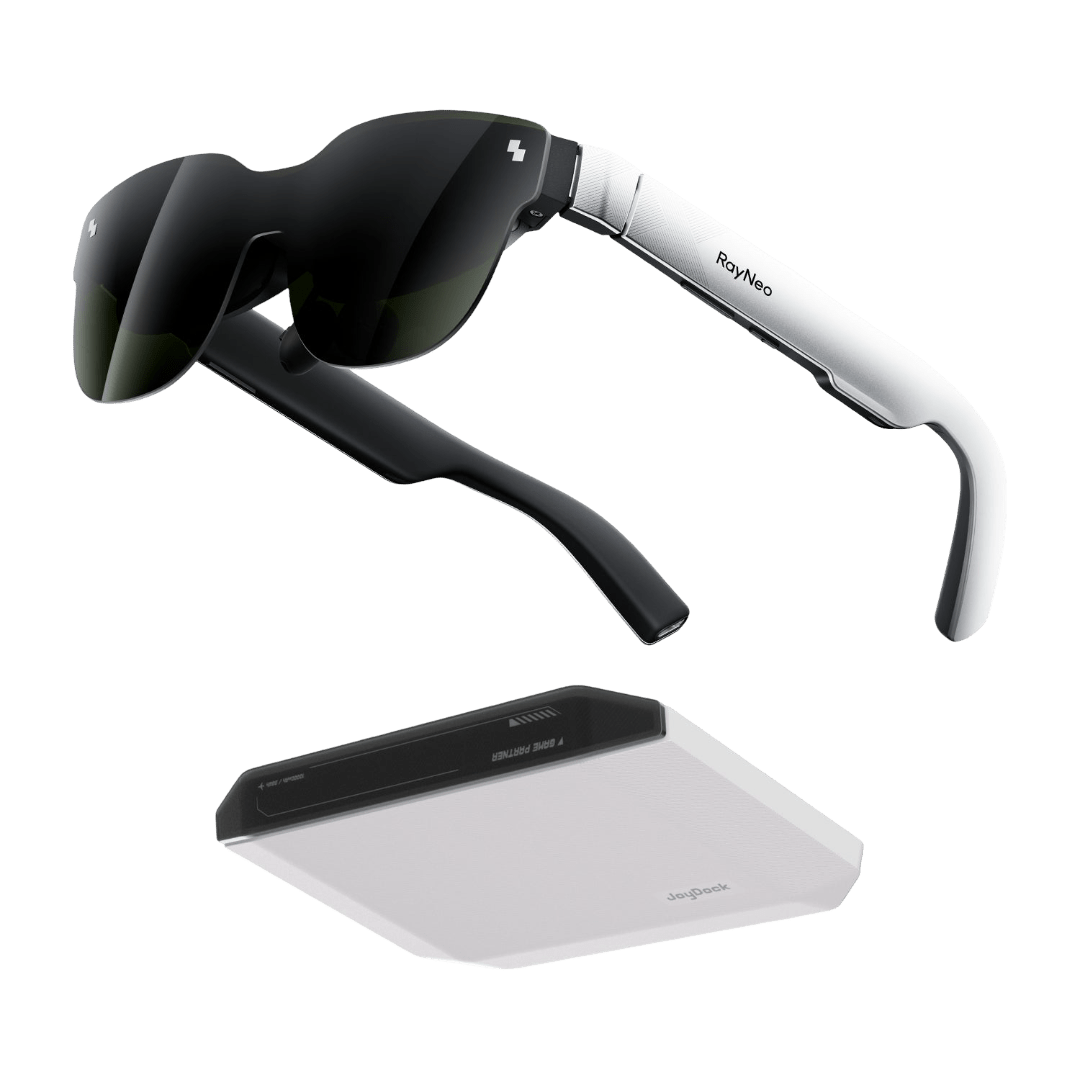
Finding a perfect fit is hard. The RayNeo Air series offers a 9-point FlexiFit adjustment system. This gives users more flexibility. It is especially helpful for users with high cheekbones or those in the Large width range. The 3-level temple height adjustment and 30-degree spring hinge relieve common pressure at the temples found in traditional AR glasses. If you want smart glasses that look like regular sunglasses but fit your face perfectly, this adjustable design is better than fixed-size frames.

The optical industry has long known that a poor fit leads to slippage and pressure marks. For smart glasses, negative feedback is even more immediate. It includes headaches, dizziness, and nausea within minutes. Spending time on proper sizing can greatly reduce these issues. It also ensures the AR display achieves its promised clarity and immersion.
If the frame width does not match your pupillary distance, the optical modules will not align with your eyes. You might feel the need to squint or tilt your head. The edges of the screen may also look blurry or distorted. Some users report drifting subtitles or trouble focusing on HUD dashboards with other products. Our tests show that moving the frame up by 2 mm or adjusting the nose pads often fixes these problems. This is why we design frames with adjustable bridges, nose pads, and temple angles. These features help every user align the virtual image with their visual axis.
We monitor pressure at the nose bridge, behind the ears, and at the temples during long-term wear tests.
Nose Bridge: If the bridge is too narrow, marks appear in less than an hour.
Behind Ears: Incorrect temple angles can cause stinging or soreness.
Temples: Poor fit in this area often leads to brief headaches.
If the frame is too large, the glasses will slip during walks or when you turn your head. Users then have to push them back up constantly. Small adjustments to the bridge and temples can solve most of these slipping issues.
Smart glasses house displays, batteries, speakers, and sensors. Most models now weigh under 80 grams, but users are still sensitive to weight during long sessions.
|
Weight Factor |
Result of Poor Balance |
|
Front-Heavy |
Glasses slip when looking down or moving quickly |
|
Rear-Heavy |
Soreness or stinging behind the ears within two hours |
Sizing details are vital for users wearing smart glasses for several hours. This applies to remote work, mobile tasks, or monitoring notifications. We track user feedback every 30 minutes over several days. We also check the skin at the nose bridge and behind the ears to improve the frame shape. Our goal is to maintain comfort and clarity for at least four hours. When the fit is perfect, users often say they forget they are wearing the glasses. They focus only on the content. This is true long-term comfort.
When buying smart glasses online, the lack of fitting guidance often results in frames that are too loose or pinch the temples. In our fitting process, we ask users for two types of measurements. First, we gather basic facial data like face width and pupillary distance. Second, we use a comfortable pair of existing glasses as a reference. This significantly increases the chance of picking the right size on your first order.
Pupillary distance (PD) is the gap between the centers of your pupils. It is the most critical parameter for aligning the AR display. Adult PD typically ranges from 54 to 74 mm. If you do not have a professional prescription, you can measure it yourself:
Stand in front of a mirror in a well-lit room.
Have someone hold a ruler near your brow bone.
Record the distance between the centers of your pupils in millimeters.
This number directly affects the clarity of the AR image. For frame width, measure the distance between the outside of your temples. Users with a face width between 130 and 139 mm generally fall into the medium range on a frame size chart.
Using a pair of glasses you already find comfortable is one of the most accurate methods for remote fitting. Read the three numbers printed inside the temple, such as 50 19 140. Use these as your starting point. You can also fine-tune based on current issues:
|
Current Issue |
Suggested Adjustment |
|
Visible marks on the nose |
Reduce the bridge width by 1 or 2 mm |
|
Glasses slip frequently |
Keep lens width same but choose shorter temples or a tighter frame |
As online sales for smart glasses grow, more platforms offer virtual tools using phone cameras. These apps can automatically suggest face width, PD, and frame size. In good lighting, these digital methods are usually accurate within 2 to 3 mm. This is enough to act as an initial filter before you buy.

Smart glasses truly join your lifestyle when you no longer have to adjust their position or deal with nose marks. When the virtual image stays stable and clear, the device disappears. Whether you want glasses for movies or an AI assistant, start by measuring your face width and PD. Use your current glasses as a guide and follow the sizing logic in this article. This will help you find a pair of smart glasses that truly fits.




Share:
Display Size Explained: Why Bigger Screens Create Better Viewing Experiences
Complete Guide to Virtual Reality Game Systems