Contents
AR glasses sound cool until you see the price tag.
That's the reality for a lot of people. With AR glasses often running $300, $500, or even over a thousand dollars, "trying one out" becomes a serious investment. But here's the good news: the AR glasses market in 2026 is mature enough that $200 or so can get you a genuinely solid product.
The real question is: what kind of "budget AR glasses" are actually worth buying? How cheap is too cheap? This guide helps you sort that out and find the best option within your budget.
First, Let's Define "Budget AR Glasses"
"Budget" means different things to different people. For AR glasses, I break it into three tiers:
| Budget Tier |
Price Range |
What You Can Expect |
| Ultra-budget |
$150-170 |
Core features intact, some spec compromises |
| Sweet spot |
$190-210 |
Complete experience, best value zone |
| Slight premium |
$240-260 |
Near-flagship experience, still reasonable |
My take: If you're searching for "best budget AR glasses," the $199 sweet spot deserves your attention. Products under $150 often have obvious weaknesses in key specs. Above $250, you're entering "slight premium" territory, which is great but not strictly "budget" anymore.
Minimum Specs for Budget AR Glasses: Don't Go Below These
Cheap doesn't mean settling. Even on a tight budget, these specs are non-negotiable. Products that fall short? Skip them.
Brightness: At Least 500 Nits
Brightness determines whether your AR glasses work in different lighting conditions. Below 500 nits, even a moderately bright indoor space will make the display look washed out. Forget about airplane cabins or coffee shops.
500 nits is the floor. 600+ nits is where comfort begins.
Resolution: At Least 1080p Per Eye
AR glasses typically project a 100-200 inch virtual screen. If resolution isn't high enough, you'll see obvious pixelation. 1080p per eye (1920×1080) is the minimum. Anything less isn't worth buying in 2026.
Weight: Under 80 Grams
AR glasses sit on your face. Weight directly impacts comfort. Anything over 80 grams starts feeling heavy after 30 minutes.
Refresh Rate: At Least 60Hz
60Hz is the baseline for watching movies. If you're gaming, 120Hz is noticeably smoother, but 60Hz is workable.
Prescription Support: Non-Negotiable
If you're nearsighted, AR glasses without prescription lens support are basically useless. Make sure your pick supports magnetic or clip-on prescription lenses.
My Picks: 3 Budget AR Glasses Worth Buying
Based on the standards above, here are my specific recommendations at each budget tier:
Pick #1: RayNeo Air 3s — The Sweet Spot Champion at $199
Price: $199 | Position: Best value pick
If your budget hovers around $200, Air 3s is my top recommendation. It doesn't have the strongest specs on paper, but at this price point, it has no obvious weak spots.
Key specs:
-
650 nits peak brightness (plenty for indoor use)
-
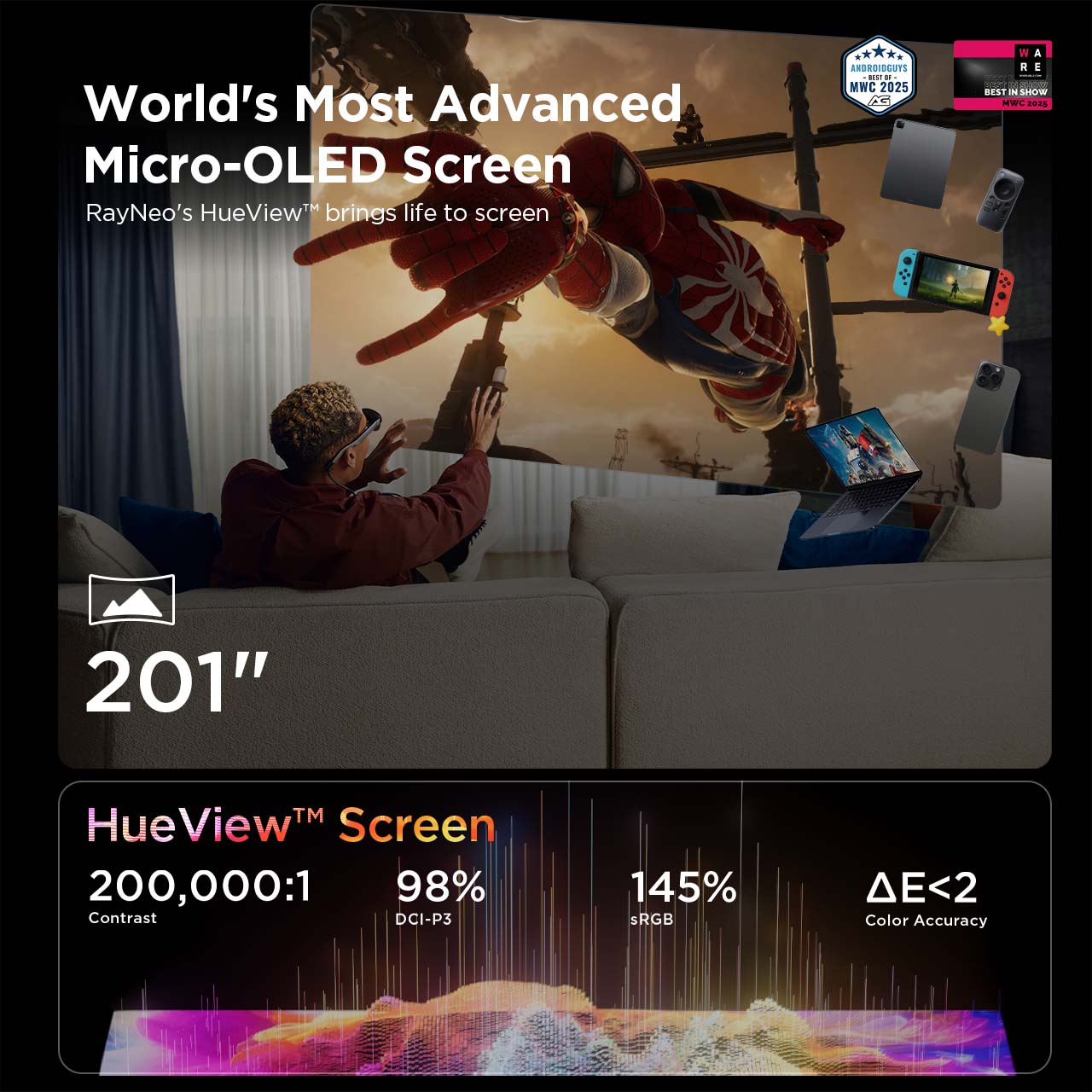
200,000:1 contrast ratio (Flagship level)
-
1920×1080 × 2 resolution (1080p per eye)
-
60/120Hz switchable refresh rate
-
About 76 grams (Ultra-light)
-
201-inch virtual screen at 6 meters
-
Magnetic prescription lens support (up to -8.00D)
Why it wins:
For $199, you get a 201-inch private theater. That's cheaper than many 15-inch portable monitors, but a completely different experience. The 650-nit brightness handles indoor environments easily, and the 120Hz refresh rate means gaming won't stutter.
What's more, Air 3s keeps the core experience from RayNeo's premium products: four-speaker system, Whisper Mode for privacy, Peacock color adjustment. Features you rarely see at this price.
Where it falls short:
650 nits won't cut it in bright airplane cabins or outdoors. If you'll mainly use it on flights, consider stepping up to Air 3s Pro.
Best for: First-time AR glasses buyers, primarily indoor users, anyone with a strict $200 budget cap.
Pick #2: RayNeo Air 2s — The Ultra-Budget Option at $159
Price: $159 | Position: Entry-level classic
If you want to minimize spending, Air 2s is the reliable choice under $160.
Key specs:
Why consider it:
When Air 2s launched in August 2024, it hit #1 on Amazon's smart glasses category in under 6 hours. At $159, with a Sony Micro-OLED screen and 120Hz refresh rate, this spec combo has almost no competition in the ultra-budget tier.
Where it falls short:
Compared to Air 3s, Air 2s lacks the Peacock color adjustment feature and runs 50 nits dimmer. Whether the $40 savings is worth it depends on how much you care about color tuning.
Best for: Extremely budget-conscious buyers, users who don't need color adjustment features, anyone wanting to test the waters at minimum cost.
Pick #3: RayNeo Air 3s Pro — The $249 Leap Worth Taking
Price: $249 | Position: High-value flagship
Technically, $249 stretches beyond "budget" territory. But if you've got $50 of flexibility, Air 3s Pro delivers a step-change in experience that's hard to ignore.
Key specs:
-
1200 nits peak brightness (nearly 2x Air 3s)
-
200,000:1 contrast ratio (HDR-grade)
-
120Hz refresh rate
-
About 76 grams
-
3840Hz PWM dimming (reduces eye strain)
-
Four speakers + Spatial Audio surround sound
Air 3s vs Air 3s Pro: Is $50 more worth it?
My verdict: If you often use AR glasses on planes, trains, or other bright environments, or if you typically use them for 2+ hours at a time, spending the extra $50 on Air 3s Pro is absolutely worth it. The gap between 1200 nits and 650 nits in bright lighting is the difference between "usable" and "enjoyable."
Best for: Users with flexible budgets, frequent business travelers, gamers, A/V enthusiasts who care about picture quality.
Product Comparison at a Glance
Common Budget AR Glasses Mistakes to Avoid
Watch out for these pitfalls:
Mistake #1: "It's cheap anyway, I'll just grab whatever"
Cheap only works if the product is actually usable. No-name products under $150 often fail to meet basic specs. Buying one, hating the experience, and shelving it wastes more money than spending a bit more upfront.
My advice: Better to spend an extra $20-30 on an entry-level product from a reputable brand than to save money on a random brand.
Mistake #2: "Brightness doesn't matter, I'll only use it at home"
You think you'll only use it at home, but once you own it, you'll want to take it places. Airplane seats, coffee shops, hotel rooms. These environments are often much brighter than your living room.
My advice: If budget allows, prioritize products with 600+ nits brightness.
Mistake #3: "I'll buy accessories later"
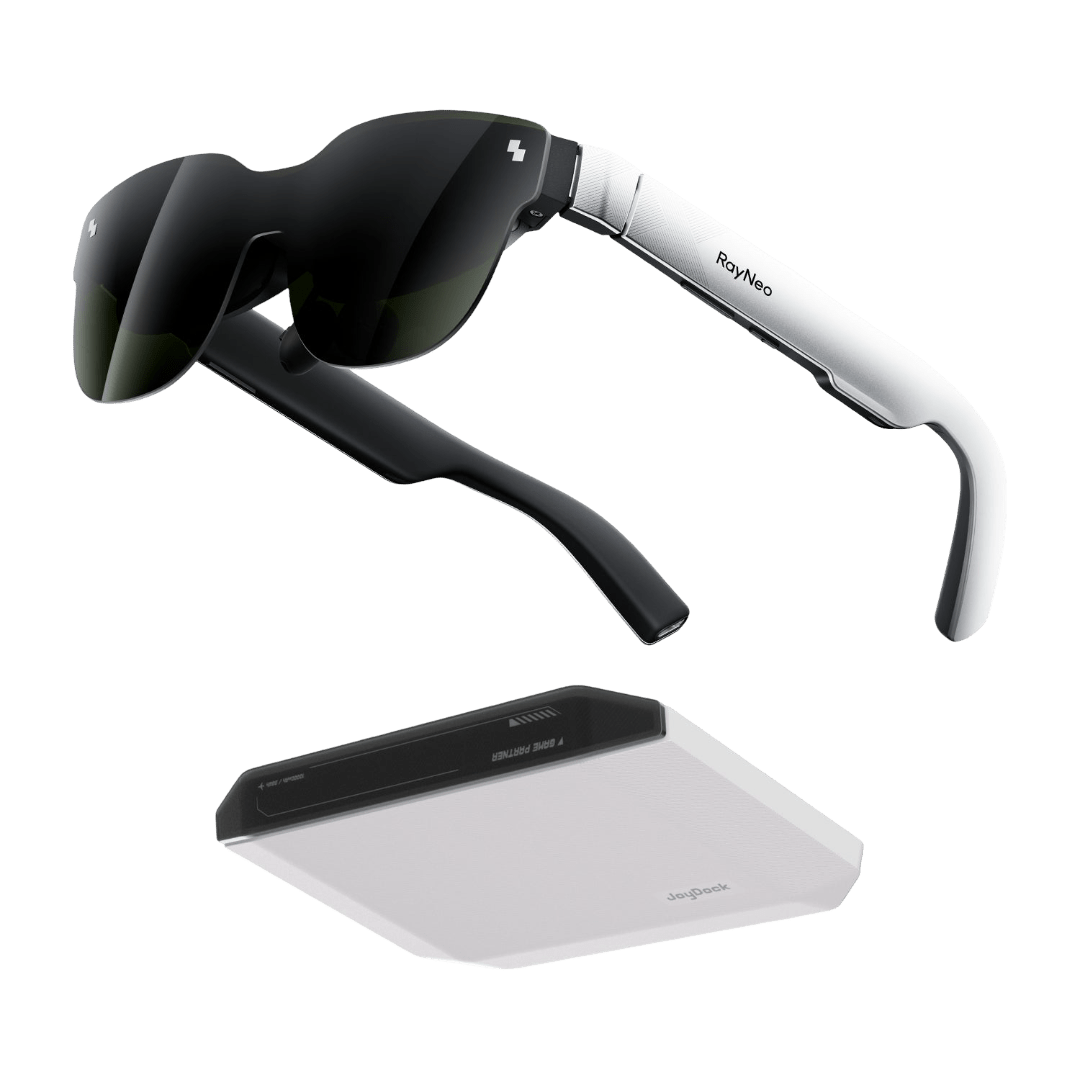
AR glasses experience depends heavily on accessories. If you have a standard Switch or Switch OLED, no JoyDock means no handheld mode usage (Note: Switch Lite is incompatible with AR glasses). If you're nearsighted, no prescription lenses means you can't wear them properly.
My advice: Factor accessories into your budget. Air 3s ($199) + prescription lenses ≈ $250-280 is a more realistic total.
My Final Recommendation
If you're asking "what are the best budget AR glasses," my answer is Air 3s.
$199. 650 nits. 120Hz. 76 grams. 201-inch screen. This spec sheet has no obvious weak spots at the $200 price point. It's the best solution when budget is tight.
But if you've got $50 of wiggle room, I strongly recommend stepping up to Air 3s Pro.
The price gap between $249 and $199 is $50, but the experience gap between 1200 nits and 650 nits is way more than 25%. Especially in bright environments, that $50 pays for itself.
RayNeo ranked #1 globally in AR glasses shipments from 2022-2025, with about 24% market share in Q3 2025. Picking an entry-level product from a market leader beats picking a "flagship" from a no-name brand every time.
Budget doesn't mean settling. $199-249 is enough to get AR glasses with a complete, solid experience.
Read More:
11.Which AR Glasses Offer the Best Value for Money




Contents
AR glasses sound cool until you see the price tag.
That's the reality for a lot of people. With AR glasses often running $300, $500, or even over a thousand dollars, "trying one out" becomes a serious investment. But here's the good news: the AR glasses market in 2026 is mature enough that $200 or so can get you a genuinely solid product.
The real question is: what kind of "budget AR glasses" are actually worth buying? How cheap is too cheap? This guide helps you sort that out and find the best option within your budget.
First, Let's Define "Budget AR Glasses"
"Budget" means different things to different people. For AR glasses, I break it into three tiers:
My take: If you're searching for "best budget AR glasses," the $199 sweet spot deserves your attention. Products under $150 often have obvious weaknesses in key specs. Above $250, you're entering "slight premium" territory, which is great but not strictly "budget" anymore.

Minimum Specs for Budget AR Glasses: Don't Go Below These
Cheap doesn't mean settling. Even on a tight budget, these specs are non-negotiable. Products that fall short? Skip them.
Brightness: At Least 500 Nits
Brightness determines whether your AR glasses work in different lighting conditions. Below 500 nits, even a moderately bright indoor space will make the display look washed out. Forget about airplane cabins or coffee shops.
500 nits is the floor. 600+ nits is where comfort begins.
Resolution: At Least 1080p Per Eye
AR glasses typically project a 100-200 inch virtual screen. If resolution isn't high enough, you'll see obvious pixelation. 1080p per eye (1920×1080) is the minimum. Anything less isn't worth buying in 2026.
Weight: Under 80 Grams
AR glasses sit on your face. Weight directly impacts comfort. Anything over 80 grams starts feeling heavy after 30 minutes.
Refresh Rate: At Least 60Hz
60Hz is the baseline for watching movies. If you're gaming, 120Hz is noticeably smoother, but 60Hz is workable.
Prescription Support: Non-Negotiable
If you're nearsighted, AR glasses without prescription lens support are basically useless. Make sure your pick supports magnetic or clip-on prescription lenses.
My Picks: 3 Budget AR Glasses Worth Buying
Based on the standards above, here are my specific recommendations at each budget tier:
Pick #1: RayNeo Air 3s — The Sweet Spot Champion at $199
Price: $199 | Position: Best value pick
If your budget hovers around $200, Air 3s is my top recommendation. It doesn't have the strongest specs on paper, but at this price point, it has no obvious weak spots.
Key specs:
650 nits peak brightness (plenty for indoor use)
200,000:1 contrast ratio (Flagship level)
1920×1080 × 2 resolution (1080p per eye)
60/120Hz switchable refresh rate
About 76 grams (Ultra-light)
201-inch virtual screen at 6 meters
Magnetic prescription lens support (up to -8.00D)
Why it wins:
For $199, you get a 201-inch private theater. That's cheaper than many 15-inch portable monitors, but a completely different experience. The 650-nit brightness handles indoor environments easily, and the 120Hz refresh rate means gaming won't stutter.
What's more, Air 3s keeps the core experience from RayNeo's premium products: four-speaker system, Whisper Mode for privacy, Peacock color adjustment. Features you rarely see at this price.
Where it falls short:
650 nits won't cut it in bright airplane cabins or outdoors. If you'll mainly use it on flights, consider stepping up to Air 3s Pro.
Best for: First-time AR glasses buyers, primarily indoor users, anyone with a strict $200 budget cap.
Pick #2: RayNeo Air 2s — The Ultra-Budget Option at $159
Price: $159 | Position: Entry-level classic
If you want to minimize spending, Air 2s is the reliable choice under $160.
Key specs:
600 nits peak brightness
1920×1080 × 2 resolution
120Hz refresh rate
About 78 grams
Sony 0.55-inch Micro-OLED display
4:6 front-back weight distribution
Why consider it:
When Air 2s launched in August 2024, it hit #1 on Amazon's smart glasses category in under 6 hours. At $159, with a Sony Micro-OLED screen and 120Hz refresh rate, this spec combo has almost no competition in the ultra-budget tier.
Where it falls short:
Compared to Air 3s, Air 2s lacks the Peacock color adjustment feature and runs 50 nits dimmer. Whether the $40 savings is worth it depends on how much you care about color tuning.
Best for: Extremely budget-conscious buyers, users who don't need color adjustment features, anyone wanting to test the waters at minimum cost.
Pick #3: RayNeo Air 3s Pro — The $249 Leap Worth Taking
Price: $249 | Position: High-value flagship
Technically, $249 stretches beyond "budget" territory. But if you've got $50 of flexibility, Air 3s Pro delivers a step-change in experience that's hard to ignore.
Key specs:
1200 nits peak brightness (nearly 2x Air 3s)
200,000:1 contrast ratio (HDR-grade)
120Hz refresh rate
About 76 grams
3840Hz PWM dimming (reduces eye strain)
Four speakers + Spatial Audio surround sound
Air 3s vs Air 3s Pro: Is $50 more worth it?
My verdict: If you often use AR glasses on planes, trains, or other bright environments, or if you typically use them for 2+ hours at a time, spending the extra $50 on Air 3s Pro is absolutely worth it. The gap between 1200 nits and 650 nits in bright lighting is the difference between "usable" and "enjoyable."
Best for: Users with flexible budgets, frequent business travelers, gamers, A/V enthusiasts who care about picture quality.
Product Comparison at a Glance
Common Budget AR Glasses Mistakes to Avoid
Watch out for these pitfalls:
Mistake #1: "It's cheap anyway, I'll just grab whatever"
Cheap only works if the product is actually usable. No-name products under $150 often fail to meet basic specs. Buying one, hating the experience, and shelving it wastes more money than spending a bit more upfront.
My advice: Better to spend an extra $20-30 on an entry-level product from a reputable brand than to save money on a random brand.
Mistake #2: "Brightness doesn't matter, I'll only use it at home"
You think you'll only use it at home, but once you own it, you'll want to take it places. Airplane seats, coffee shops, hotel rooms. These environments are often much brighter than your living room.
My advice: If budget allows, prioritize products with 600+ nits brightness.
Mistake #3: "I'll buy accessories later"
AR glasses experience depends heavily on accessories. If you have a standard Switch or Switch OLED, no JoyDock means no handheld mode usage (Note: Switch Lite is incompatible with AR glasses). If you're nearsighted, no prescription lenses means you can't wear them properly.
My advice: Factor accessories into your budget. Air 3s ($199) + prescription lenses ≈ $250-280 is a more realistic total.
My Final Recommendation
If you're asking "what are the best budget AR glasses," my answer is Air 3s.
$199. 650 nits. 120Hz. 76 grams. 201-inch screen. This spec sheet has no obvious weak spots at the $200 price point. It's the best solution when budget is tight.
But if you've got $50 of wiggle room, I strongly recommend stepping up to Air 3s Pro.
The price gap between $249 and $199 is $50, but the experience gap between 1200 nits and 650 nits is way more than 25%. Especially in bright environments, that $50 pays for itself.
RayNeo ranked #1 globally in AR glasses shipments from 2022-2025, with about 24% market share in Q3 2025. Picking an entry-level product from a market leader beats picking a "flagship" from a no-name brand every time.
Budget doesn't mean settling. $199-249 is enough to get AR glasses with a complete, solid experience.
Read More:
RayNeo Buying Guide
RayNeo Product Compatibility
RayNeo Support Center
11.Which AR Glasses Offer the Best Value for Money
Share:
Leave a Comment
We'd love to hear your thoughts. Comments are reviewed before publication.