

Sale price$399.00
Regular priceReg. $429.00
Save $30.00

What Are the Best AR Glasses in 2026? Your Complete Buying Guide
CES 2026 has just concluded in Las Vegas, and the augmented reality landscape has fundamentally shifted. AR glasses are no longer concept demonstrations; they are shipping products that people can use in their daily lives. The question has evolved from "when will AR glasses be practical?" to "how do I choose the right AR glasses for my needs?"
The show floor revealed a clear trend: 2026 marks the transition of AR glasses from early adopter territory into mainstream accessibility. However, what the marketing hype doesn't emphasize is that understanding your primary use case determines whether these glasses become daily tools or expensive paperweights.
This guide focuses on practical considerations based on three scenarios that matter most: watching movies, gaming, and productivity work. Here is what you need to know before purchasing AR glasses in 2026.

What Changed in 2026: Why This Year Actually Matters
The breakthrough that separates 2026 from previous years is specific: HDR10 support has arrived in consumer AR glasses. This isn't an incremental improvement. It is the difference between viewing compressed content and experiencing media as creators intended.
Modern films and streaming content are color graded and mastered for HDR displays. Shadow detail, color accuracy, contrast ratios, and visual elements that make contemporary content compelling require HDR capability to display properly. CES 2026 demonstrated this clearly. While numerous brands competed on refresh rates and field-of-view specifications, the standout models shared one crucial feature, which is the ability to display the full dynamic range of modern content.
Understanding Your Primary Use Case
Before evaluating specific products, identify which scenario dominates your intended usage:
Entertainment-focused buyers primarily watch streaming content on flights, during commutes, or for personal viewing at home. Visual quality and audio performance determine their satisfaction.
Gaming-focused buyers want to enhance their portable gaming experience with Steam Deck, ROG Ally, Nintendo Switch, or console gaming. Display responsiveness and compatibility matter most.
Productivity-focused buyers need flexible workspace solutions for travel, remote work, or space-constrained environments. Text clarity and extended-wear comfort become critical.
Most buyers fall primarily into one category while occasionally using AR glasses for others. Understanding your dominant use case prevents purchasing decisions you'll regret.
AR Glasses for Watching Movies: What Matters Most
If entertainment drives your purchase decision, display technology determines whether AR glasses deliver compelling experiences or disappointing compromises.
Why HDR10 Transforms the Viewing Experience
Modern films from Netflix, Disney+, Apple TV+, and theatrical releases are mastered for HDR displays. When you watch deliberately dark cinematography or vibrant visual effects through standard dynamic range AR glasses, you are seeing a compressed, compromised version.
Directors craft specific shadow details, color transitions, and lighting effects that don't translate without HDR capability. In darker films, the difference between true blacks and grey shadows affects visual storytelling. In animated content, HDR reveals color creativity and intentional saturation that SDR cannot reproduce.
The RayNeo Air 4 Pro: Setting the Entertainment Standard
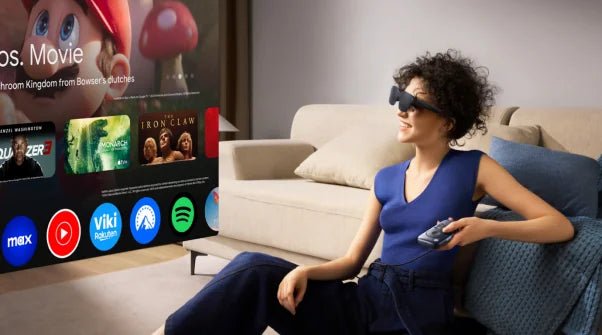
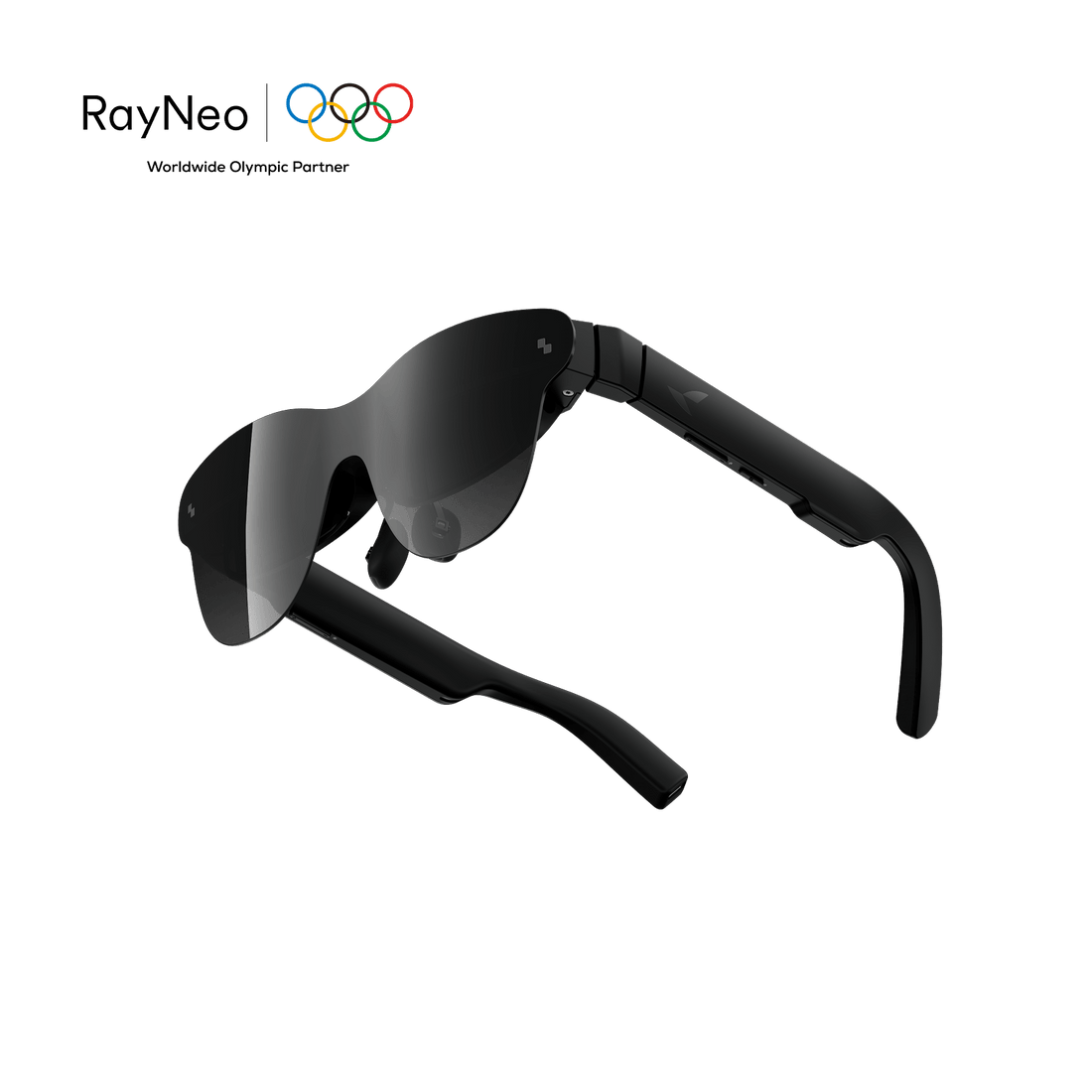
The RayNeo Air 4 Pro launched at CES 2026 as the world's first consumer AR glasses with certified HDR10 support. This distinction represents more than a specification. It fundamentally changes the viewing experience.
Display Performance:
HDR10 certification: Displays content with over a billion colors and a contrast ratio of 200,000:1.
Color accuracy: Delta E under 2, with 145% sRGB coverage and 98% DCI-P3 color gamut support.
135-inch equivalent screen: At a comfortable viewing distance, it creates a private theater experience.
Micro-OLED technology: Dual 0.6-inch SeeYa displays delivering 1920×1080 resolution per eye in 2D mode, and 3840×1080 in 3D mode.
Adaptive refresh rate: 60Hz/120Hz capability handles both standard and high-motion content.
Advanced eye protection: 3840Hz PWM mixed dimming significantly reduces flicker, preventing eye fatigue during extended viewing.
Adjustable brightness: Eight levels of brightness adjustment offering high peak brightness, plus three image quality modes (standard, movie, eye protection).
Audio Engineering: The four-speaker system with innovative sound tube fittings was tuned in collaboration with Audio by Bang & Olufsen. The directional sound tube design reduces sound loss by 80%, retaining complete sound details while maintaining privacy in shared spaces.
Two distinct audio modes serve different needs:
Whisper mode: Reduces high-density sounds with minimal environmental interference, ideal for quiet environments.
Surround mode: Dynamically enhances spatial audio for cinema-like experiences.
Dialogue remains centered and clear while maintaining depth and impact across the frequency spectrum. The open-ear design allows you to remain aware of important ambient sounds, solving fundamental problems with traditional headphones during travel.
Comfort for Extended Viewing: At 76 grams, the Air 4 Pro achieves genuine all-day wearability through engineered weight distribution. The frame features a golden ratio weight balance of 46.7% front to 53.3% rear, ensuring the device doesn't cause discomfort during extended wear.
Design features include:
9-level adjustability: Accommodates different head shapes and sizes.
Optimized nose pads: Three levels of adjustment for a personalized fit.
Flexible temple arms: Multiple directional adjustments for proper positioning.
Prescription lens support: Magnetic prescription lenses attach easily for users who wear glasses.
The compact form factor enhances portability:
Folded: 176.5 × 154.3 × 47.4mm
Unfolded: 57.8 × 154.3 × 47.4mm
Exclusive Design Collaboration: The Air 4 Pro features Batman-inspired lens shade designs, merging iconic pop culture style with cutting-edge technology. Additional IP design collaborations are planned for future releases.

Real-World Entertainment Scenarios:
International flights transform into premium entertainment experiences.
Hotel rooms offer better viewing than unfamiliar TV interfaces.
In-bed viewing doesn't disturb sleeping partners.
Commute streaming becomes genuinely enjoyable compared to small phone screens.
The Air 4 Pro is priced under $300, making HDR10 technology accessible to mainstream consumers.
AR Glasses for Gaming: Performance Beyond Screen Size
Portable gaming has expanded significantly with devices like Steam Deck, ROG Ally, and Nintendo Switch driving demand for displays larger than built-in 7-inch screens. AR glasses transform handheld gaming when specifications align with gaming requirements.
Gaming-Specific Requirements
Gaming demands different display characteristics than passive content consumption:
Refresh rate responsiveness: Smooth motion without blur or judder.
HDR for visual clarity: Maintains visibility in dark scenes without excessive gamma adjustments.
Input lag minimization: Imperceptible delay between controller input and visual response.
Universal compatibility: Works across multiple gaming platforms without configuration.
The RayNeo Air 4 Pro: Comprehensive Gaming Performance
Refresh Rate and Motion Handling: The 60Hz/120Hz adaptive refresh rate accommodates both standard and high-performance gaming. The 120Hz mode delivers smooth motion for action games, while 60Hz conserves power for turn-based and narrative experiences.
HDR Advantage for Gaming: HDR proves particularly valuable for modern games. Dark environments in atmospheric titles become playable without compromising visual fidelity. UI elements in complex games maintain readability. Visual storytelling in cinematic games displays as developers intended, with proper shadow detail and color grading.
Device Compatibility: The Air 4 Pro uses standard USB-C connectivity with DisplayPort protocol. Compatible devices include:
iPhone 15 and above (excluding iPhone 16e)
Macs with HDR output capability
PCs with HDR output capability
Gaming consoles: Nintendo Switch 2, PlayStation 5
Note that most Android phones do not support 10-bit output via DisplayPort protocol and therefore cannot transmit HDR video sources to the glasses.
No dedicated apps or complex configuration required; the glasses function as plug-and-play external displays.
Spatial Audio for Gaming: The Audio by Bang & Olufsen tuned speaker system delivers directional audio cues important for gaming experiences. The open-ear design maintains environmental awareness in public spaces while providing clear positional audio.
Vision 4000 Processing: RayNeo's custom Vision 4000 visual processor provides real-time enhancements:
SDR to HDR upscaling: Standard content receives intelligent enhancement to HDR quality through AI technology.
AI 3D conversion: Traditional 2D content converts to stereoscopic 3D format.
Adaptive optimization: Every frame receives analysis and optimization for maximum clarity.
The processor makes bright image areas more vivid, dark areas deeper, and colors richer, perfectly restoring light and shadow in gaming content.
AR Glasses for Productivity: Understanding Real Capabilities
The productivity use case remains niche, but for specific scenarios such as frequent travelers needing workspace flexibility or digital nomads working from varying locations, AR glasses offer genuine value.
Reality Check: When AR Glasses Work for Productivity
AR glasses won't replace desktop monitors for traditional office work. Ergonomics favor standard displays for full workdays. However, mobile work scenarios benefit:
Airplane productivity: Provides comfortable workspace where laptop screens feel constrained.
Hotel room work: Eliminates the need for portable monitors.
Flexible workspaces: Enables productivity from locations with limited desk space.
Travel work: Functions with just a laptop and glasses.
Display Requirements for Productive Work
Text readability determines productivity viability. The Air 4 Pro's display sharpness and color accuracy make extended text work feasible:
High resolution: 1920×1080 per eye in 2D mode ensures sharp text rendering.
Color accuracy: Delta E under 2 maintains consistent visual presentation.
Contrast ratio: 200,000:1 prevents eye strain when distinguishing interface elements.
Eye protection: 3840Hz PWM dimming reduces flicker during extended sessions.
HDR support, while less critical for productivity than entertainment, improves UI element visibility and reduces eye fatigue when working with multiple windows.
Audio for Professional Work: The open-ear design enables video calls while maintaining environmental awareness. Directional audio provides clarity for remote meetings without external headphones, though privacy concerns apply for confidential discussions.
Practical Approach: For most productivity users, treating AR glasses as a single large external display proves more practical than attempting complex virtual multi-screen setups. This straightforward approach maximizes compatibility and minimizes the learning curve.
Key Specifications That Actually Matter
When evaluating AR glasses, focus on specifications that impact daily use:
Display Technology (Most Critical)
HDR10 support: Essential for modern content consumption.
Resolution per eye: 1920×1080 minimum for text clarity.
Refresh rate: 60Hz/120Hz adaptive capability handles diverse content.
Brightness levels: Adjustability accommodates varying environments.
Contrast ratio: High ratios reduce eye strain and improve visual quality.
Color accuracy: Delta E under 2 ensures professional-grade color reproduction.
Weight and Comfort
Under 80 grams: Necessary for extended wear without discomfort.
Weight distribution: Balanced design prevents pressure points.
Adjustable components: Nose pads and temple positioning for a personalized fit.
Prescription support: Magnetic lens attachments for glasses wearers.
Audio Quality
Spatial audio capability: Creates immersion without isolation.
Directional speakers: Maintains privacy in shared spaces.
Sound leakage prevention: Minimizes disturbance to nearby people.
Environmental awareness: Open-ear design maintains situational awareness.
Compatibility
USB-C DisplayPort: Standard connectivity across devices.
Cross-platform support: Works with multiple operating systems.
HDR capability: Device must support HDR output for full functionality.
No proprietary requirements: Avoids mandatory apps or subscriptions.
Processing Technology
Dedicated visual processor: Real-time content enhancement.
AI upscaling: Improves standard content quality.
3D conversion: Adds depth to traditional 2D content.
Automatic optimization: Requires no user intervention.
The 2026 Buying Decision: What Delivers Real Value
Display technology fundamentally determines whether AR glasses deliver on their promises. The RayNeo Air 4 Pro represents the current standard as the only consumer AR glasses displaying content with full HDR10 certification.
Key advantages include:
Future-proof display: HDR10 support aligns with streaming service and gaming industry standards.
Professional audio: Audio by Bang & Olufsen collaboration eliminates the need for separate headphones.
Engineered comfort: 76 grams with 46.7%:53.3% weight distribution enables extended wear.
Universal compatibility: Standard USB-C works across platforms where HDR output is supported.
Advanced processing: Vision 4000 chip provides real-time content enhancement.
Accessible pricing: Under $300 price point makes premium technology mainstream.
Investment Perspective
AR glasses consolidate multiple devices:
Portable monitor ($200-400)
Premium travel headphones ($200-350)
Entertainment tablet ($300-800)
The Air 4 Pro addresses these use cases while outperforming each category individually, making the sub-$300 price point represent significant value.
Future-Proofing Considerations
Content libraries increasingly adopt HDR standards. Netflix, Apple TV+, Disney+, and YouTube continue expanding HDR offerings. Modern games increasingly utilize HDR for intended visual experiences.
Purchasing AR glasses without HDR10 support in 2026 means investing in technology that cannot properly display current content standards, a limitation that becomes more significant as HDR adoption accelerates.
Common Buying Mistakes to Avoid
Mistake 1: Prioritizing minimal weight over display quality Ultra-lightweight designs mean nothing if content appears washed out. The 76-gram Air 4 Pro demonstrates that proper engineering achieves both lightness and premium display technology.
Mistake 2: Assuming outdoor usability Standard AR glasses become difficult to use in bright sunlight. Unless outdoor use specifically matches your needs, indoor and travel scenarios dominate actual usage patterns.
Mistake 3: Overvaluing field of view specifications Wider FOV sounds superior but doesn't significantly impact viewing experience compared to display quality. Adequate field of view with superior HDR creates better experiences than wide FOV with compromised visuals.
Mistake 4: Ignoring audio quality Poor built-in audio diminishes entertainment experiences. Premium spatial audio eliminates the need for separate headphones while improving overall immersion.
Mistake 5: Purchasing for theoretical use cases Buy for your primary use case, not imagined scenarios. If you primarily watch movies, prioritize display quality. If gaming dominates, ensure compatibility with your gaming devices. If productivity drives purchase, verify text clarity and comfort during extended sessions.
Manufacturing Quality and Support
RayNeo operates as the only AR company with full in-house R&D and mass production capabilities for core optical solutions. The company operates its own optical manufacturing facilities and complete device production plants. This vertical integration enables consistent quality control while delivering high-quality AR glasses at accessible price points.
The Bottom Line: Choosing AR Glasses in 2026
2026 represents the first year AR glasses evolved from aspirational technology to practical products, but "practical" applies only when devices prioritize features impacting daily use.
The RayNeo Air 4 Pro delivers the complete package without compromises:
World's first consumer HDR10 support ensures content displays as intended.
Audio by Bang & Olufsen tuning enhances rather than compromises experiences.
76-gram engineered design enables genuine extended wear.
Vision 4000 processor provides intelligent content enhancement.
Universal USB-C compatibility works across devices where HDR output is supported.
Batman-inspired design collaboration merges style with technology.
Sub-$300 pricing democratizes premium AR technology.
For most buyers across entertainment, gaming, and productivity use cases, the Air 4 Pro represents where consumer AR glasses should be: premium technology at accessible pricing, focusing on fundamentals that matter rather than marketing gimmicks.
The future of personal entertainment, gaming, and mobile productivity centers on genuinely superior displays for content we already consume. The RayNeo Air 4 Pro delivers on that promise.
Learn more about the RayNeo Air 4 Pro at www.rayneo.com.





Share:
What Are the Best AR Glasses for Steam Deck? The Complete 2026 Guide
What Are the Best AR Glasses Right Now? RayNeo Air 4 Pro Sets New Standards at CES 2026