

Sale price$399.00
Regular priceReg. $429.00
Save $30.00


A pair of smart glasses is practical for daily use when it passes five specific tests: it stays comfortable on your face for a full day, its battery actually lasts through that day, it looks close enough to normal eyewear that you’re not self-conscious wearing it in public, it does something useful often enough to justify putting it on each morning, and it can survive the rain, sweat, and spilled coffee that come with normal life. Miss two or three of those and the glasses end up in a drawer within a month, no matter how impressive the feature list looked in a demo.
This isn’t a hypothetical bar. It’s the same checklist worth running against any smart glasses before buying, and it’s the one used below to walk through RayNeo iO, a $449 AI glasses model built specifically around all-day wear rather than a single flashy feature.
Comfort over eight or ten hours comes down to weight and where that weight sits on your face, not just the number on a spec sheet. A standard pair of prescription glasses typically runs between 20 and 40 grams depending on frame material, according to optical retailers like Optics Town. Anything much heavier than that starts pressing on the nose and behind the ears well before lunchtime.
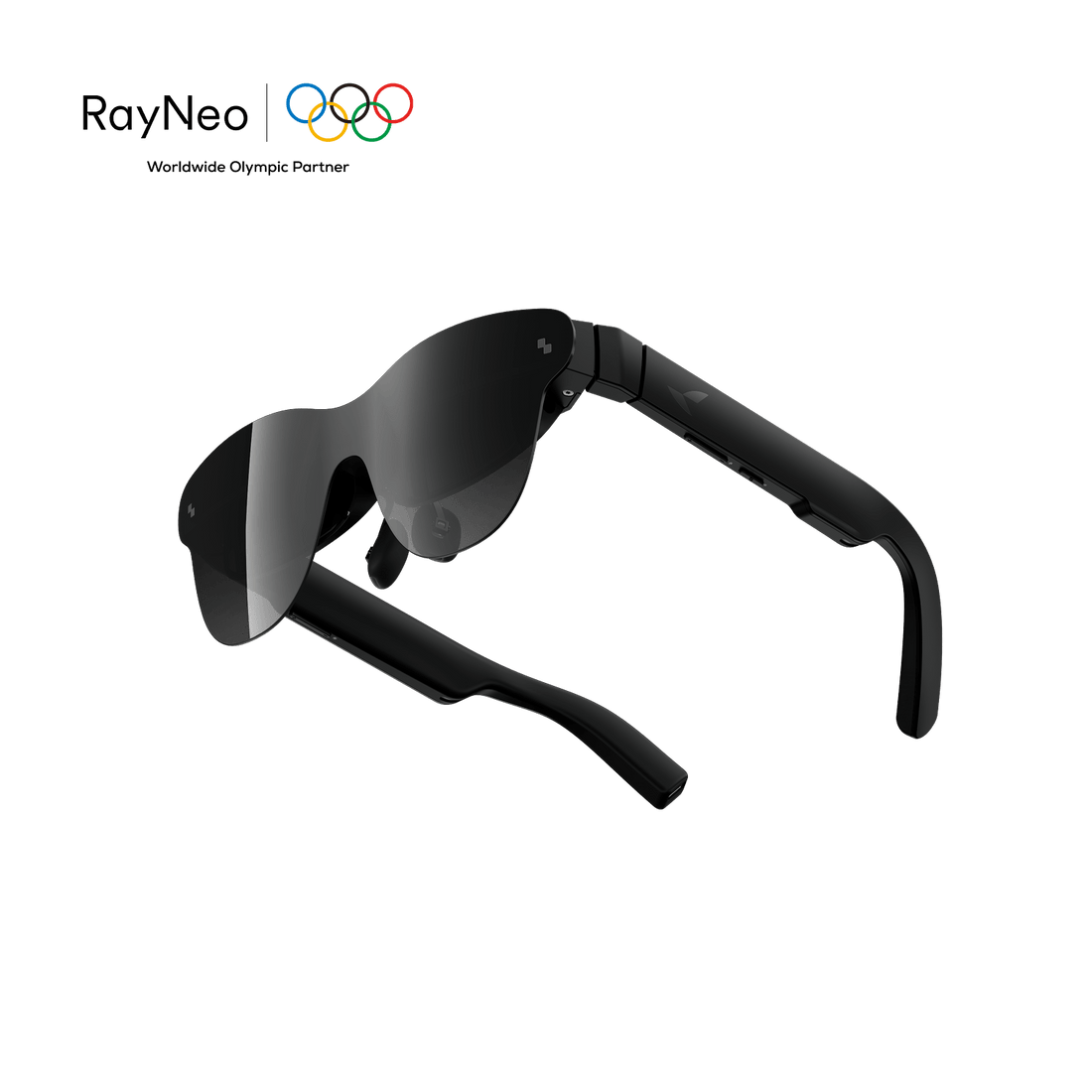
RayNeo iO weighs 33 grams, which lands inside that normal eyewear range rather than in gadget territory. The frame uses a Crown Panto shape, built from an AZ91D magnesium-aluminum alloy front with aviation-grade titanium alloy temples.
RayNeo positions that weight and frame combination around all-day comfort rather than the front-heavy feel some display devices carry. iO ships with a nose pad kit in the box, designed to relieve pressure points for all-day wear, and prescription lenses are available through RayNeo’s prescription-lens service (HSA/FSA eligible), so people who already need vision correction aren’t forced to layer a device on top of their existing glasses.

A device that needs charging by mid-afternoon isn’t practical for daily use, regardless of what it can do. RayNeo rates iO’s 240mAh battery for up to two days of everyday use, though the company’s own FAQ notes that actual battery life varies depending on usage patterns, enabled features, and AI activity.
That top-line figure is a general estimate rather than a fixed test result. Two more targeted numbers matter if a day involves heavier use: RayNeo lists up to 18 hours of continuous audio recording and up to 6.2 hours of continuous translation on a single charge. Anyone planning to run the glasses through back-to-back meetings or a full day of travel conversations should plan around those two numbers rather than the general “up to two days” figure, since translation and recording draw more power than passive notifications.
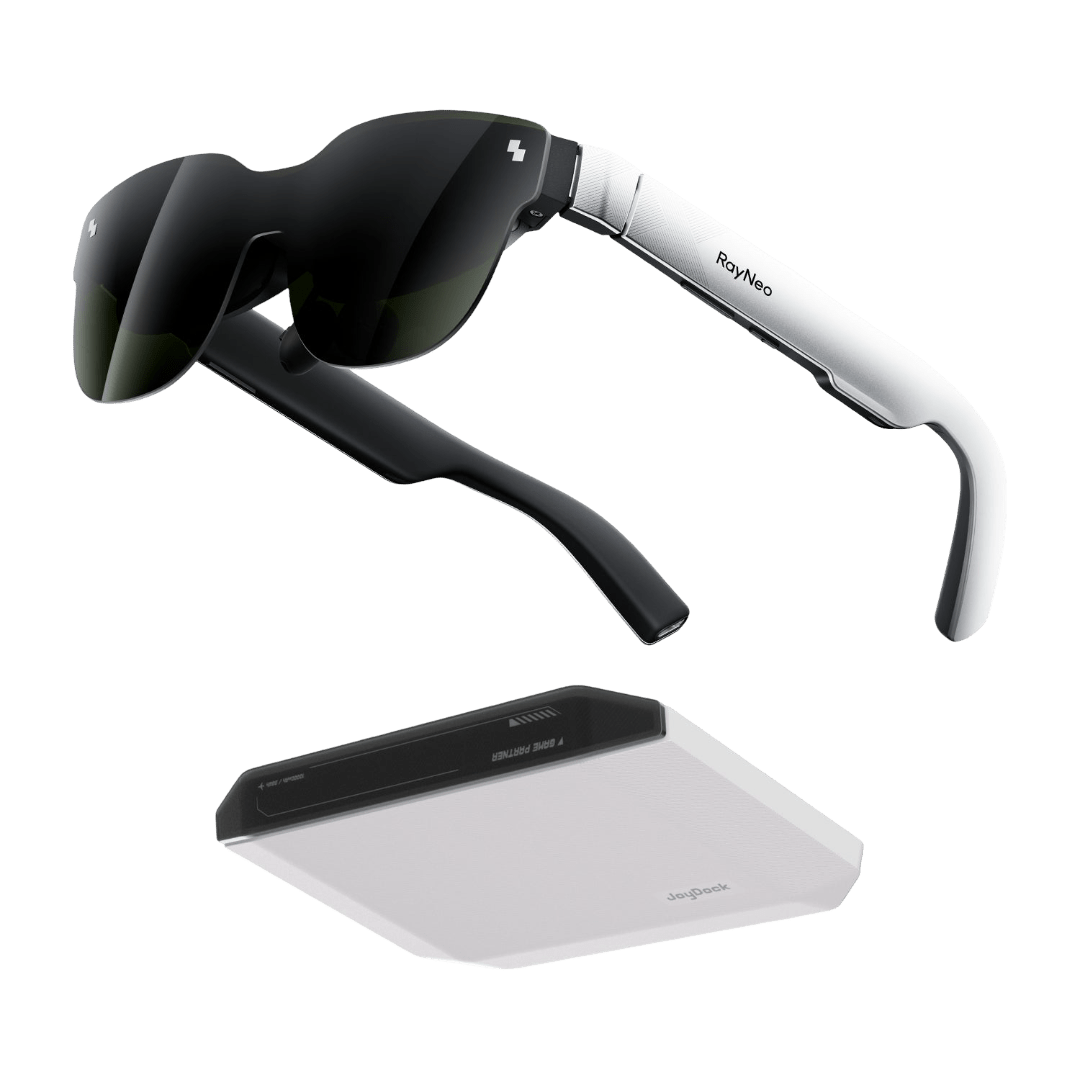
iO ships with a USB-C Eyewear Charging Clip in the box, and RayNeo’s product materials cite a 25-minute fast charge to 80 percent. That’s short enough to top up over a coffee break rather than requiring the glasses to sit on a charger overnight, which matters for a device meant to be worn continuously rather than swapped in and out.
RayNeo also sells iO as a $499 Charging Case Bundle, which pairs the same glasses with a charging case instead of just the clip.

Whether other people can tell you’re wearing “smart” glasses at all changes how comfortable it feels to use them at a desk, in a meeting, or on the street. Two things drive that: the display’s visibility from the outside, and whether there’s a visible camera.
iO’s display is a monochrome green heads-up display shown through a diffractive waveguide lens, which RayNeo rates at 97 percent active display transparency and markets as an “Invisible AI Display.” From the outside, the lenses look close to clear glass rather than a tinted visor or a lit-up screen. RayNeo’s product page states directly that the design carries no camera at all: “RayNeo iO is designed without a camera.” That’s a deliberate choice, not a missing feature, and it removes a specific concern that camera-equipped smart glasses raise in shared spaces like offices, classrooms, and public transit, where people may reasonably wonder whether they’re being recorded.
That’s a narrower privacy question than a blanket guarantee, though. iO’s Lifelog feature records ambient audio throughout the day, which is a separate consideration for anyone nearby. RayNeo includes a privacy indicator light on the frame, which the product page describes as letting you know “when key features are active.”
Comfort and looks only matter if the glasses earn their place on your face. iO’s software centers on a small set of specific tools rather than a broad, unfocused feature grid, and each one maps to something people already do daily:
Interaction runs through the Smart Crown dial, voice commands (“Hey, RayNeo”), and head gestures. Voice input is picked up by a four-microphone array plus a bone-conduction sensor, which RayNeo describes as designed to isolate your voice with precision. iO’s spec sheet lists audio input only, with no speaker, so calls and music aren’t part of what this device does; it’s built around glanceable visual information and voice input rather than audio output. That’s a meaningful distinction from earbuds or audio glasses, and it’s worth knowing before buying if listening to audio is what you actually want.

Daily use means occasional exposure to dust and light moisture, not full submersion. iO carries an IP54 rating. RayNeo’s own product FAQ states that iO “is rated IP54 for dust and water resistance” and is “designed to resist everyday dust and splashes,” adding that “splash, water, and dust resistance are not permanent conditions and may decrease with normal wear.” That’s a standard caveat for consumer electronics with this rating rather than something specific to iO. IP54 isn’t rated for submersion, so swimming or standing in heavy rain for an extended period falls outside what the rating covers.
| Test | RayNeo iO |
|---|---|
| Weight | 33g |
| Frame | Crown Panto, magnesium-aluminum front, titanium temples |
| Battery (typical use) | Up to 2 days |
| Fast charge | 25 minutes to 80% |
| Display visibility | Monochrome green HUD, 97% lens transparency |
| Camera | None |
| Water/dust resistance | IP54 |
| Connection | Bluetooth 5.4, MFi Certified |
| Price (at time of writing) | $449 (Standard) / $499 (Charging Case Bundle) |
RayNeo backs iO with a 30-day return window and a one-year limited warranty, which gives buyers some room to test the fit and daily routine before committing.
RayNeo iO fits people who want heads-up information and voice AI available all day without adding a visible gadget to their face. That includes professionals who sit through back-to-back meetings and want automatic notes without a laptop open on the table, frequent travelers or bilingual households who need real-time captions and translation on the go, presenters who want a discreet teleprompter instead of reading off a laptop, and anyone who wants schedule and notification glances without pulling out a phone every few minutes.
It’s a less obvious fit for anyone who wants photo or video capture built into the glasses (RayNeo’s X3 Pro covers that with its 12MP camera instead), anyone who wants music or calls through the glasses themselves (iO has no speaker), or anyone who mainly wants a large screen for movies or gaming, which is a different use case covered by RayNeo GT and GT Max.
Do I need to connect RayNeo iO to a phone for it to work?
Can RayNeo iO play music or take phone calls?
Is IP54 enough protection for wearing iO during a workout or in the rain?
How is iO different from RayNeo’s GT and GT Max glasses?





Share:
What AR Glasses Are Comfortable to Wear While Lying in Bed?
Which Glasses Have a HUD Display, and How Useful Is It in Real Life?