

$429.00

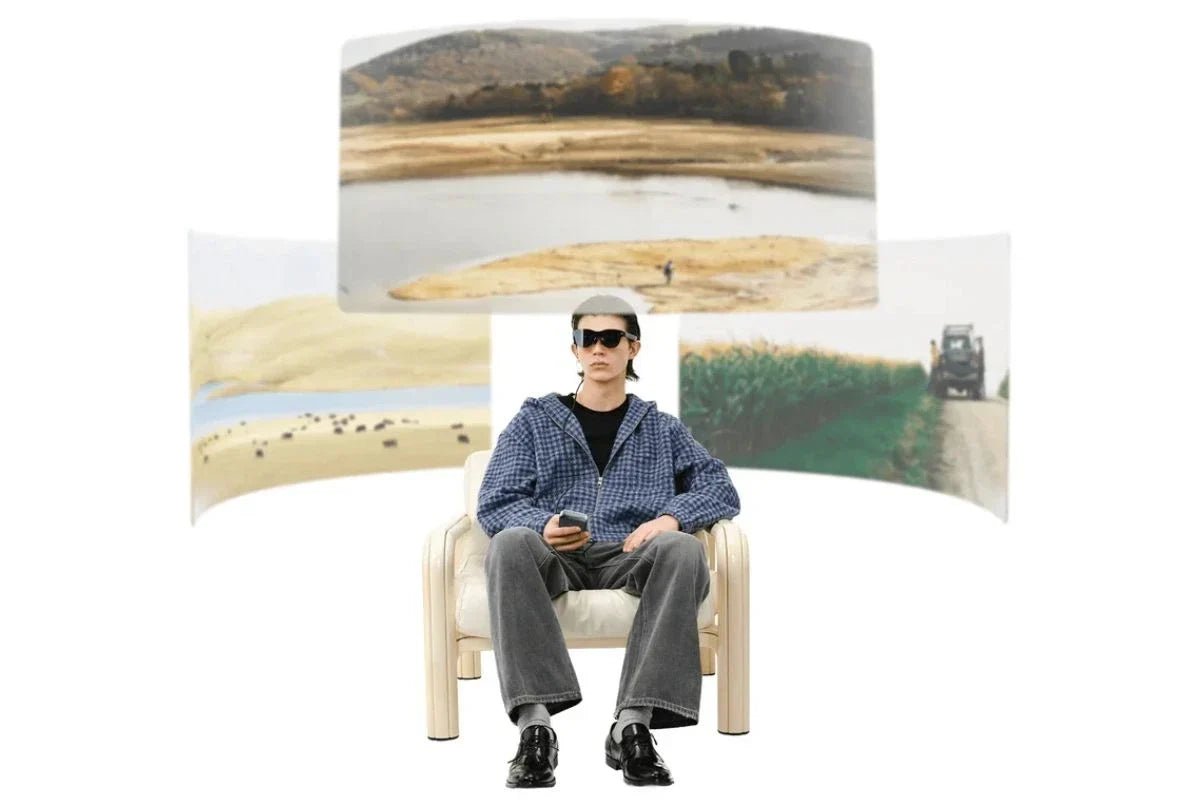
RayNeo’s Air line of display glasses has four models: Air 2s, Air 3s, Air 3s Pro, and Air 4 Pro. All four are external display glasses that need a USB-C video connection to a phone, laptop, tablet, or game console to show anything. That is the line’s defining trait, and it is what separates the Air series from RayNeo’s X3 Pro (a standalone glasses platform with a camera and a Gemini-based voice assistant) and the iO AI glasses (which have a monochrome MicroLED display but don’t work as a USB-C video screen).
The naming doesn’t climb neatly. At the time of writing, the Air 3s Pro costs $20 less than the Air 4 Pro, and the lowest-priced model, the Air 2s, is out of stock. A side-by-side table is more useful than reading four product pages one at a time.
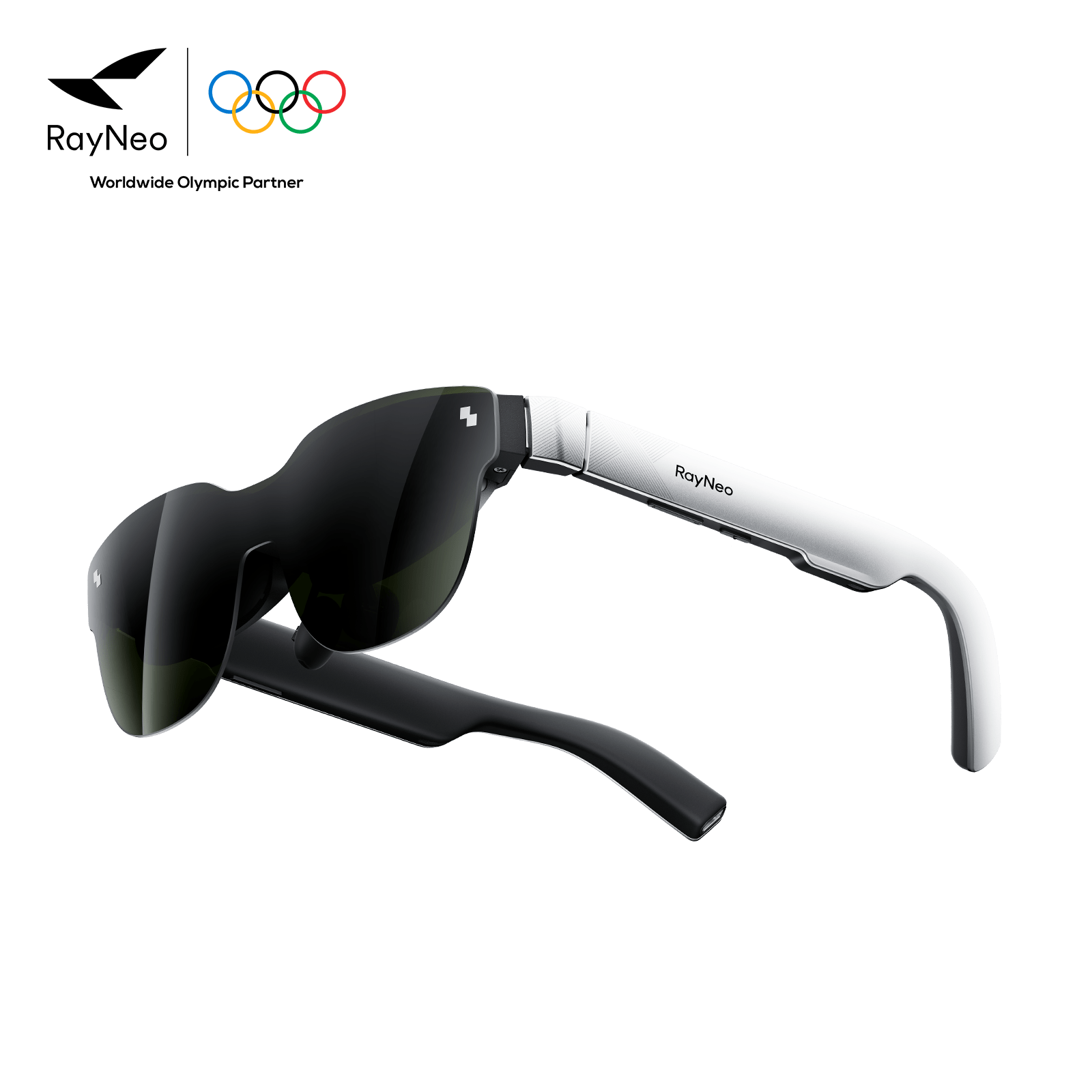
The four models differ mainly in price, brightness, HDR, audio, and a few certification and compatibility details. Here is the comparison, followed by which one suits which buyer.
| Spec | Air 2s | Air 3s | Air 3s Pro | Air 4 Pro |
|---|---|---|---|---|
| Price at time of writing | $159 (list $299) | $269 | $279 (list $299) | $299 |
| Availability (Oct 2026) | Out of stock | In stock | In stock | In stock |
| Weight | 76g | 76g | 76g | 76g |
| Optical design | Birdbath | Birdbath | Birdbath | Birdbath |
| Display panel | Sony Micro-OLED | Micro-OLED (HueView branding; supplier not named on current page) | SeeYa Micro-OLED, two 0.6” panels (one per eye) | SeeYa Micro-OLED |
| Brightness as RayNeo states it | 600 nits (Key Specs) and 5,000 nits (marketing copy) on the same page | 650 nits, “to-eye” | 1,200 nits, “to-eye” | 1,200 nits, basis not labeled |
| Contrast ratio | Not listed | 200,000:1 | 200,000:1 | 200,000:1 |
| HDR | Not listed | Not listed | Not listed | HDR10 plus real-time SDR-to-HDR enhancement (Vision 4000) |
| Audio | Not listed here | Not listed here | Not listed here | Quad speakers with Bang & Olufsen tuning |
| Resolution as RayNeo states it | “1080p” | “1080p” | 1920x1080 (2D) / 3840x1080 (3D) | “Full HD” |
| Field of view | 46° | 46° | 46° | 46° |
| Virtual screen size | 201” (at 6m) | 201” (at 6m) | 201” (at 6m) | 201” (viewing distance not stated) |
| Refresh rate | 120Hz | 120Hz | 120Hz | Up to 120Hz |
| TÜV low blue light / flicker-free | Not in the spec sheet; “TÜV” appears in one image caption | Listed | Listed | Listed |
| Tablet compatibility wording | Generic “iPad” mention | Specific iPad models named | Specific iPad models named | Generic “Tablets” category |
| Prescription lens purchase path | RayNeo’s own purchase page | External Lensology partner link | External Lensology partner link | External Lensology partner link |
Prices and stock change often. Check each product page directly before ordering.
On those axes the models match, so the choice comes down to brightness, HDR, audio, fit and adjustment, and the scenarios you’ll use them for.
RayNeo states these brightness figures on each model’s current product page:
Because of the Air 2s inconsistency and the unlabeled Air 4 Pro basis, compare brightness cautiously. The Air 3s Pro’s 1,200 nits is explicitly labeled to-eye.
The Air 4 Pro is the model with HDR10 support and real-time SDR-to-HDR enhancement through its Vision 4000 chip, and its page lists quad speakers with Bang & Olufsen tuning. These are the differences most likely to matter for movies. HDR10 benefits only content mastered in HDR10 and a source that outputs it; the enhancement applies to standard content.
“1080p” and “Full HD” both typically mean 1920x1080, so the practical resolution is the same class across the line. For more on the 3D figure, see the Air 3s Pro resolution explainer, “RayNeo Air 3s Pro Display Resolution Explained: 1920x1080 (2D) and 3840x1080 (3D).”
The Air 3s, Air 3s Pro, and Air 4 Pro pages list TÜV SÜD certification for low blue light and flicker-free display performance. The Air 2s page doesn’t list it in its spec sheet; “TÜV” appears only in an image caption. A short note: the Air 3s Pro page describes itself as the “only” display glasses with this certification, while other Air pages list it too, so treat that wording as marketing language rather than a performance difference.
The Air 3s and Air 3s Pro pages name specific iPad models. The Air 2s page mentions “iPad” generally, and the Air 4 Pro lists a generic “Tablets” category. If you plan to use a specific iPad, check the model list on the Air 3s or Air 3s Pro page, and confirm with RayNeo for the others.
All four Air models support prescription lens inserts, but the purchase path differs. The Air 2s option is sold through RayNeo’s own purchase page. The Air 3s, Air 3s Pro, and Air 4 Pro pages link to Lensology, RayNeo’s external optical partner, whose pricing and processing times vary by region. If prescription lenses are a must-have, budget extra time for that separate order.
All four models list some form of adjustable fit:
The Air 3s Pro is the model with the most published fit detail. For more, see the Air 3s Pro fit guide, “RayNeo Air 3s Pro Fit and Weight Distribution.”
The glasses read a USB-C video signal, the same kind a modern phone or laptop sends over USB-C. Consoles that only output HDMI need an adapter.
| Console | Connection | Extra accessory |
|---|---|---|
| PS4 | HDMI only | RayNeo’s HDMI Adapter, sold separately |
| PS5 | HDMI only | HDMI Adapter, sold separately |
| Xbox | HDMI only | HDMI Adapter, sold separately |
| Nintendo Switch / Switch 2 | Docked HDMI route through the HDMI Adapter; models differ, so see the Switch guide | Powered HDMI Adapter setup and a compatible console dock |
| Steam Deck | Its USB-C port supports DisplayPort video, so a direct USB-C connection is possible | For an HDMI route: a compatible HDMI-output dock plus a powered HDMI Adapter |
These requirements are the same whichever Air model you pick. For setup steps and power details, see the guides “Connecting RayNeo AR Glasses to Xbox, PlayStation, and Steam Deck” and “Can RayNeo AR Glasses Connect to Nintendo Switch?”
If budget is the deciding factor: the Air 2s is the cheapest at $159 (list $299), but RayNeo lists it as out of stock with no restock date, and its brightness figure is stated two different ways on its own page. Among models available to order, the Air 3s at $269 is the least expensive, and it lists the TÜV low blue light and flicker-free certification.
If a documented eye-comfort certification matters to you: the Air 3s, Air 3s Pro, and Air 4 Pro list TÜV SÜD certification. Among those, the Air 3s is the least expensive at $269.
If you want a 1,200-nit to-eye rating at a lower price: the Air 3s Pro lists 1,200 nits to-eye, 1920x1080 per eye for 2D and 3840x1080 for a combined 3D frame, a 9-level temple and 3-level nose pad adjustment, and a published eyebox, at $279.
If you want HDR and built-in audio: the Air 4 Pro at $299 matches the Air 3s Pro’s 1,200 nits figure and supports HDR10 and real-time SDR-to-HDR enhancement. Its audio specification names quad Bang & Olufsen-tuned speakers; that does not mean the other Air models lack built-in audio. RayNeo calls it the “World’s First HDR10 Display in AR Glasses,” a marketing claim rather than an independent ranking. The 200,000:1 contrast figure isn’t an Air 4 Pro exclusive: the Air 3s and Air 3s Pro list it too. HDR10 only helps content mastered that way and a source that outputs it.
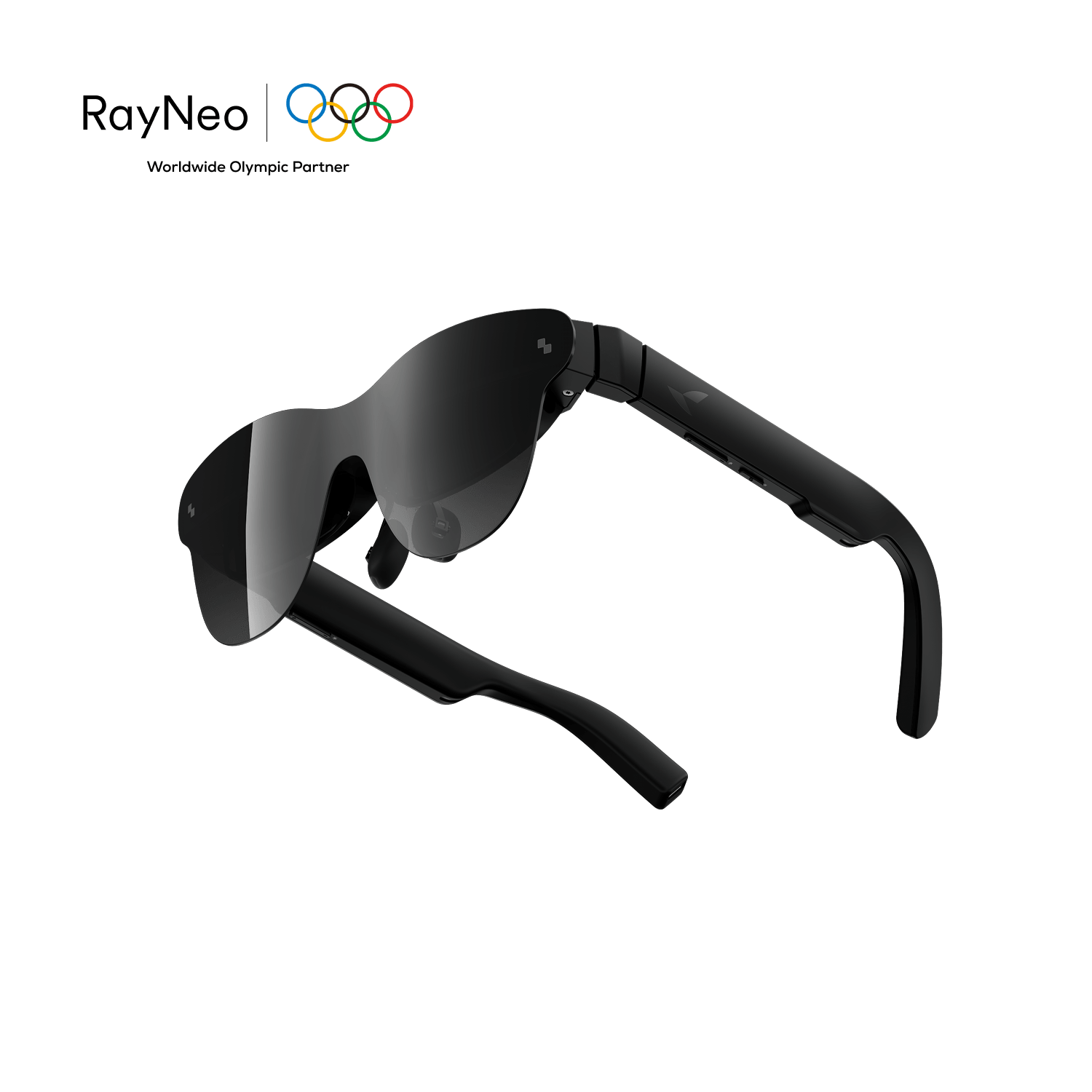
If you want a camera, a built-in voice assistant, or AI features: the Air series is built as external display glasses. The X3 Pro is RayNeo’s model built around those features, and it’s worth comparing.
If you mainly want movie or game viewing with a wider field of view and spatial display modes: RayNeo’s GT series is built around that use case. The GT Max has a 59° field of view, wider than the 46° on every Air model; the GT matches the Air’s 46° and differs in features such as its spatial modes and screen-size presets. Compare them side by side rather than assuming a higher Air model covers the same ground.
Is Air 4 Pro just a newer version of Air 3s Pro?
Why does the Air 2s’s brightness number not match across its own product page?
Do any of the Air models have a camera or voice assistant?
Can I use any Air model with an iPad?
Which Air model is cheapest right now?
Do all four models support prescription lenses?





Share:
RayNeo Wired vs. Wireless Glasses: What the Cable Actually Means
RayNeo Air 3s Pro Display Resolution Explained: 1920x1080 (2D) and 3840x1080 (3D)