

$449.00

Focal length is the distance between the center of a lens and its focal point, determining how zoomed or wide a camera’s view appears. The choice of focal length in AR glasses directly determines the display distance of virtual images, visual comfort, clarity, and the suitable use cases. In this article, we will first explain the physical meaning and geometric relationships of focal length in a simple yet rigorous way. We will then expand into the field of view, spatial composition, and how to choose focal lengths for different types of content. Finally, we will apply this knowledge to the experience of using AR and smart glasses. This will help you understand both lenses and wearable display devices through a unified optical framework.
In the world of smart glasses and cameras, focal length is the starting point of every discussion. It defines how a lens focuses parallel light onto a light-sensitive surface. Common focal length parameters, such as 24 mm, 50 mm, or 200 mm, play a major role in determining the field of view and magnification of an image. When we calibrate built-in cameras or AR projection engines, every change to the focal length causes immediate shifts in edge distortion, focus distance, and the range of clarity within our lab.
In an ideal thin lens model, focal length is the distance from the optical center of the lens to the focal point on the imaging plane, measured in millimetres. For a camera lens, this imaging plane is usually a CMOS or CCD sensor. For the light engine in AR glasses, it might be a micro OLED or micro LED chip. When we measure this on a test bench, we use a collimated light source to emit parallel rays. These rays pass through the lens and focus on a movable screen. When both the edges and the center of the image reach peak sharpness, that distance is the effective focal length.
In wearable devices, this distance is often in the 10 mm range, which is much smaller than the tens of millimetres found in traditional cameras. However, after light travels through refractive prisms and waveguides, the equivalent field of view can be designed to be very wide. This is the key to how smart glasses fit large-scale images into such a small volume.

We stick to millimetres for labelling focal length because the millimetre scale represents the actual tolerance for lens design and manufacturing. A change of just 1 mm in focal length often creates a visible difference in the field of view for wide-angle lenses, while causing significant magnification shifts for telephoto lenses. When choosing built-in cameras, we often compare 18 mm and 28 mm equivalents. Adjusting just a few millimetres determines whether the glasses are better for recording street scenes or capturing close-up documents and screens.
In AR display engines, millimetres are just as vital. The focal length of the light engine and the range of eye movement together define the final display performance. For a deeper dive into how these angles affect your visual immersion and screen size, check out our comprehensive guide on what the field of view (FOV).
Many users instinctively think that focal length matches the physical length of a lens, assuming a longer lens always has a longer focal length. In modern optical systems, this is no longer true. Complex lens groups use multiple elements and folded light paths to achieve long equivalent focal lengths within a short physical body. The projection engines we use in smart glasses are usually between 5 and 15 mm thick. However, through refraction and reflection, they can create a virtual screen that feels several meters away.
This means you cannot judge internal structure simply by looking at a lens labeled 50 mm. The same applies to AR glasses. We use folded optics to keep the frames close to the size of daily eyewear while providing a large-screen experience that feels like it is floating 4 to 6 meters away.
From a geometric optics perspective, focal length determines how light rays entering from different angles are arranged on the sensor. A shorter focal length collects light from a wider range of angles, resulting in a broader field of view. A longer focal length causes light beams to converge more tightly, concentrating the composition in the center of the frame. By inputting different focal lengths into simulation software, we can clearly see changes in the incident angle of marginal light rays. This directly impacts metrics like distortion correction, field curvature, and edge sharpness.
In AR display systems, we use geometric optics to plan the entire light path from the micro-display to the user's retina. A change of just a few degrees in field of view often creates a massive difference in how a 3D scene feels. We use professional FOV meters to record every minor adjustment, especially in the 30 to 55 degree range used for daily wear. This ensures that the frame or nose pads do not block the edges of the virtual screen during real-world use.
Whether dealing with landscapes and portraits in traditional photography or the screen size and immersion in AR devices, the core issue is the relationship between focal length and field of view. This addresses a common pain point for users; when evaluating what are smart glasses with display configurations, many people find their screen feels too small or requires looking up to see the whole image. These visual limits stem directly from the optical engineering trade-offs between equivalent focal length and FOV.
In a standard 35 mm camera system, a shorter focal length means a wider angle of view, while a longer focal length means a narrower one. Using a full-frame sensor as an example, a 14 mm lens has a diagonal angle of nearly 114 degrees. A 35 mm lens is about 63 degrees, 50 mm is around 46 degrees, and 200 mm narrows down to about 12 degrees. When explaining these numbers to beginners, we use comparison photos to help them build an intuitive understanding of the visuals.
With smart glasses, we focus more on horizontal and vertical FOV. Typical consumer AR glasses fall within the 35 to 55 degree horizontal range. In the lab, we can push the field of view from 30 to 50 degrees using adjustable focal length optical engines and waveguide structures. However, every additional degree adds significant pressure to the nose pads and increases frame thickness and heat. This explains why some users feel the field of view is only average despite the device feeling heavy.

When the focal length is short, the wide-angle view fits more content into the frame. The 14 mm to 24 mm range is ideal for shooting architecture and landscapes, or for capturing full scenes in tight indoor spaces. In our internal tests, using a 24 mm equivalent camera to record an office environment easily covers everything from the desk to the person sitting opposite. This is very useful for first-person recording on smart glasses.
However, wide angles cause stretching at the edges. If a person is near the edge of the frame, their face will look noticeably elongated. This distortion is especially obvious below 18 mm. Community feedback shows that many users feel their faces look distorted in selfies taken with built-in cameras because the focal length is too wide. For AR displays, an excessively wide FOV can cause blurring and geometric distortion at the edges. This is why the center is sharp while the edges look soft, which presents a tough challenge for optical field correction.
As focal lengths extend to 85 mm, 135 mm, or even 600 mm, the angle of view narrows significantly. Distant subjects are magnified, and the background appears to be pulled closer. This is the well-known telephoto compression effect. We often use 70 mm to 200 mm equivalent lenses for sports or stage performances to make distant people appear larger while keeping a safe distance. While AR glasses usually do not offer high-ratio optical zoom, we can simulate telephoto views in spatial computing. For example, we can zoom in on distant architectural details in a 3D scene, allowing users to observe content as if they were using binoculars.
The specific focal length of human vision is a debated topic. However, in product design, we generally treat the 40 mm to 50 mm equivalent range as the natural field of view. On a full-frame camera, a 50 mm prime lens provides a perspective and sense of space similar to what a person perceives when focusing on an object.
We use this natural vision concept when designing the FOV for AR glasses. If a virtual screen has an equivalent viewing distance of 4 meters and an angle between 46 and 50 degrees, most users find it comfortable. It does not feel too aggressive or as cramped as a smartphone screen. When we adjust optical engines in the lab to simulate different viewing distances, we collect subjective scores from testers to track comfort and immersion across various angles.
The following table maps common camera focal lengths to typical horizontal angles on a full-frame sensor to help you make quick comparisons:
|
Focal Length (mm) |
Approximate Horizontal FOV (Full Frame) |
|
14 |
Approximately 104° |
|
24 |
Approximately 74° |
|
35 |
Approximately 54° |
|
50 |
Approximately 40° |
|
85 |
Approximately 24° |
|
135 |
Approximately 15° |
|
200 |
Approximately 10° |
More users are now trusting their visual experience to a pair of glasses rather than just a smartphone screen. According to research from Statista, the AR glasses and headset market reached approximately 6.3 billion dollars in 2024 and will continue to grow. For smart glasses users, focal length influences everything from virtual screen size and edge clarity to overall wearing comfort.
When product pages mention an equivalent 130-inch virtual screen at a 4-meter viewing distance, they are using familiar TV language to explain the results of optical focal length and FOV calculations. Micro-displays are typically 0.5 to 0.7 inches, with focal lengths ranging from a few millimetres to over ten millimetres. Through lens groups and waveguides, we project the image from this tiny screen to a virtual plane several meters away. The eye then focuses on this plane to create a sharp image on the retina.
In the lab, we have testers use a scale on a wall to judge the boundaries of the virtual image. Combining these subjective reports with geometric measurements allows us to calculate the equivalent diagonal size. This size is directly affected by the focal length. A shorter focal length can make the screen look larger, but it also places a higher demand on waveguide efficiency and edge sharpness.
The curvature of the front lens, the internal light path of the waveguide, and the distance between the eye and the lens determine the final FOV. While increasing lens curvature can expand the field of view by a few degrees, it also increases the thickness near the nose bridge. This shifts the weight forward, often causing noticeable pressure marks after an hour of use.
Community feedback confirms that many users find that certain AR glasses have a large screen but cause pain on the nose. When designing frames, we balance lens curvature, weight distribution, and FOV. Our goal is to maintain a 70 gram weight class within a 40 to 50 degree field of view, keeping nose bridge pressure at an acceptable level for 2 to 3 hours of continuous wear.
Image clarity is key to long-term user retention. Common complaints like sharp in the center but blurry at the edges often stem from issues with focal length, field curvature, and waveguide design. We use resolution test charts to measure the MTF curve at different angles. We aim to keep the resolution difference between the center and the 70% field radius as small as possible.
The eye naturally moves to check the edges of a screen. If the edges are blurry, users will instinctively turn their heads to compensate, straining the neck and eye muscles. Many users report feeling tired after searching for a clear focal point. Because of this, we prioritize stable edge-to-edge clarity over an aggressively wide FOV.
AR glasses can simulate the styles of different photographic lenses in a virtual space. By setting the virtual camera focal length in a rendering engine, we can create a wide 24 mm city nightscape or the compressed look of an 85 mm portrait. Paired with virtual depth of field, this gives users a cinematic visual language on their smart glasses.
Users clearly want a mobile cinema experience for commuting or travel. They want the immersion of a large screen without disturbing others. We use appropriate equivalent viewing distances and FOV, combined with HDR and high contrast, to recreate the lighting layers of traditional film. We also avoid extreme wide-angle perspectives to prevent visual fatigue during long sessions.

Many users highlight three main issues: FOV versus actual screen size, wearing comfort, and battery life. Some users feel that marketing videos promise a movie theatre experience, while the reality feels more like a 13-inch laptop. Others struggle with nose pad pressure and overheating during AI tasks.
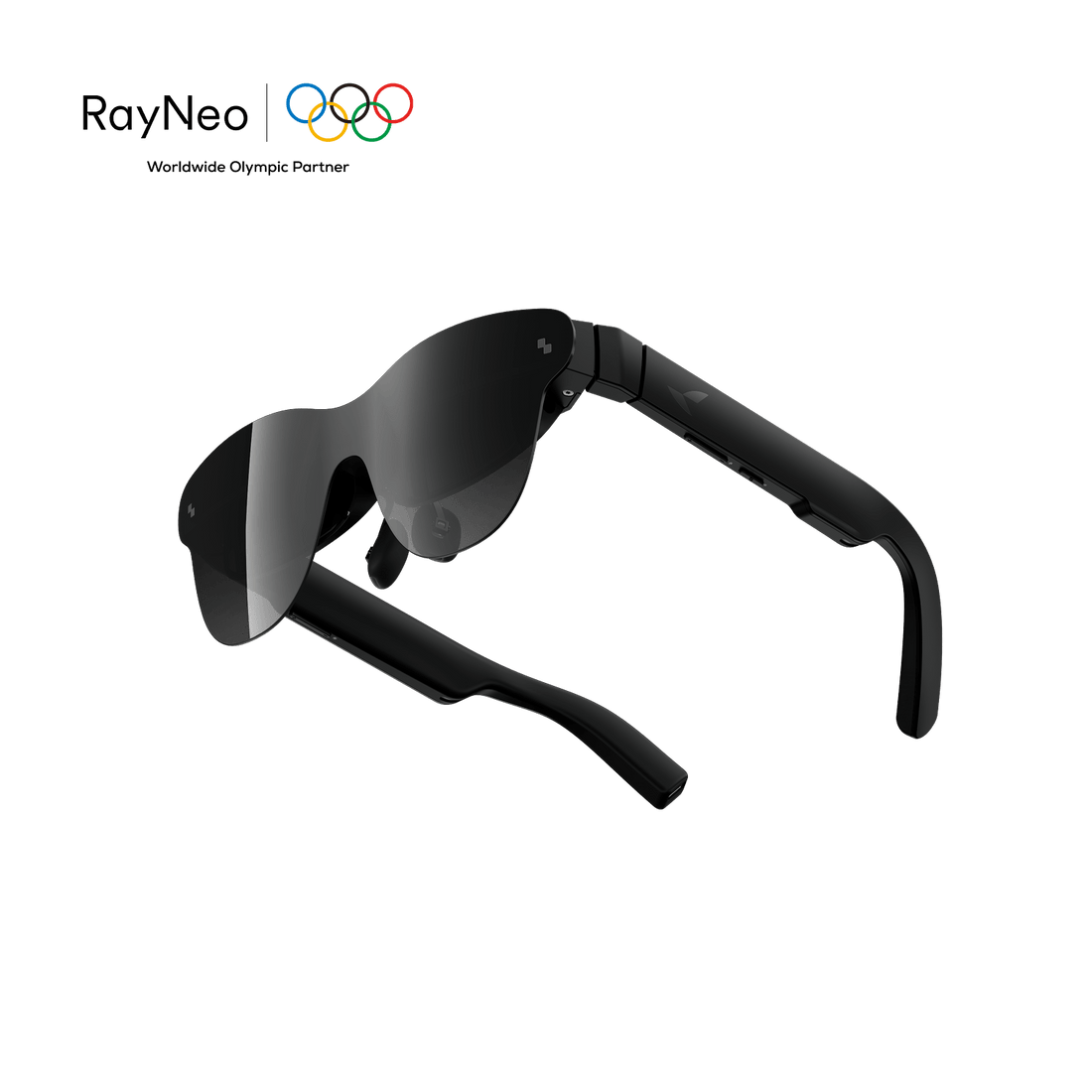
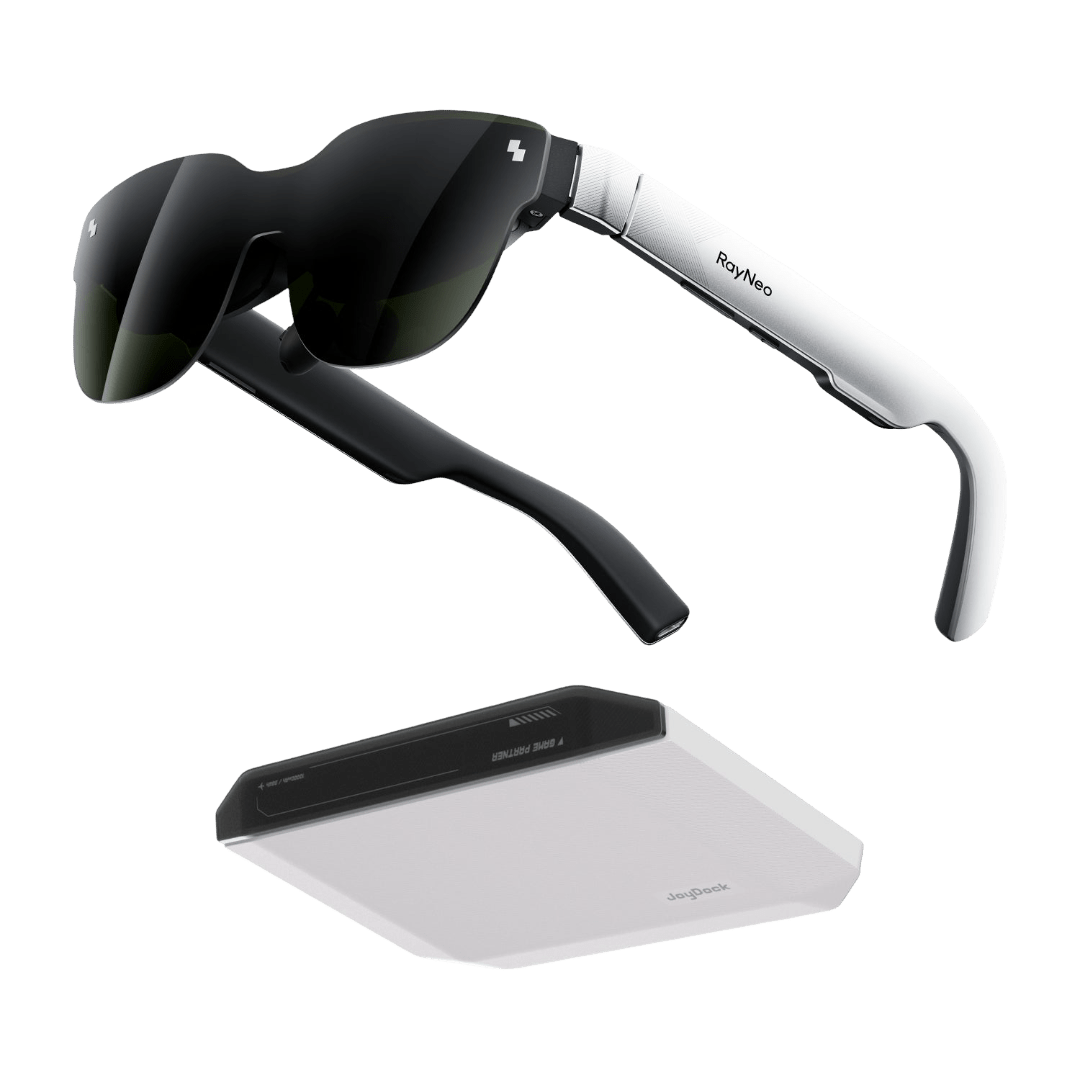
We address these pain points by balancing technical specs. The RayNeo Air 4 Pro uses a HueView 2.0 micro OLED system, offering 1200 nits of perceived brightness and HDR10. This creates an experience equivalent to a 201-inch screen at a 6-meter distance, with an FOV designed for long-term comfort.
In a flight test from San Francisco to New York, the RayNeo Air 4 Pro maintained comfort over 5 hours of use. The weight distribution kept the center of gravity similar to standard sunglasses, avoiding the need to take them off after just one hour. The 120 Hz refresh rate and high brightness ensured that subtitles and UI elements remained clear even in cabin lighting.
For AI and spatial computing, the RayNeo X3 Pro focuses on information density and overlay accuracy. Using a micro LED system with a peak brightness of 6000 nits, it remains legible in bright sunlight. Its 6DOF tracking ensures that AR navigation arrows stay locked onto real-world buildings. By keeping the FOV at a balanced 30 degrees, we provide clear information without blocking the user's view of their surroundings or draining the battery too quickly.
In this article, we have followed a single optical thread from the basic definition of focal length to field of view, composition, and subject choice, all the way to the real-world experience of smart glasses and AR glasses. On the surface, focal length is just a number in millimeters. However, it controls the amount of information in a frame, spatial compression, and background blur. It also determines the size of a virtual screen, edge clarity, and wearing comfort. Once you understand focal length, you gain the power to reshape your visual world, whether through a 35 mm lens or a pair of RayNeo smart glasses that switch freely between reality and the virtual realm.
Yes. Shorter focal lengths cause more noticeable perspective exaggeration for faces close to the lens. This makes the nose look larger, and the cheeks appear to recede, resulting in a sharper or distorted face shape. This effect is especially obvious below 20 mm. Between 50 mm and 85 mm, facial proportions look more like what we see with the naked eye. Because of this, that range is the standard for portrait photography and video interviews.
The optical structure of a prime lens is optimized for a single focal length. It uses fewer glass elements and a simpler light path to achieve higher resolution and lower distortion. Zoom lenses must balance performance across multiple focal lengths. Their internal lens groups are more complex, making manufacturing and calibration harder. This often results in lower sharpness at certain focal lengths compared to a prime lens in the same class.
Using full-frame as a benchmark, we recommend starting with 35 mm or 50 mm. A 35 mm lens is better for street photography and environmental portraits since it is easier to compose in tight spaces. A 50 mm lens is ideal for close-ups and daily life, helping you quickly develop an intuition for natural perspective. For users who rely on phones and smart glasses for content creation, a 24 mm to 28 mm equivalent is a very practical range for everyday videos and photos.
No. Focal length is the distance from the optical center of the lens to the image plane. Working distance is the physical space between the front of the lens and the subject. While they both influence composition, they are entirely different concepts. You can see this in macro photography. Even with a fixed focal length, changing the focus and working distance significantly alters the subject size and background blur.
If you keep the aperture and composition the same, a longer focal length creates a shallower depth of field. This makes the background blur more easily. When you double the focal length, you typically need to stop down the aperture by about one stop or increase your shooting distance to maintain the same depth of field.





Share:
Top 10 Glasses AI Features That Are Changing Reality
7 Best Ways to Learn a New Language Faster in 2026 (Proven Methods)