

$449.00



The question "Can you recommend some XR glasses?" reflects both growing interest in extended reality technology and confusion about what "XR" actually encompasses. Extended Reality serves as umbrella term covering various technologies—Augmented Reality (AR), Virtual Reality (VR), and Mixed Reality (MR)—that modify or enhance how people perceive their environment. Understanding which XR category suits specific needs requires first clarifying what distinguishes these technologies, then identifying which applications each serves best, and finally evaluating individual implementations within the appropriate category.
This guide explains XR terminology, distinguishes AR, VR, and MR implementations, and helps readers determine which technology aligns with their intended uses. Rather than attempting universal recommendations across all XR categories, the focus remains on helping readers understand their needs well enough to evaluate appropriate device categories, then consider specific implementations within those categories that match their usage scenarios and preferences.
Extended Reality (XR) encompasses all technologies that alter human perception of reality through digital means. The term covers a spectrum from devices that completely replace natural vision with computer-generated environments (VR) to those that overlay digital information on normal vision (AR), with variations between these extremes (MR). Understanding XR requires recognizing it as category descriptor rather than specific technology type—asking for "XR glasses" resembles asking for "vehicles" without specifying cars, motorcycles, or bicycles.
The XR spectrum reflects different approaches to blending digital and physical reality. At one extreme, VR creates fully immersive digital environments blocking out physical surroundings entirely. At the other extreme, AR maintains normal physical vision while adding digital overlays. Between these poles, MR enables digital objects that interact with physical environment—virtual items appearing to sit on real tables or characters navigating around actual furniture. Each approach serves different applications, making category selection the critical first step before evaluating specific devices.
Virtual Reality headsets completely replace the user's vision with computer-generated environments. Opaque displays block all external light, presenting only digital scenes rendered by the device. Users cannot see their physical surroundings while wearing VR headsets—they inhabit entirely virtual spaces whether simulated rooms, fantastical landscapes, or abstract environments.
VR headsets serve specific applications where full immersion provides value: gaming in virtual worlds, virtual tourism exploring distant locations, training simulations replicating dangerous or expensive scenarios, and social VR enabling presence with distant participants in shared virtual spaces. The complete environmental control enables experiences impossible in physical reality—flying, visiting Mars, or experiencing historical events—though at cost of disconnection from actual surroundings.
The form factor reflects immersion priorities. VR headsets typically weigh 400-600 grams, substantially heavier than eyewear. The weight accommodates displays, lenses, processing hardware, batteries, and sensors enabling spatial tracking. Users cannot wear VR headsets casually throughout daily activities—they represent dedicated devices for specific immersive sessions rather than everyday wearables.
Augmented Reality glasses overlay digital information on normal vision without blocking physical surroundings. Transparent or translucent optics allow users to see their environment naturally while displaying additional content—text, images, navigation arrows, or other information floating in field of view. AR maintains connection to physical reality while enhancing it with digital additions.
AR applications emphasize information augmentation: navigation directions overlaid on streets, work instructions displayed while viewing equipment, translation of foreign text seen through the glasses, or information about objects or locations viewed. The technology enhances existing activities rather than creating alternative realities, making AR glasses more suitable for everyday use during normal activities where environmental awareness remains essential.
The form factor priorities differ dramatically from VR. AR glasses targeting everyday use aim for eyewear-like designs weighing under 100 grams, enabling comfortable extended wear during daily activities. The lighter weight comes through different optical approaches, simpler displays showing information rather than full environment replacement, and often leveraging smartphone processing rather than incorporating powerful onboard computers.
Mixed Reality represents middle ground where digital objects interact with physical environment in sophisticated ways. Unlike simple AR overlays floating in vision, MR enables virtual items that appear anchored to real locations—3D models sitting on actual tables, digital characters navigating around real furniture, or virtual screens positioned persistently in specific room locations.
MR requires environmental understanding—devices must map physical spaces, recognize surfaces, track precise position and orientation—enabling digital content that responds to and integrates with physical surroundings. This spatial understanding supports applications like room-scale design visualization, interactive training where virtual equipment occupies real space, or collaborative work with virtual whiteboards anchored to walls.
The technical requirements for true MR exceed simple AR implementations. Devices need cameras mapping environment, sufficient processing power analyzing spatial data in real-time, and precise tracking maintaining consistent digital object positioning as users move. These requirements often result in heavier, more expensive devices than lightweight AR glasses, though less bulky than VR headsets.
The primary consideration when selecting XR category involves intended applications. Gaming and entertainment emphasizing immersion in virtual worlds clearly indicates VR headsets. Navigation, information display, translation, or content viewing while maintaining environmental awareness suggests AR glasses. Spatial design, interactive training, or collaborative work involving digital objects in physical space points toward MR capabilities.
Many people discover their XR interests span multiple categories—VR for gaming, AR for productivity and daily activities. In such cases, budget and frequency of use determine whether investing in multiple devices makes sense or whether compromising on one category's optimal solution proves more practical. Someone gaming occasionally but wanting everyday information display likely prioritizes AR glasses over VR headsets, accepting less ideal gaming experiences when they occur.
Consider how and where XR devices will be used. Stationary home use in dedicated spaces accommodates VR headsets' bulk and tethered connections to gaming PCs. Mobile use throughout the day—commuting, working in various locations, traveling—demands lightweight AR glasses fitting daily routines without special accommodation. Some users need both—VR for evening gaming sessions at home, AR for daytime productivity and entertainment.
The social context matters significantly. VR headsets' obvious immersive nature makes them inappropriate for social settings or public spaces—wearing VR communicates complete unavailability and disconnection. AR glasses resembling normal eyewear maintain social appropriateness, enabling use during commutes, in offices, or other contexts where complete disconnection would be unacceptable or unsafe. Understanding your primary usage contexts helps determine which form factor suits your lifestyle.
Different XR categories impose different technical requirements. VR demands substantial processing power rendering complex 3D environments at high frame rates—90fps or higher for comfortable immersion. This often requires powerful gaming computers for tethered VR or results in expensive standalone headsets incorporating sufficient onboard processing. AR glasses showing information overlays require less processing, often leveraging smartphone power rather than incorporating expensive dedicated processors.
Battery life varies dramatically across categories. VR headsets providing 2-3 hours per charge suit dedicated gaming or training sessions but require charging between uses. AR glasses need all-day battery for everyday utility—4-6 hours minimum, ideally supporting full workdays or travel days. Understanding usage pattern durations helps determine which battery capabilities prove adequate versus insufficient for intended scenarios.
XR devices span wide price ranges. Quality VR headsets cost $300-600 for standalone units or $400-1000+ for PC-tethered systems including required gaming computers. AR glasses range from $300-1500 depending on capability sophistication. MR devices typically cost $500-3500 reflecting technical complexity. Understanding which category suits your needs helps focus budget on appropriate devices rather than spending on capabilities you won't use.
The total cost includes accessories and content. VR requires game purchases or subscription services providing content. AR glasses with translation, navigation, or entertainment focus work with existing phone apps and services, minimizing additional costs. MR applications may require specific software purchases. Budgeting should account for complete system costs rather than only device prices.

Since AR glasses serve the broadest everyday applications and represent most practical XR category for general users, deeper exploration helps understand available options and selection criteria within this category.
AR glasses implement augmentation through various technical approaches. Some display information in fixed positions within user's vision—"heads-up display" style showing notifications, navigation, or status information. Others implement "see-through AR" projecting virtual objects that appear anchored to physical locations, though this remains technically challenging in lightweight consumer devices.
Most current consumer AR glasses emphasize information display—showing content from paired smartphones, mirroring applications, or presenting notifications and messages. This practical approach delivers genuine utility without requiring sophisticated spatial mapping or expensive processing hardware, keeping devices lightweight and affordable while serving common needs like content viewing, navigation display, and hands-free information access.
AR glasses excel at scenarios where information access enhances physical world activities: walking navigation showing directions while maintaining environmental awareness, work reference materials visible while using hands for tasks, language translation of signs and text during international travel, and entertainment viewing movies or content without holding devices or wearing bulky headphones.
The everyday wearability positions AR glasses as potentially persistent devices rather than single-purpose equipment. Users might wear AR glasses throughout the day for varied activities—navigation during commute, reference information during work, entertainment during breaks, translation while traveling—similar to how smartphones serve multiple purposes rather than single functions.
When evaluating AR glasses, prioritize factors affecting everyday usability: weight under 80 grams enabling comfortable all-day wear, battery life supporting full daily usage patterns, display brightness working across lighting conditions including outdoors, and connectivity compatibility with your phone and content sources.
Audio integration matters significantly. Integrated audio eliminates separate headphones, though quality varies between implementations. Open-ear designs maintaining environmental awareness suit most daily use better than sealed designs blocking surroundings. Audio quality requirements depend on whether you prioritize entertainment (higher quality needs) or primarily information and navigation (basic audio suffices).
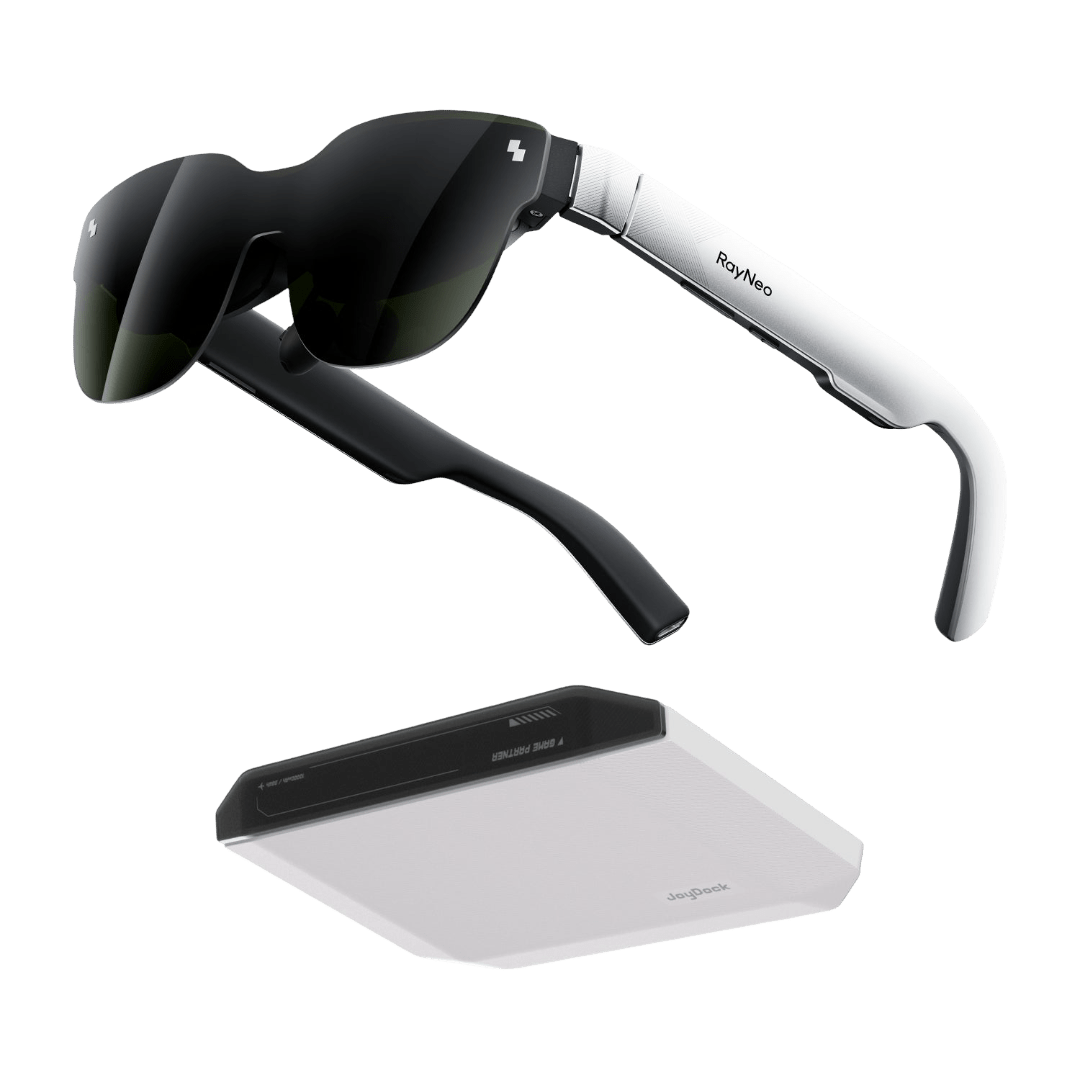
Within AR glasses category, RayNeo products demonstrate focused approaches serving different usage priorities while maintaining everyday wearability and practical utility over experimental capabilities.
The Air 4 Pro positions as entertainment-focused AR glasses providing portable private cinema experiences. The 135-inch equivalent display creates immersive viewing for movies, series, or content consumption. The implementation prioritizes viewing quality—1920x1080 Micro-OLED display with HDR10 support, 120Hz refresh rate, and Bang & Olufsen co-engineered audio—over complex AR features.
The lightweight 76-gram design enables comfortable viewing during feature-length content. The USB-C connectivity provides straightforward connection to phones, tablets, or computers for content streaming. The entertainment focus makes these glasses excellent for travel entertainment, personal viewing in shared spaces, or anyone wanting large-screen experiences without physical display space.
The Air 4 Pro serves users whose primary XR interest involves content consumption—watching movies during travel, viewing media without disturbing others, or enjoying entertainment in comfortable positions. The straightforward content display approach without complex AR features keeps the device accessible and reliable while delivering genuine entertainment value.
The X3 Pro extends beyond entertainment to include productivity and translation features. The 14-language translation capability provides practical utility for international travel or multilingual work environments. The dual connectivity—USB-C and WiFi 6—accommodates varied usage scenarios from stationary work to mobile applications.
The 43-inch display size balances visibility with environmental awareness, suitable for reference information, navigation, or content viewing where large entertainment screens would prove excessive. The MicroLED technology provides 6000 nits peak brightness ensuring outdoor visibility across challenging lighting conditions.
The X3 Pro serves users whose AR interests extend beyond entertainment to include travel assistance, language translation, or productivity applications. The broader feature set addresses diverse needs while maintaining 76-gram comfortable wearability and 4-hour battery supporting full-day usage patterns.
Selection between RayNeo models depends on primary usage priorities. Entertainment-focused users prioritizing large-screen viewing, movie watching, or content consumption find the Air 4 Pro's display size and audio quality better aligned with needs. The lower price point ($299 vs $1,299) also suits entertainment budgets where translation and advanced features would go unused.
Users requiring translation, outdoor visibility, or diverse application support find the X3 Pro's expanded capabilities justify higher investment. The translation feature alone provides significant value for frequent international travelers or multilingual work contexts, while the connectivity flexibility and brightness accommodate broader usage scenarios.
Both models serve the AR category effectively, providing practical everyday utility through information display and content viewing rather than attempting comprehensive MR capabilities or immersive VR-like experiences. The focused AR approach delivers reliable functionality in comfortable, wearable form factors suited for daily integration.
RayNeo AR Glasses Category Positioning:
RayNeo, initially incubated within TCL, develops AR glasses designed for everyday integration. With full in-house R&D and manufacturing capabilities for optical systems, the company leverages 25+ years of optical expertise from its TCL heritage. Products are available in over 70 countries. Visit www.rayneo.com for more information.
Q: What's the difference between AR, VR, and MR glasses?
VR (Virtual Reality): Completely replaces your vision with digital environments—opaque headsets blocking physical world for gaming, training simulations, or virtual tourism. Heavy (400-600g) for dedicated immersive sessions, not daily wear. AR (Augmented Reality): Overlays digital info on normal vision while you see the real world—navigation arrows, translations, content viewing. Lightweight (<80g), eyewear-like for all-day everyday use. MR (Mixed Reality): Digital objects interact with physical space—virtual models on real tables, characters navigating around furniture. Requires cameras/sensors for spatial mapping, heavier than AR but lighter than VR. Most users wanting everyday tech benefit most from AR glasses.
Q: Which XR category should I choose for my needs?
Choose based on primary use: VR if you want immersive gaming or training in fully virtual worlds (requires dedicated space, not portable). AR if you need everyday tools—watching movies during travel, navigation while walking, translation abroad, work reference info, or any activity requiring environmental awareness and all-day comfort. MR if you need spatial design, interactive training with virtual objects in real space (niche professional use). Budget matters: VR $300-1000+, AR $300-1500, MR $500-3500+. Most people seeking "XR glasses" actually want AR for practical daily integration—entertainment, productivity, translation—while maintaining normal life awareness.
Q: Can I use the same device for both entertainment and productivity?
Within AR glasses, yes—but with different optimization priorities. Entertainment-focused (RayNeo Air 4 Pro, $299): Large 135-inch display, HDR10, Bang & Olufsen audio, 120Hz refresh—prioritizes movie quality, gaming, content viewing. Feature-rich (RayNeo X3 Pro, $1,299): Smaller 43-inch display, 14-language translation, 6000 nits outdoor brightness, productivity features—balances entertainment with work/travel utility. Both are AR glasses maintaining 76g comfortable weight and all-day wearability, but optimize differently. Most users choose based on primary use (entertainment vs. international work/travel) rather than trying to excel equally at everything. VR and AR require separate devices—they serve fundamentally different purposes and form factors.
Understanding XR glasses requires first clarifying extended reality encompasses distinct categories—VR for immersive virtual environments, AR for information overlay on physical world, and MR for interactive digital objects in real space. Each category serves different applications, making category selection the critical first decision before evaluating specific devices.
For most users seeking everyday wearable technology enhancing rather than replacing reality, AR glasses provide most practical value. The category enables information access, content viewing, navigation, and translation while maintaining environmental awareness and social appropriateness. AR glasses' lightweight form factors enable all-day wear during varied activities, positioning them as genuine daily technology versus occasional-use equipment.
When evaluating AR glasses specifically, prioritize everyday usability factors—comfortable weight under 80 grams, sufficient battery for daily usage, adequate brightness across lighting conditions, and feature sets matching your actual needs. Entertainment-focused implementations prioritize display quality and audio. Feature-rich implementations add translation, productivity support, or advanced connectivity. Understanding your primary usage scenarios guides selection toward appropriate AR glasses providing genuine daily utility rather than impressive capabilities you won't regularly use.




Share:
Smart Glasses Navigation: Hands-Free Directions for Every Journey
The Complete AR Glasses Buying Guide: 7 Essential Factors for First-Time Buyers