

$449.00

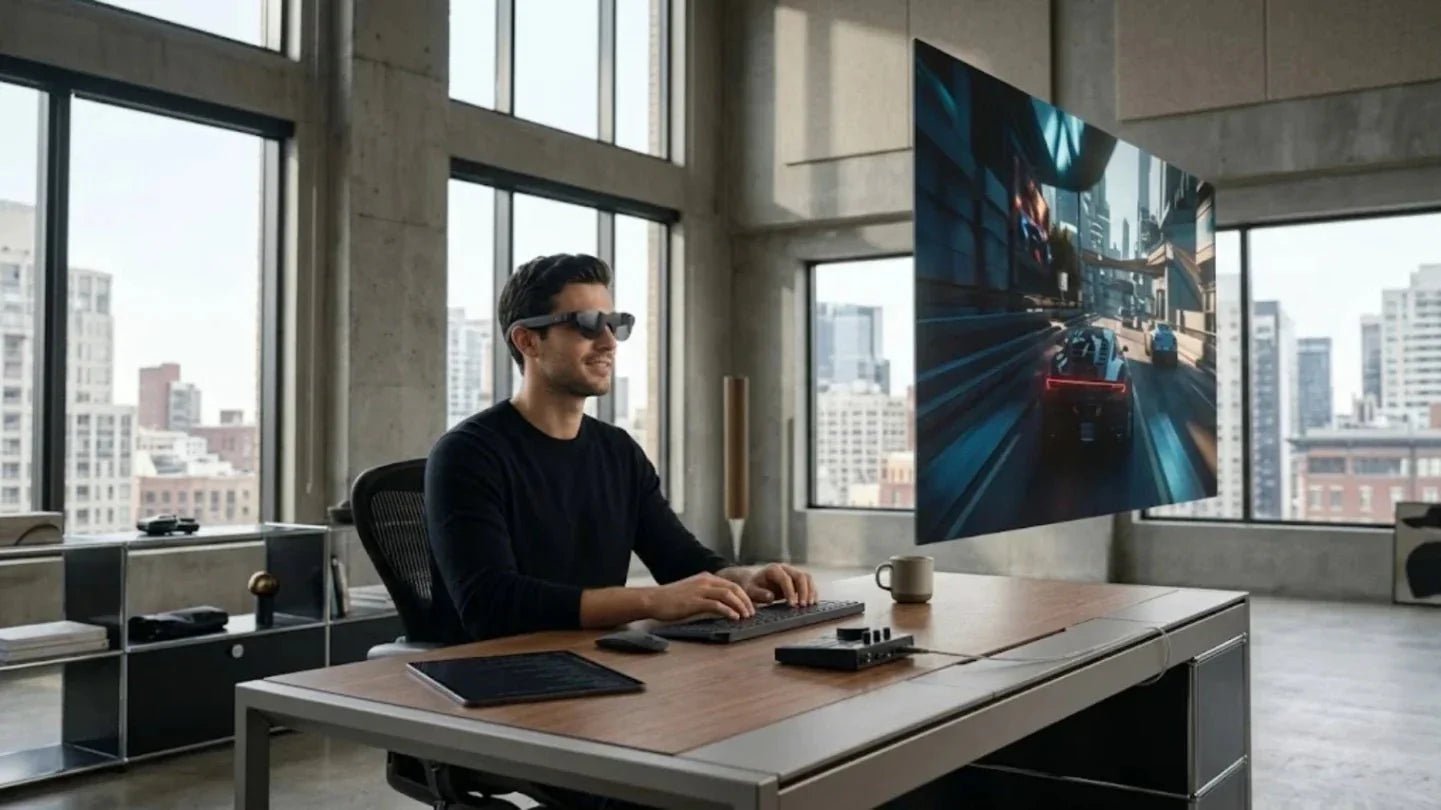
We spent twenty years making game consoles smaller and smaller, only to realize the real problem was never the size of the console. It was the screen. A pair of AR glasses completely flips this logic. Handhelds can stay small, but the world before your eyes can now be infinitely large. The next revolution in handheld gaming is not a more powerful chip. It is the seemingly ordinary pair of glasses on your face. This article will show you how AR glasses in 2026 are fundamentally reshaping the handheld gaming experience. We will cover hardware compatibility, visual performance, and real-world usage to explain what this portable gaming revolution actually means.
Portable gaming in 2026 can be a complete redesign of the user journey. It redefines where we play, how we play, and for how long. Traditional handhelds and mobile games face limits in heat, battery life, and eye strain. Meanwhile, AR glasses have reached a new balance of large screens, long-term comfort, and cross-device connectivity. These two forces have converged this year. What truly drives the move to AR glasses for portable gaming is no longer just frame rates. It is about freedom of posture, the size of the view, and the ability to play while lying down.
Traditional handheld and high-performance mobile gamers summarized their core complaints between 2024 and 2026 into three main issues: battery life, heat, and physical fatigue. On communities like Reddit, players who use handheld devices for extended periods frequently report that their devices become noticeably hot after just two to three hours of playing AAA titles. During this time, battery levels often drop by nearly half. Furthermore, users experience swelling or discomfort in their knuckles and wrists, especially with models weighing over 300 grams. For gamers who commute or travel with handhelds, power banks have essentially become a mandatory accessory. This means that portability is, in reality, tethered once again by cables.
At the same time, player demand for large screens in portable settings is rising. This trend appears frequently in the comment sections of YouTube gaming influencers. Most people are used to playing console titles on 55-inch or larger TVs at home. Once they leave the living room, a 7-inch screen immediately feels cramped. This is especially true for data-heavy genres like open-world games, racing, and MOBAs.
Consequently, players seeking a portable big screen are turning to portable monitors and dedicated gaming glasses. When it comes to stretching a 150-inch or larger virtual display into a pocket-sized form factor, traditional hardware simply cannot balance size and experience.

A more significant change is happening in what devices people use. For the last decade, players defined themselves by a single platform. The lines between console, PC, and mobile gamers were clear. Since 2025, we have seen more players switch between three or more devices daily. They play mobile games during commutes, connect to a console or PC at home, and continue on a handheld before bed.
This flexible style demands new things from portable gear. The computing platform matters less than the ability to connect to everything with a unified visual experience. From this view, AR glasses are a display terminal. They do not compete with any platform. Instead, they turn consoles, PCs, and phones into signal sources. Players need big-screen glasses that perform reliably across different scenarios, not another closed handheld with no compatibility.
As gaming moves toward the cloud and multi-platform sync, the game account is becoming the true core asset. The device is just a portal. Cloud gaming services matured after 2025, allowing players to jump between phones, TVs, and laptops seamlessly. This makes device generations less important in the actual experience.
Conversations with hardcore players show they care about three things:
Stable and clear visuals in any setting.
Controlled input latency.
The ability to play longer in a comfortable posture.
AR glasses provide a new solution to these problems. They pull the visual layer away from the hardware. It no longer matters which device is running the game. This opens a new technical path for portable gaming. When the game account takes center stage, the display terminal that connects all devices becomes the key player in the next stage of portable play.
The screen no longer takes up physical space. The visual experience is closer to a home theater. AR glasses provide a display upgrade for portable gaming. They also completely redefine usage postures and scenarios.
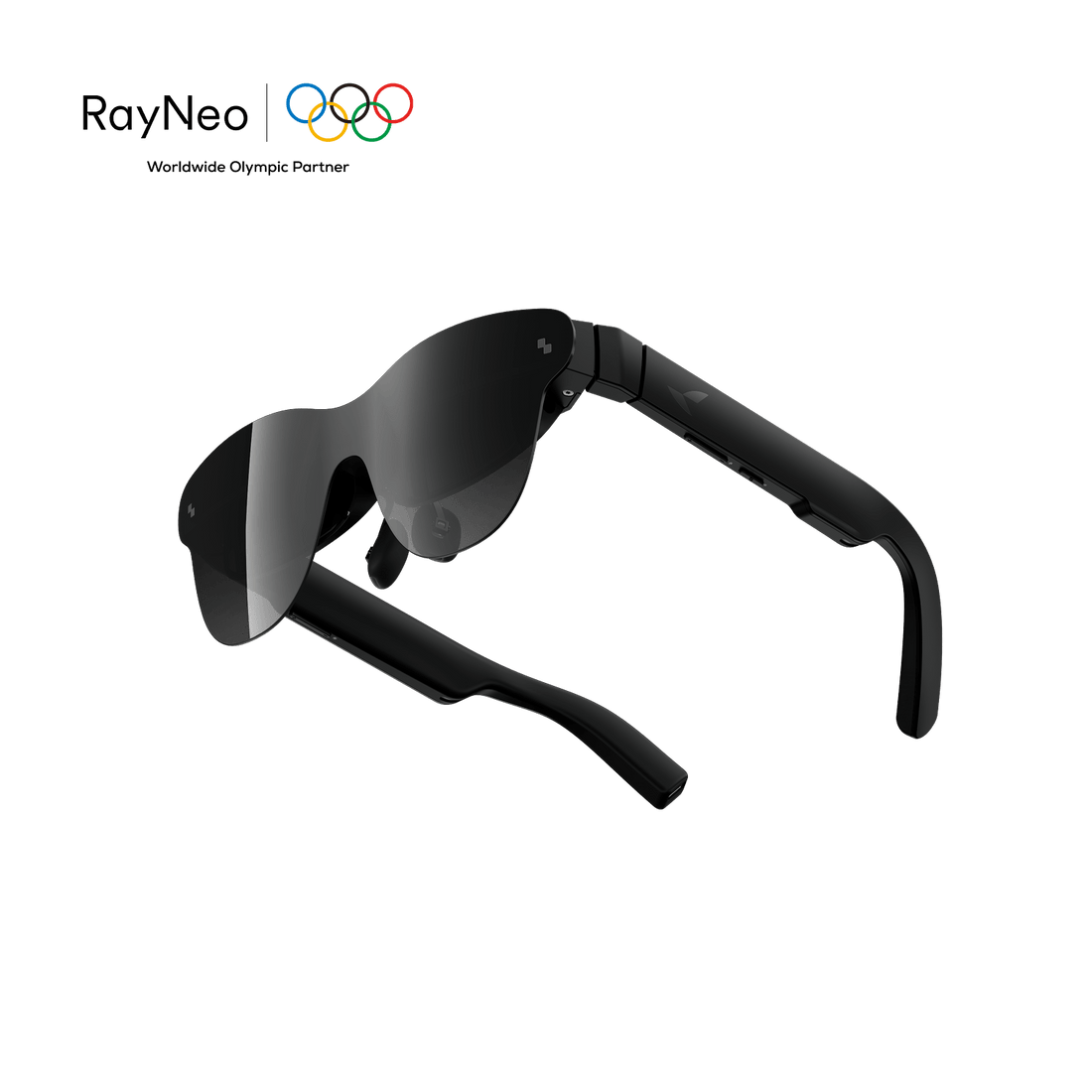
The first sensation AR glasses provide is the sense of scale. When wearing devices with modern optical solutions, you often forget the waveguide is only a few millimeters thick. The image in front of you is equivalent to a 120 to 200-inch screen. For instance, the gaming-focused RayNeo Air 4 Pro best AR Glasses 2026 presents a nearly 201-inch virtual screen. Using HueView 2.0 optics and high-contrast display, it maintains cinema-level immersion at an equivalent distance of 3 to 4 meters.
Unlike traditional portable monitors, AR glasses have no physical panel. You do not need to worry about stands, bezels, or desk space. This avoids the struggle of setting up equipment in cramped areas. In airplane economy seats or overnight trains, you might only have a few inches of space in front of your knees. Even then, you still get a full big-screen view. For frequent travelers, this provides a dimension of play that traditional handhelds simply cannot match.
The second major change is environmental adaptability. Many AR glasses reviews on YouTube highlight common pain points. These include low outdoor brightness, weak contrast, and washed-out visuals in complex lighting like cafes or offices. New AR glasses feature higher brightness and contrast. Advanced optical coatings keep the display readable in bright light and comfortable in low light.
We repeatedly tested gaming visuals on subways, terraces, and in open office spaces. We focused on three metrics: text sharpness, shadow detail, and color accuracy. Thanks to high pixel density Micro OLED or Micro LED screens and HDR dynamic range, detail retention is now better than standard phone screens. This is clear in dark FPS games or night missions in open-world titles. Players can spot enemies or scan distant terrain more easily in complex scenes.
Traditional portable gaming has a major posture problem. Holding a handheld or phone requires constant arm strength and keeps your neck tilted forward. Terms like tech neck reflect real physical strain. AR glasses move the screen away from your hands. Your hands only need to hold a controller, keyboard, or the console itself. In cloud gaming, a light controller is enough. You look straight ahead, which reduces the angle of neck bending.
As portable gaming moves toward AR, the boundary between the screen and reality softens. Unlike closed VR headsets, most AR glasses maintain light transmission. Players can perceive their surroundings and the virtual screen at the same time. While playing a racing game in a cafe, you can still notice a waiter or a friend nearby.
This is vital for mobile players. In subways, airports, or on the way home at night, closed headsets can make people feel unsafe. AR glasses offer a middle ground. The virtual image does not steal all your attention. You can shift your focus to reality with a slight eye movement and then return to the game. This keeps you connected to the real world during long sessions.
To define the role of AR glasses in portable gaming, we must compare them across the hardware spectrum. We look at performance, portability, immersion, and flexibility. This helps you decide what works best for your life.
Smartphones remain the most common gaming device. They are easy to access and perfect for quick sessions. A player can finish a round during a short commute from stop to stop.
However, problems appear during longer sessions. These include small screens, constant notifications, and restricted posture. Hardcore players often stop using phones as their main device. Instead, they use them as a portal for cloud gaming or a hub for a controller. Adding AR glasses turns the phone into a controller, which fundamentally upgrades the experience.

Handhelds offer a focused experience. They have no message alerts, great physical buttons, and a library built for serious gamers. For fans of RPGs or action games, opening a handheld creates a private world.
But handheld issues have grown over the last few years. They are becoming as large as small tablets. Fan noise, heat, and battery drain are real problems. After a few hours of heavy play, weight and heat cause hand fatigue. Players used to 120-inch TVs at home also find small screens disappointing.
High-performance laptops are still vital for precision and high frame rates. They offer raw power and a complete ecosystem. Paired with a controller or high-refresh monitor, they handle any AAA title.
The downside is portability. Their size and weight make them transportable rather than truly portable. They always need a desk, whether in a cafe, airport, or bed. Some users now keep the laptop as a streaming source. They play on a sofa or in bed using AR glasses, freeing up their posture and space.
True portable gaming freedom comes from splitting performance and display. Keep the power in your bag and wear the screen on your face.
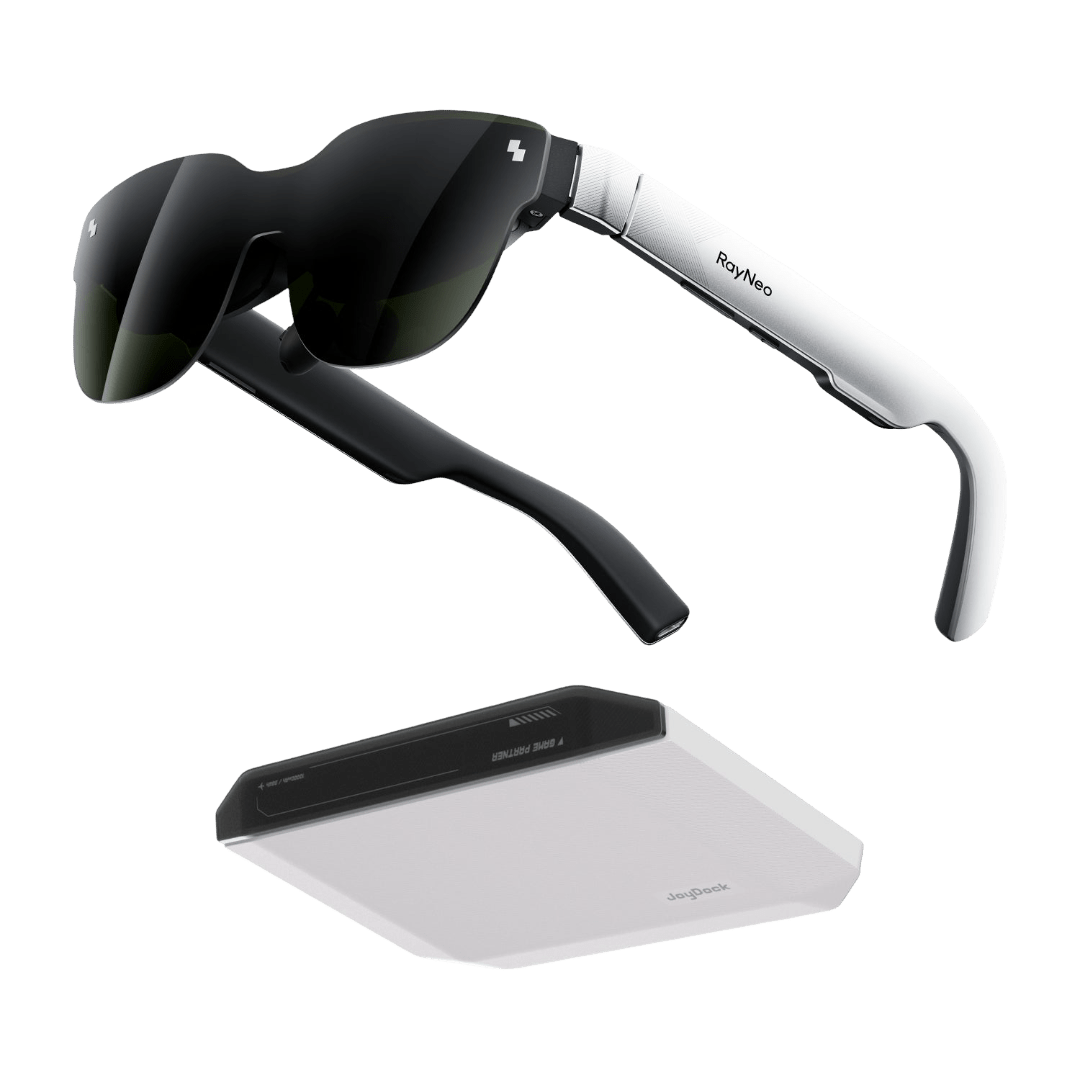
AR glasses act as a display layer for phones, handhelds, and PCs. They connect via USB-C or wireless to project a unified virtual big screen. Your visuals are no longer limited by physical screen size. The RayNeo Air 4 Pro fits this category. It pairs with a phone or Steam Deck to provide a sharp 1080p image on a 201-inch virtual screen. Its light design ensures long-term comfort.
Portable Device Comparison Matrix:
|
Device Type |
Primary Advantage |
Main Limitation |
Role in 2026 |
|
Smartphone |
High accessibility |
Small screen; notifications |
Controller and network hub |
|
Handheld |
Physical controls |
Weight; battery; screen size |
Dedicated portable gaming |
|
Laptop |
Peak performance |
Desk-dependent; bulky |
Power and content source |
|
AR Glasses |
Immersive big screen |
Dependent on host power |
Unified display layer |
From a system perspective, AR glasses do not replace these devices. They connect them. For players using multiple platforms, the best setup is a powerful host, a flexible handheld or phone, and high-quality AR glasses. Whether on a sofa, in an office lounge, or a hotel, you get the same massive field of view.
According to estimates from organizations like Statista, the AR and VR markets will maintain a high compound growth rate of around 20% in 2026. This growth is driven by the continuous demand for immersive content and gaming experiences.
The golden age of handheld gaming is not the Game Boy era; it is right now. AR glasses have transformed the Steam Deck, turning a seven-inch screen into a portable 200-inch private theater. Achieving immersion, privacy, and portability at the same time was previously impossible. You already have the handheld, and now you just need the AR glasses. Do not let your gaming experience stay stuck in the past.
Most mainstream AR glasses can connect to home gaming consoles via cable or an adapter. The key is matching the video signal standard and power delivery. As long as the console supports HDMI to USB-C output and you use the correct adapter module, you can project the game onto a massive virtual screen inside the AR glasses. The actual experience is similar to using a TV or monitor.
Note that different consoles have specific limits on resolution and HDR output. You will need to manually adjust output resolution and color space in the settings to match the optimal display parameters of the AR glasses. Once you finish this initial calibration, it becomes plug-and-play. This significantly reduces the hassle of moving display equipment for players who frequently switch between the living room, bedroom, or office.
Yes. PC adaptation is even more flexible. You can treat the GPU output as an external monitor via USB-C or HDMI adapter. Alternatively, you can use streaming software to push the image to a mobile device over a local network, which then displays it on the AR glasses. We recommend the former approach because it fully utilizes discrete GPU performance, ensuring high frame rates and low latency.
AR glasses weighing around 70 to 80 grams with proper weight distribution can typically support over two hours of gaming without significant discomfort. Products with weights closer to VR headsets are at a major disadvantage in this area.
When buying portable gaming gear in 2026, we suggest evaluating four dimensions: performance output, display experience, wearing or holding comfort, and ecosystem compatibility. For players who already own a console or PC, a new device is better suited as a display and interaction tool to expand gaming scenarios rather than just redundant computing power.
The following table provides a simplified reference based on player feedback and hands-on experience to help compare how different devices fit into portable gaming.
|
Device type |
Performance |
Display size |
Comfort long use |
Cross device role |
|
Smartphone |
Medium |
6–7 inches |
Medium |
Game library and controller |
|
Handheld console |
Medium high |
7–8 inches |
Medium low |
Dedicated gaming device |
|
Gaming laptop |
High |
15–17 inches |
Medium |
Mobile performance hub |
|
AR glasses |
As host device |
Up to 201 inches |
High with light weight |
Universal display layer |





Share:
What Is the Screen Door Effect and Why Does It Happen?
Surround Sound vs. Stereo: Which Is Better for Watching Movies?