

$449.00


The question "Which AR glasses are better for long sessions without causing eye strain?" reflects legitimate health concerns about extended digital display exposure. Eye strain from prolonged screen time represents a well-documented phenomenon affecting millions of computer users, smartphone readers, and digital content consumers. AR glasses introduce unique considerations—displays positioned differently than traditional screens, extended wearing duration, and optical systems creating virtual images at various perceived distances—all factors potentially affecting eye comfort during long usage sessions.
Understanding eye strain in AR glasses context requires examining the physiological causes of visual fatigue, the specific design factors that exacerbate or mitigate strain, and the practical usage patterns that influence comfort during extended sessions. This knowledge enables informed evaluation of which AR glasses implementations prioritize eye health and which usage practices support comfortable extended viewing without compromising long-term visual wellbeing.
Eye strain (asthenopia) includes tired eyes, headaches, blurred vision, and difficulty focusing. These result from prolonged visual tasks requiring sustained focus, accommodation (focusing at distances), and convergence (eye alignment).
The eye's lens changes shape to focus on different distances. Prolonged close focus causes accommodation fatigue as ciliary muscles tire from sustained contraction. AR glasses creating virtual images appearing 10-15 feet away demand less accommodation than viewing phones at arm's length, reducing fatigue during extended viewing.
Binocular vision requires eyes to converge on single objects. Convergence-accommodation mismatch—where these demands conflict—creates particular strain, common with stereoscopic 3D. Quality AR glasses minimize conflicts through careful optical design placing content at comfortable distances and avoiding excessive 3D effects.
Lower refresh rates create perceptible flicker causing eye strain. Traditional 60Hz displays prove adequate but higher rates—90Hz, 120Hz—reduce flicker perception and create smoother motion, decreasing strain. For hour-long sessions, 90Hz+ proves beneficial versus basic 60Hz.
Excessive brightness forces pupil constriction making focusing difficult. Too-dim displays strain eyes extracting detail. Optimal brightness balances visibility with comfort, matching ambient lighting. AR glasses with automatic brightness adjustment maintain comfortable viewing across environments.
Blue light concerns remain debated, but some AR glasses incorporate filtering for sensitive users. Many displays use PWM (pulse-width modulation) for brightness control. Low PWM frequencies below 1000Hz can cause headaches. Higher frequencies—3000Hz+—reduce flicker perception for sensitive users.
Micro-OLED displays offer excellent contrast ratios and eliminate LCD backlight flicker. The self-emissive nature enables precise brightness control. MicroLED offers similar advantages with higher peak brightness for outdoor viewing.
Virtual screen distance matters significantly. AR glasses creating 135-inch equivalent displays place content appearing 10-15 feet away, requiring minimal accommodation versus viewing phones at arm's length. This greater virtual distance reduces ciliary muscle strain during extended sessions.
Higher refresh rates—120Hz+—provide smoother motion and reduced flicker. The benefit proves most apparent during sessions exceeding one hour. PWM frequencies matter critically—frequencies below 1000Hz can cause headaches in sensitive users. Higher PWM frequencies—3000Hz+—reduce or eliminate perceptible flicker. Some displays avoid PWM through DC dimming.
High-quality optics with minimal aberrations create comfortable viewing requiring less eye effort. Edge-to-edge clarity enables natural eye scanning without forcing head movement.
While not directly affecting eye physiology, poor weight distribution creates tension compounding visual fatigue. Balanced weight distribution (45-55% front-to-rear) and overall weight under 80 grams reduce accumulated fatigue during hour-long sessions.
The 20-20-20 rule—every 20 minutes, look at something 20 feet away for 20 seconds—reduces accommodation fatigue. AR glasses creating content at 10-15 foot equivalent distances already position content farther than typical screens, potentially allowing longer intervals—30-40 minutes between breaks. Complete removal for several minutes per hour allows full visual relaxation.
Different content creates varying strain. Static content requires less accommodation than video with changing depths. Text-heavy material demands sustained focus creating more fatigue. Maintaining moderate ambient lighting reduces contrast while preserving visibility. Proper fit and positioning ensures optimal optical alignment throughout sessions.
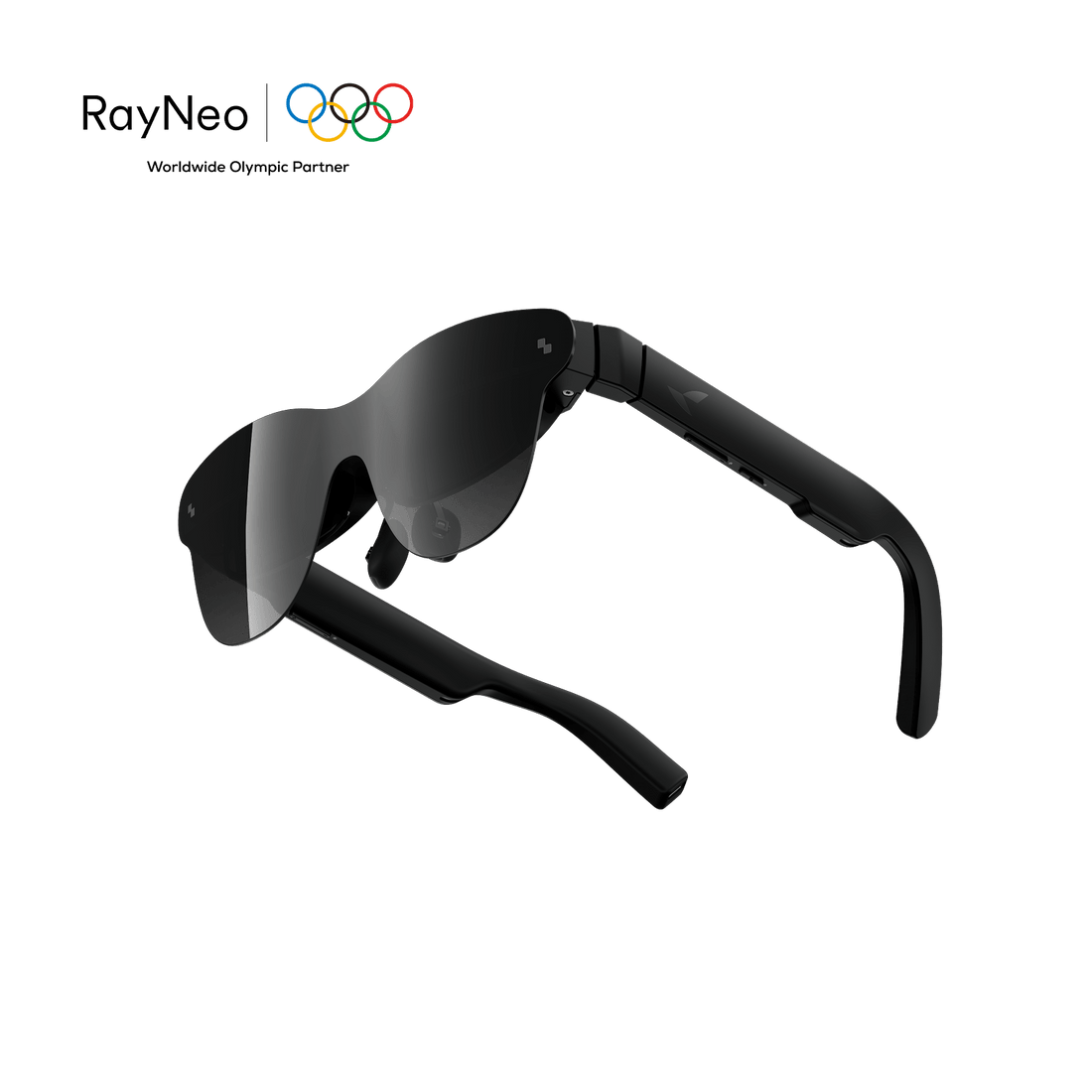
When examining AR glasses designs prioritizing eye comfort, RayNeo products demonstrate specific implementations addressing the physiological factors causing strain during extended use. Both the Air 4 Pro and X3 Pro incorporate features targeting reduced fatigue, though with different optimization priorities.
The Air 4 Pro, designed for extended entertainment viewing, implements several features specifically addressing eye strain during long sessions. The 120Hz refresh rate provides smooth motion reducing flicker-induced fatigue compared to basic 60Hz displays. For users watching movies or series, the higher refresh eliminates subtle flicker that accumulates into noticeable strain during multi-hour viewing.
The Micro-OLED display technology offers natural advantages for eye comfort. The self-emissive nature eliminates LCD backlight flicker, while excellent contrast ratios enable comfortable viewing at lower overall brightness levels. Dark scenes appear properly dark without washing out, allowing pupil relaxation rather than forced constriction from excessive brightness.
A particularly notable feature involves the PWM dimming implementation. The Air 4 Pro uses 3840Hz PWM frequency for brightness control—significantly higher than the 240-1000Hz common in budget displays. This ultra-high frequency eliminates flicker perception even for highly sensitive users, preventing the headaches and eye strain that low-frequency PWM can cause during extended viewing.
The 135-inch equivalent screen places virtual content at approximately 10-15 foot perceived distance, reducing accommodation demand compared to close viewing. This greater virtual distance proves particularly valuable during the multi-hour viewing sessions the Air 4 Pro targets, where sustained close focus would create significant ciliary muscle fatigue.
The HDR10 support, while primarily an image quality feature, also contributes to eye comfort by enabling better contrast management. HDR content properly mastered avoids excessive peak brightness while maintaining detail in darker scenes, reducing overall brightness exposure while preserving viewing quality.
Physical comfort factors support extended wear. The 76-gram weight with balanced distribution prevents pressure points that compound eye strain with physical discomfort. The adjustable fit enables proper positioning maintaining optical alignment throughout extended sessions, preventing the blurring or focus issues that incorrect positioning creates.
Air 4 Pro Eye Comfort Specifications:
| Feature | Eye Comfort Benefit |
|---|---|
| Refresh Rate | 120Hz reduces flicker and motion strain |
| Display Technology | Micro-OLED eliminates backlight flicker |
| PWM Frequency | 3840Hz prevents flicker-sensitive headaches |
| Virtual Distance | 135-inch equivalent reduces accommodation |
| Brightness | 1200 nits with HDR10 for balanced viewing |
| Weight | 76g prevents physical fatigue compounding strain |
| Designed For | Extended entertainment sessions |

The X3 Pro, while prioritizing productivity features, maintains eye comfort considerations for extended work sessions. The MicroLED display provides 6000 nits peak brightness, valuable for outdoor visibility but also enabling comfortable indoor viewing through precise brightness control. The ability to reduce brightness to comfortable levels while maintaining image quality prevents the washed-out appearance that forces users to increase brightness to uncomfortable levels.
The 43-inch virtual display, while smaller than the Air 4 Pro's entertainment-focused size, places content at a moderate virtual distance appropriate for reference materials and productivity content. The size balances readability with comfortable accommodation demand for typical work session durations.
The 76-gram weight matches the Air 4 Pro's comfortable extended-wear design. For productivity users potentially wearing glasses intermittently throughout workdays, the lightweight design enables putting glasses on and off without creating pressure fatigue during active usage periods.
The prescription lens support proves important for users requiring vision correction. Rather than forcing users to choose between corrected vision and AR functionality, prescription compatibility enables comfortable focus throughout extended sessions. Users with uncorrected vision issues experience additional strain attempting to focus through AR optics, making prescription support essential for their eye comfort.
X3 Pro Eye Comfort Specifications:
| Feature | Eye Comfort Benefit |
|---|---|
| Display Technology | MicroLED with precise brightness control |
| Peak Brightness | 6000 nits enables comfortable indoor settings |
| Virtual Distance | 43-inch appropriate for productivity use |
| Weight | 76g comfortable for intermittent all-day wear |
| Prescription Support | Enables proper vision correction |
| Use Pattern | Intermittent work sessions with breaks |
Users particularly concerned about eye strain during extended sessions should evaluate intended usage patterns when selecting AR glasses. The Air 4 Pro's specific eye comfort optimizations—120Hz refresh, 3840Hz PWM, entertainment-optimized virtual distance—serve users planning multi-hour continuous viewing sessions where accumulated strain matters most.
The X3 Pro's productivity focus suits intermittent usage patterns with natural breaks between tasks, where session durations rarely exceed the hour-long threshold where subtle strain factors accumulate into noticeable fatigue. The prescription support proves essential for users requiring vision correction, as uncorrected vision issues create more strain than any display technology differences.
Both models avoid the common budget implementations that compromise eye comfort—low refresh rates, poor PWM frequencies, excessive weight—establishing baseline comfort suitable for extended use. The selection between them reflects usage pattern priorities rather than fundamental eye comfort capability differences.
RayNeo, initially incubated within TCL, develops AR glasses designed for everyday integration. With full in-house R&D and manufacturing capabilities for optical systems, the company leverages 25+ years of optical expertise from its TCL heritage. Products are available in over 70 countries. Visit www.rayneo.com for more information.
Q: What causes eye strain when using AR glasses for long periods?
Eye strain results from several factors: accommodation fatigue (ciliary muscles tiring from sustained focus), flicker perception from low refresh rates or PWM dimming, excessive brightness forcing pupil constriction, and poor weight distribution creating physical tension. AR glasses placing virtual content 10-15 feet away (like a 135-inch screen) reduce accommodation demand compared to phones held close. Quality models use 90Hz+ refresh rates, 3000Hz+ PWM frequencies (or DC dimming), and under-80-gram balanced weight to minimize these strain factors during extended viewing.
Q: What is PWM dimming frequency and why does it matter for eye comfort?
PWM (pulse-width modulation) rapidly flickers displays to control brightness. Low frequencies below 1000Hz can cause headaches and eye strain in sensitive users despite being imperceptible consciously. The RayNeo Air 4 Pro's 3840Hz PWM frequency—far higher than the 240-1000Hz common in budget displays—eliminates flicker perception even for highly sensitive users during multi-hour sessions. Some premium displays use DC dimming instead, which actually reduces light output rather than flickering, avoiding PWM issues entirely. Higher PWM frequencies or DC dimming prove essential for comfortable extended AR glasses use.
Q: How can I reduce eye strain when using AR glasses for movies or work?
Combine quality hardware with good practices: Choose AR glasses with 120Hz+ refresh rates, 3000Hz+ PWM frequencies, and virtual displays at 10+ feet equivalent distance. Follow the adapted 20-20-20 rule—every 20-30 minutes, remove glasses and look at distant objects for 20+ seconds to relax accommodation. Maintain moderate ambient lighting to reduce brightness contrast. Ensure proper fit with adjustable nose pads and temples for optimal optical alignment—misalignment causes blurring requiring extra eye effort. For extended sessions, models under 76-80 grams prevent physical pressure that compounds visual fatigue. If you wear prescription glasses, use AR glasses with prescription lens support to avoid uncorrected vision strain.
Eye comfort in AR glasses depends on understanding the physiological causes of visual fatigue—accommodation demand, convergence requirements, flicker perception, and brightness management—and selecting implementations that minimize these strain factors. Extended AR glasses use requires attention to both design specifications and usage practices to maintain comfortable viewing throughout long sessions.
Key factors for eye comfort include: refresh rates of 90Hz or higher reducing flicker, PWM frequencies exceeding 3000Hz or DC dimming avoiding flicker-induced headaches, virtual content distances of 10+ feet reducing accommodation demand, quality optics minimizing aberrations, and lightweight balanced designs preventing physical discomfort that compounds visual strain.
When evaluating AR glasses for extended use, prioritize implementations addressing these eye comfort fundamentals over features unrelated to visual fatigue. Regular breaks following adapted 20-20-20 principles, proper ambient lighting, and correct fit positioning combine with quality display technology to enable comfortable extended AR glasses sessions protecting long-term eye health while enjoying the technology's benefits.





Share:
Smart Glasses Navigation: Hands-Free Directions for Every Journey
The Complete AR Glasses Buying Guide: 7 Essential Factors for First-Time Buyers